
Plants
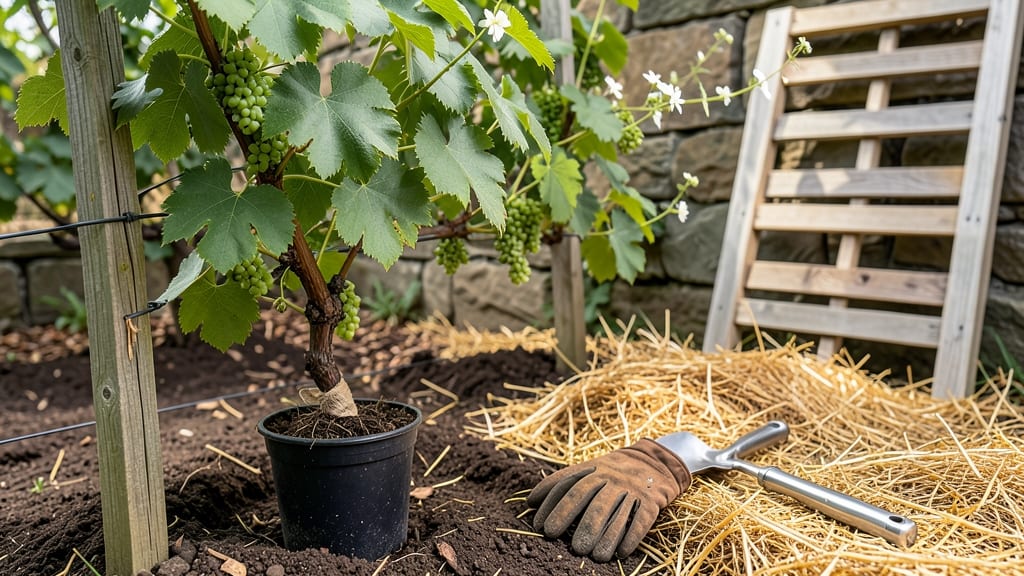
Timing your 🍇 grapes planting in California isn’t just about the calendar—it’s about surviving the state’s wild climate swings.
Whether you’re in frost-prone coastal zones like 9b-11 or the sunbaked 8-10 inland valleys, planting too early or late can mean the difference between a thriving vineyard and a sad, wilted experiment.
Most gardeners swear by fall planting (October–November) or early spring (February–March), but the key lies in your microclimate. Coastal areas play it safe with cooler winters, while inland growers race against summer heat to get vines established before the real fun—harvest season—rolls around in August-October.
You’ll also need to know whether your Thompson Seedless or Cabernet Sauvignon prefers the chill of coastal hills or the warmth of the Central Valley.
Get this wrong, and your vines might struggle with heat stress or frost damage—neither of which helps when you’re dreaming of that first glass of homegrown wine.
Let’s break down the exact planting windows, soil secrets, and variety-specific tricks so you can time it right—and finally grow grapes that taste like they belong in a Napa tasting room.
California’s best grape planting months by coastal vs inland zones
California’s grape-growing regions aren’t one-size-fits-all. The coastal areas—like Sonoma and Santa Barbara—enjoy milder winters with rare frost, while inland valleys (e.g., Central Valley, Napa) face colder nights and hotter days. These differences drastically impact your planting window and vine survival.
For coastal California, your best bet is fall planting (October-November) or early spring (February-March). The mild winters reduce frost risk, giving young vines time to establish roots before summer heat arrives.
In contrast, inland zones demand earlier fall planting (September-October) to avoid late-winter frosts that can kill tender new growth.
Soil preparation is equally critical. Both regions need well-draining soil with a pH between 6.0-7.5, but coastal areas benefit from added organic matter to retain moisture, while inland soils often require gypsum or sand to prevent compaction from summer heat.
Here’s how to match your planting schedule to California’s two dominant climates:
| Region | Best Planting Window | Frost Risk | Soil Prep Tip | Microclimate Note |
|---|---|---|---|---|
| Coastal (Sonoma, Santa Barbara) | Oct-Nov (fall) or Feb-Mar (spring) | Low (rare below 32°F) | Add compost for moisture retention | Foggy mornings extend growing season |
| Inland (Central Valley, Napa) | Sep-Oct (fall) or Jan-Feb (spring) | High (frost possible Dec-Feb) | Amend with gypsum for drainage | Hot days require afternoon shade for young vines |
| Northern CA (Mendocino, Lake County) | Oct-Nov (fall) only | Moderate (frost possible) | Test soil for boron deficiency | Cooler nights suit Pinot Noir |
| Southern CA (Riverside, Temecula) | Nov-Dec (fall) or Feb (spring) | Low (mild winters) | Use drip irrigation for water efficiency | Desert-adjacent areas need windbreaks |
If you’re planting in Northern California, prioritize fall planting (October-November) to avoid spring frosts that can delay bud break. Southern California’s milder winters allow for later fall (November-December) or even early spring (February) options, but watch for sudden cold snaps in coastal canyons.
For bare-root vines, your planting window narrows further. Coastal growers can plant as late as mid-November, while inland plantings should wrap up by October 15th to prevent winter dieback. Always soak roots in water for 1-2 hours before planting to reduce transplant shock.
Pro tip: Use UC Master Gardener resources to check your local frost dates. For example, Napa Valley averages its last frost around March 15th, while Santa Barbara rarely drops below freezing. Timing your planting just 4-6 weeks before your area’s first frost ensures vines establish roots before dormancy.
Don’t overlook rootstock compatibility. Inland zones with poor drainage need phylloxera-resistant rootstocks like 1103 Paulsen or 140 Ruggeri, while coastal areas can often use own-rooted vines for Thompson Seedless or Flame Seedless varieties.
🍇
Variety-specific planting times for California grapes (table vs wine grapes)
Not all 🍇 grapes thrive on the same schedule in California. Thompson Seedless, the classic table grape, loves the coastal chill, while Cabernet Sauvignon craves the Central Valley’s warmth.
Your variety choice determines whether you plant in fall’s mild temps or spring’s rapid growth—and whether you’ll end up with juicy snacks or award-winning wine grapes.
Coastal growers often plant Zinfandel and Pinot Noir in October-November to avoid spring frosts, while inland vineyards might push Syrah or Grenache into February-March to beat summer heat. The key? Matching your grape’s chill-hour needs (hours below 45°F) to your microclimate’s winter chill.
For example, Flame Seedless table grapes need 300-400 chill hours—perfect for coastal USDA Zone 9b—while Cabernet Sauvignon thrives with 500+ chill hours, making it ideal for Zone 8-10 inland areas. Get this wrong, and you’ll either have poor fruit set or heat-stressed vines.
🍇 California Grape Varieties & Planting Windows
| Variety | Type | Best Planting Month | Chill Hours Needed | Ideal Zone |
|---|---|---|---|---|
| Thompson Seedless | Table | October-November | 300-400 | 9b-11 (Coastal) |
| Flame Seedless | Table | February-March | 350-450 | 9b-10 (Coastal/Inland) |
| Cabernet Sauvignon | Wine | February-March | 500-700 | 8-10 (Inland) |
| Zinfandel | Wine | October-November | 400-500 | 9a-11 (Coastal/Inland) |
| Syrah | Wine | February-March | 500-600 | 8-10 (Inland) |
💡 Pro Tip: Coastal areas can plant 1-2 months earlier than inland zones to avoid spring frosts.
If you’re growing wine grapes like Pinot Noir or Grenache, aim for February-March plantings in inland zones to give roots time to establish before summer’s 100°F+ heat.
These varieties need deep, well-draining soil and full sun—if your soil is rocky or shallow, amend with compost or plant on a south-facing slope.
For table grapes, October-November is ideal in coastal zones because the mild winters let roots settle without frost risk. But inland? Plant in February to beat the June Gloom heatwave.
And always mulch heavily—grapes hate soil temperature swings, which can cause poor fruit set or split berries.
One last trick: Bare-root vines (available at nurseries in winter/early spring) establish faster than potted plants. If you