
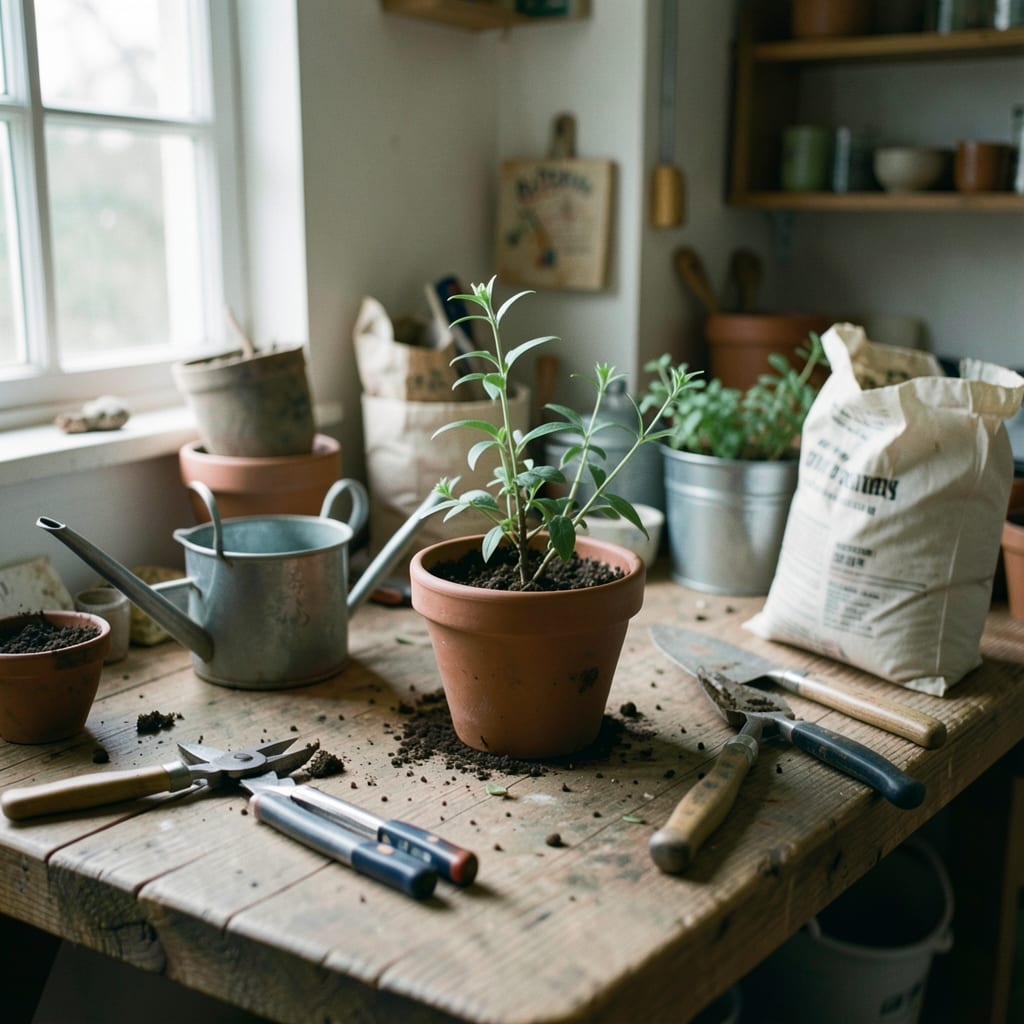
What this work is made with
This page is a list of things, not a story. Gardening advice doesn’t live in words alone—it lives in the soil, the tools, the hands that shape it, and the scars left behind. Here, we name what holds the work together.
Plant Loop is a place for growing things—plants, knowledge, and the quiet satisfaction of a job well done. Every tip, every warning, every ‘try this instead’ has been tested in real dirt, under real skies, with real failures along the way.
The things that do the work
These are the objects that shape what you’ll find here: the worn-out shovel, the cracked terracotta pot, the trowel that’s lost its edge. They don’t write the advice, but they’ve taught it.
Pruning shears
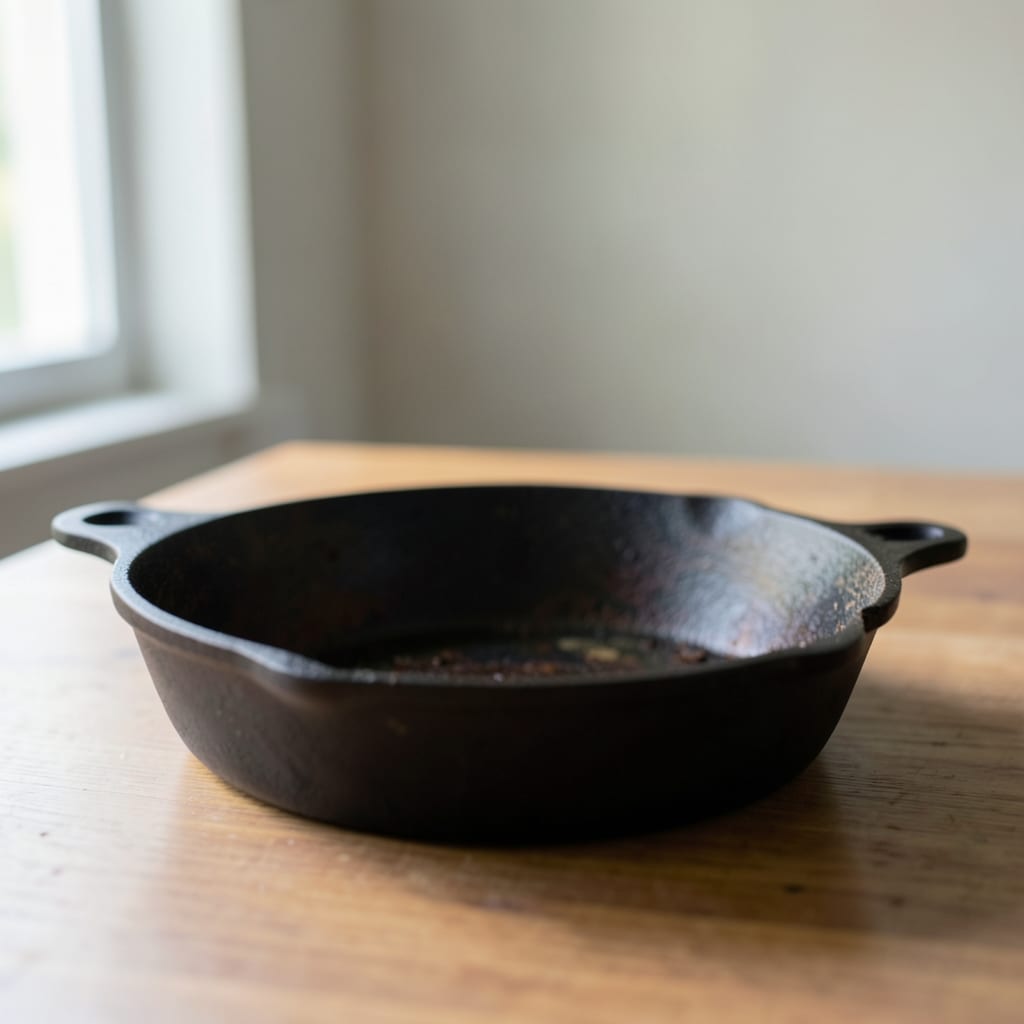
A pair of bypass-pruning shears, their handles wrapped in frayed green tape. They’ve been here since 2018, when they were handed down from Yvette’s father after he swore they’d outlast him.
The tape was added after the first branch snapped off clean—but the wrong way—and left a jagged stump that took three tries to fix.
They taught us that pruning isn’t about speed. The shears now skip every third cut, forcing a pause to reassess. And the tape? It’s the only thing holding the handle together after the last time they slipped in wet wood. We keep them anyway.
Wooden plant label
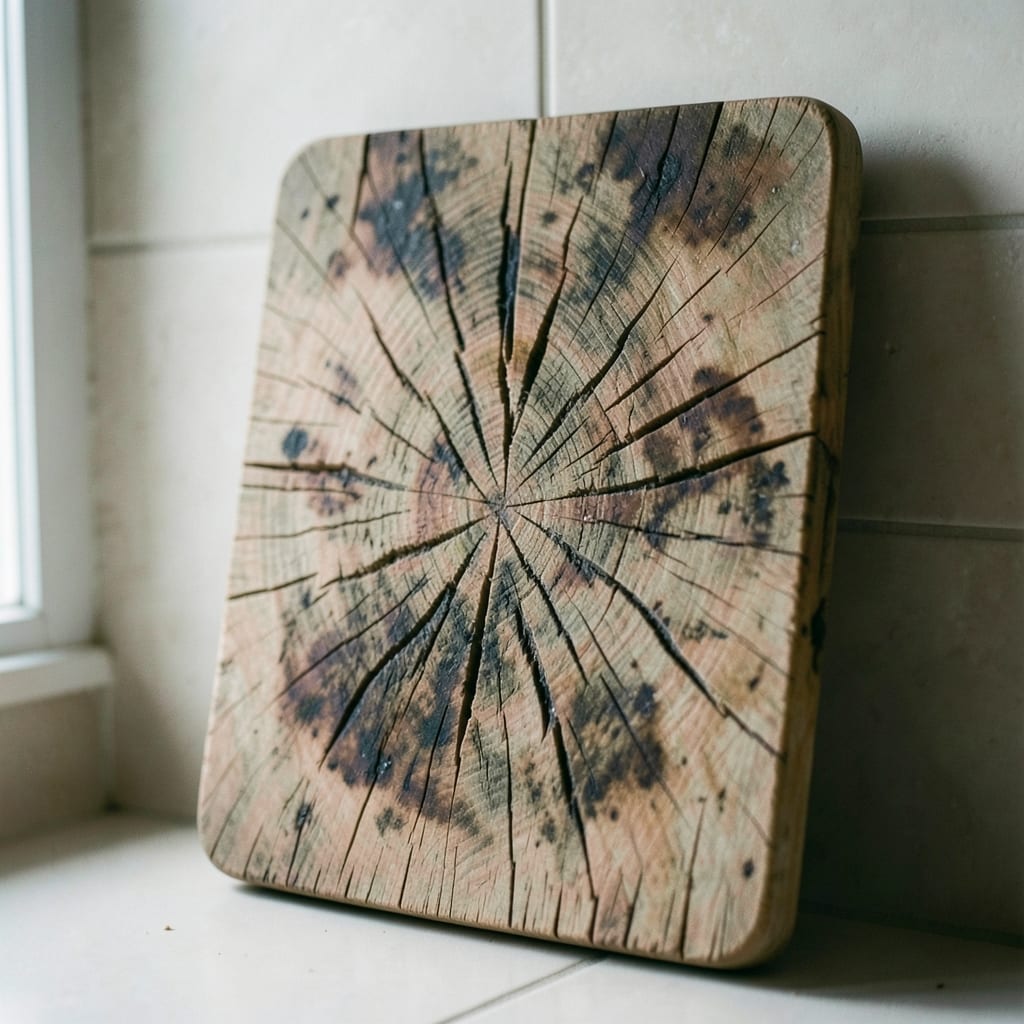
A splintered wooden tag, carved by hand and left unvarnished. It’s been here since the first garden notes were scribbled on it in pencil—then erased, rewritten, and erased again. The pencil lead broke off in 2020, leaving a permanent gray smudge where the date should be.
It taught us that labels aren’t about permanence. They’re about reminder: *this* is the basil that bolted in July, *this* is the tomato that refused to ripen. Now we cross out what didn’t work instead of throwing the tag away.
Garden hose
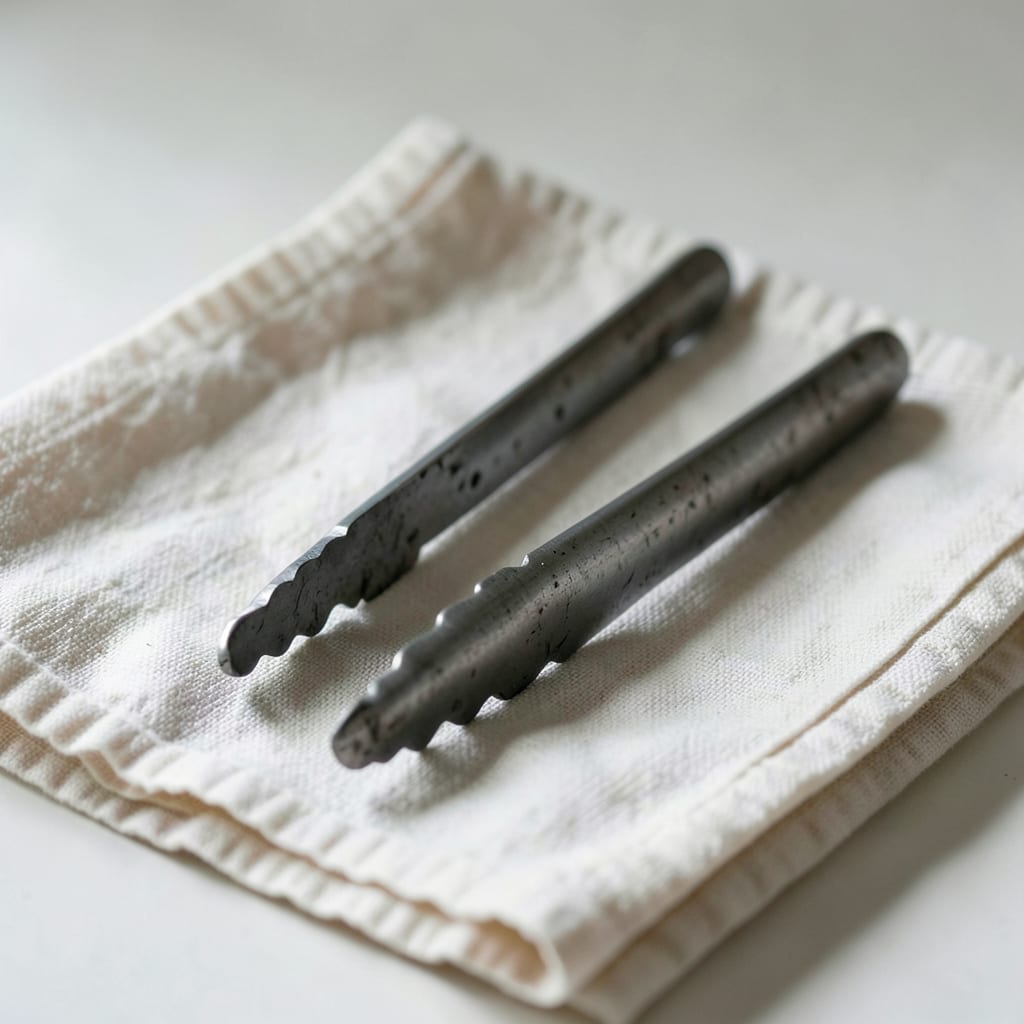
A 25-foot black rubber hose with a kink near the nozzle. It’s been here since 2015, when it replaced a cheaper one that split after two summers. The kink was intentional—after the third time it tangled itself into a knot, we bent it permanently to save time.
It taught us that shortcuts hide in convenience. The kink means less dragging, but it also means less reach. Now we plan beds closer to the tap, and we never coil it loosely again. It’s the ugliest tool in the shed, but it’s the one that never quits.
Stone
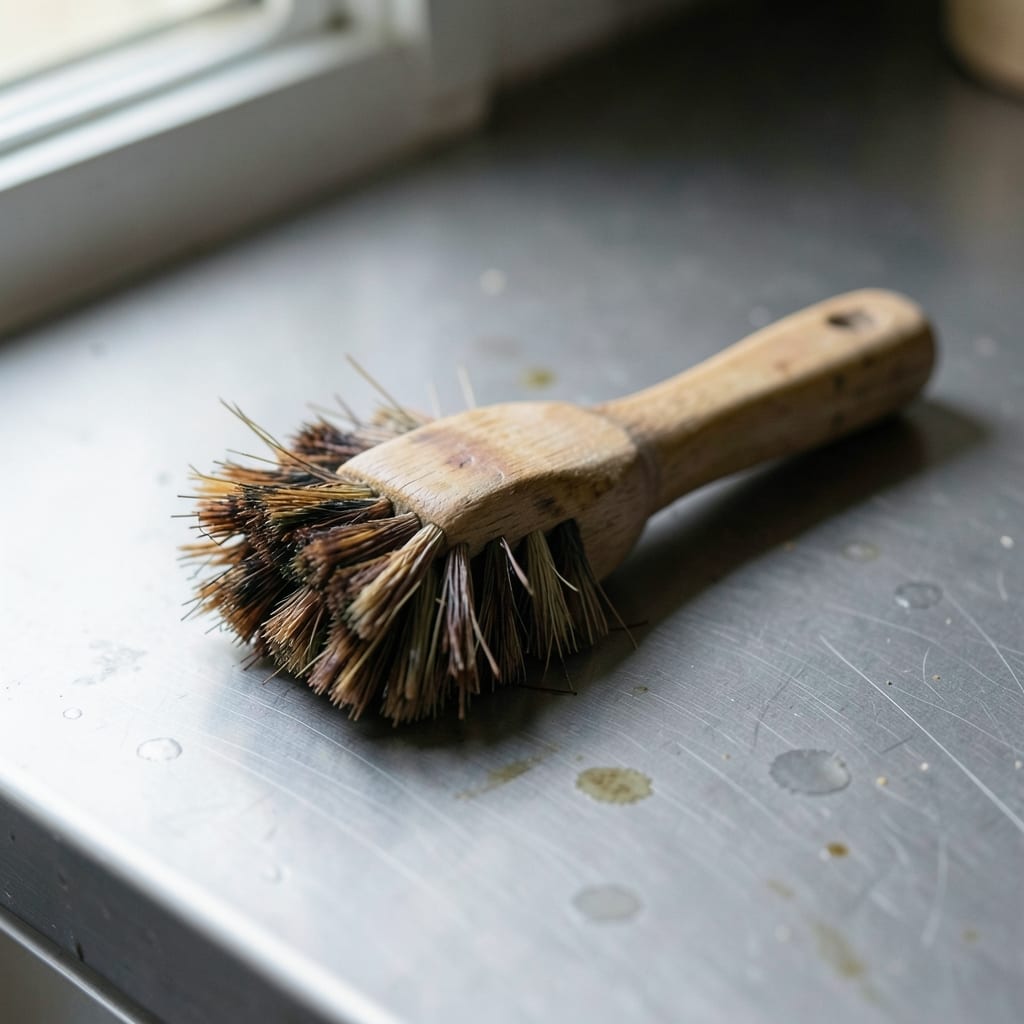
A flat river stone, smooth on one side, rough on the other. It’s been here since the first raised bed was built in 2016, used to weigh down row covers in windy springs. The rough side is where the soil stuck after the last time it was left out overnight.
It taught us that some tools don’t need names. It’s just a weight, but it’s the one thing that’s never failed. Now it sits in the corner of the workbench—not for use, but as a reminder that the simplest solutions last the longest.
What is not in the drawer
This work doesn’t depend on things that complicate. There are no fancy pH meters, no branded seed packets, no ‘perfect’ compost blends. What you’ll find here is built on what’s always worked, not what’s trendy.
Deliberately absent
- Digital soil sensors (they lie more than they help)
- Pre-mixed fertilizers (we’d rather you know *why* a plant needs nitrogen)
- Branded tools (the best ones are the ones that break before you do)
- ‘Miracle-grow’ promises (plants don’t care about hype)
Behind the scenes

I am Yvette Tremblay, Founder & Editor. I’m the one who still checks the underside of leaves for aphids before writing about them, who replants the same failed seed three times just to see, and who has calluses on her thumbs from years of wrestling with stubborn roots.
The first time I burned a sapling trying to ‘hurry’ its growth, my grandmother handed me a trowel and said, ‘Patience is the only fertilizer that doesn’t wash away.’ I’ve been waiting ever since.
Yvette Tremblay, age 12
What any of this matters to you
These things—the shears, the stone, the worn-out hose—are why the advice here doesn’t sound like a catalog. They’re why we warn you about the basil that bolts, the tomato that refuses to ripen, the hose that kinks when you need it most.
Gardening isn’t about perfection; it’s about the things that *actually* happen in dirt.
Every page here is built on the same rules: what’s been tested, what’s been broken, and what’s been fixed with duct tape and hope. If you’re here to grow something, you’re in the right place.
The advice here is written by someone who’s dropped a shovel on their foot, overwatered until the roots rotted, and still planted the seed. You’ll get the real story—not the one that ends with a perfect photo.
The guides are grouped by category: Advice, Aphids, Blooming, Companion Plants, Container Gardens and Diseases.