
Plants
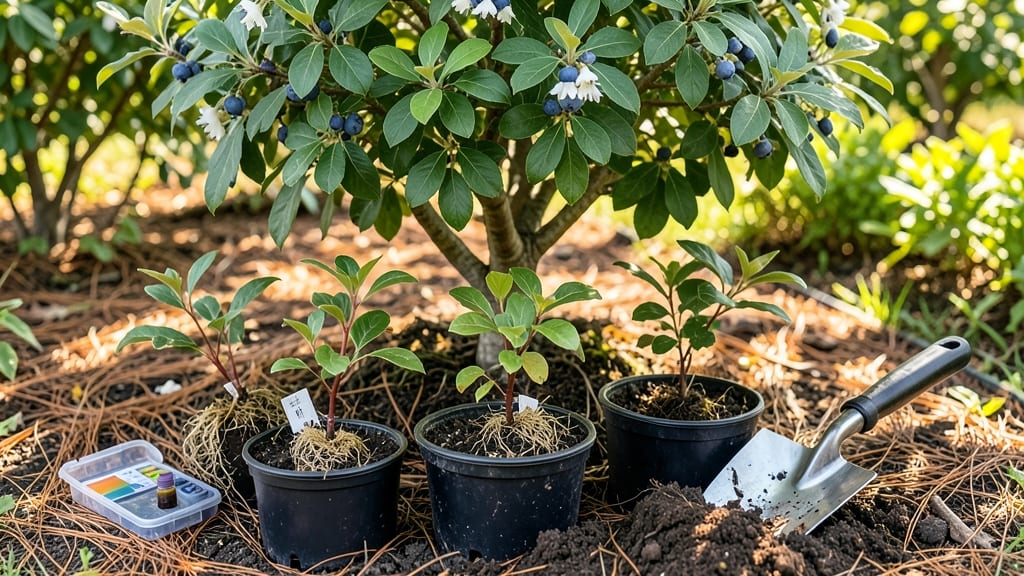
Planting blueberries in New Jersey isn’t just about picking a month—it’s about matching your variety to NJ’s unique chill-hour zones for the best fruit set. Whether you’re growing Jersey blueberries or other cold-hardy types, timing is everything to avoid frost damage or weak root establishment.
New Jersey’s 6a-7b climate means your 🫐 blueberry bushes need precise planting windows: late April to early June (after the last frost) or fall (September–October). But here’s the catch: some varieties thrive in spring, while others prefer fall—so choosing the right time depends on your bush’s chill-hour needs.
I’ll break down the exact months for each variety, from northern highbush to southern highbush, so you can plant with confidence. Plus, I’ll share NJ-specific soil prep tips to ensure your bushes take root and produce bountiful harvests from mid-July to August.
Ready to grow blueberries that outperform the average garden? Let’s get started with the timing and techniques that work best in your backyard.
Best planting months for NJ blueberries based on chill-hour requirements
New Jersey’s USDA zones 6a-7b create a unique challenge for blueberry growers—coastal areas like Cape May have fewer chill hours (200-400), while inland regions like Sussex County can reach 1,000+ chill hours. This means your blueberry variety choice directly impacts planting success.
Most NJ gardeners should focus on highbush varieties like 'Bluecrop' (600-800 hours) or 'Jersey' (400-600 hours), while rabbiteye varieties (900+ hours) thrive only in southern NJ.
The ideal planting window in NJ spans two seasons: late April to early June (after last frost) or September to October (before first frost). Fall planting gives roots time to establish before winter, while spring planting avoids drought stress during summer.
However, coastal gardeners should plant in late fall (November) to prevent winter dieback from salt spray exposure.
Pro Tip: Check your local last frost date—northern NJ (e.g., Bergen County) averages April 15, while southern NJ (e.g., Atlantic City) can be 2 weeks earlier. Use the NJ State Climate Office or Rutgers Cooperative Extension for precise data.
NJ Blueberry Planting Timeline by Variety
| Variety Type | Chill Hours Needed | Best Planting Months | NJ Region Fit |
|---|---|---|---|
| Highbush (e.g., Bluecrop) | 600-800 hours | April-May or Sept-Oct | Statewide (best for zones 6b-7a) |
| Half-High (e.g., Top Hat) | 400-600 hours | April-May or Sept-Oct | Coastal (zones 6a-7a) |
| RabbitEye (e.g., Tifblue) | 900+ hours | April-May only | Southern NJ (zones 7b+) |
| Low-Chill (e.g., Premier) | 200-400 hours | November (coastal only) | Cape May/Salem |
⚠️ Warning: Planting rabbiteye varieties in northern NJ (zones 6a-6b) risks poor fruit set due to insufficient chill hours.
For spring planting, aim to get bushes in the ground 4-6 weeks before your area’s last frost date.
This gives roots time to establish before summer heat arrives. Fall planting, however, offers a longer window—September to early November—but avoid planting after October 15 in northern NJ to prevent frost damage to new roots.
Microclimates matter! Coastal NJ (e.g., Atlantic City) has warmer winters and fewer chill hours, making low-chill varieties like 'Premier' ideal. Inland areas (e.g., Morris County) can handle higher-chill varieties like 'Patriot' (800-1,000 hours). Use the Rutgers Garden Instructor tool to map your exact chill hours.
If you’re unsure about your chill-hour zone, start with Bluecrop or Jersey—they’re the most NJ-adapted varieties and produce reliably across zones 6a-7b. For container growing, choose half-high varieties like 'Top Hat' (400-600 hours) to fit urban spaces while meeting chill requirements.
Remember: Soil temperature matters just as much as air temperature. Blueberry roots need soil temps above 45°F to thrive. Use a soil thermometer to confirm—planting when soil is 50-60°F ensures faster root establishment. In cooler inland areas, wait until mid-May for spring planting.
For organic gardeners, consider bare-root plants in late winter (February-March) and pot them up until spring planting. This method gives you earlier access to varieties and avoids nursery stockouts. Just keep them moist but not soggy until transplanting.
🌱 Key Takeaway: Match your blueberry variety to your NJ chill zone, plant in late April-June or September-October, and prioritize acidic, well-draining soil for first-year success.
Best planting months for NJ blueberries based on chill-hour requirements
New Jersey’s USDA zones 6a-7b create a unique challenge for blueberry growers—some areas get 800+ chill hours, while coastal regions may see only 300-500 hours. This variance means your planting window and variety choice must align with your specific microclimate to avoid poor fruit set or winter damage.
For spring planting (the most common method), aim for late April to early June—after your average last frost date (typically mid-April inland, early May near the coast). Fall planting (September-October) works too, giving roots time to establish before winter, but requires soil temperatures above 50°F.
Chill hours determine which varieties thrive in your area. Northern NJ (zones 6a) can handle 800+ hour varieties like 'Bluecrop,' while southern NJ (zones 7a-7b) should focus on 300-500 hour types like 'Top Hat' or 'Sunshine Blue.' Planting the wrong variety wastes time and money—your bushes may bloom but produce no fruit.
| Planting Window | Chill-Hour Range | Best Varieties | NJ Region Fit |
|---|---|---|---|
| Late April - Early June | 800+ hours | Bluecrop, Jersey, Patriot | Northern NJ (zones 6a) |
| Late April - Early June | 500-700 hours | Duke, Legacy, Aurora | Central NJ (zones 6b-7a) |
| Late April - Early June | 300-500 hours | Top Hat, Sunshine Blue, Pink Lemonade | Southern NJ (zones 7a-7b) |
| September - October | All ranges | Any (check dormancy) | All NJ regions |
Coastal gardeners should plant 1-2 weeks later than inland areas due to delayed frost dates. Check NJ State Climate Office frost maps for your exact location—even a 10-mile difference can shift your planting window by 7-10 days.
For example, Cape May averages last frosts on April 20, while Morristown sees them by April 5.
Pro tip: Bare-root plants (sold dormant) can handle spring planting better than container-grown ones. If buying potted blueberries, wait until soil temps reach 50°F—use a soil thermometer to confirm. Container plants also need extra watering during establishment, so plan for consistent moisture in their first year.
Remember: Fall planting reduces transplant shock because bushes establish roots before winter. But if you choose this method, mulch heavily (4-6 inches) to protect roots from freeze-thaw cycles. Use pine straw or shredded leaves—they acidify soil slowly over time, a bonus for blueberries!