
Trees
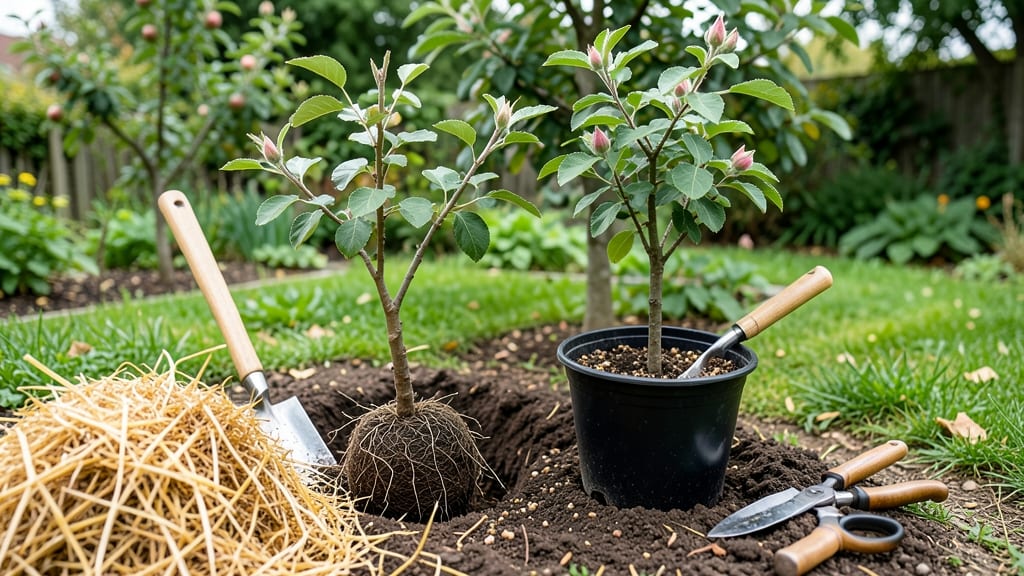
Timing your Apple Tree 🍎 planting in Alabama isn't just about the calendar—it's about survival. With the state's unpredictable frost patterns and warm winters, planting too early risks frost damage, while waiting too long means your tree won't establish roots before summer's brutal heat.
Get this window right, and you're setting up decades of homegrown fruit.
Alabama's 7a-8b USDA zones mean you've got just a 4-6 week window each year to plant your Apple Tree 🍎 successfully. The ideal time falls between late winter and early spring, when the ground is workable but before buds begin to swell—typically February through March.
This timing ensures your tree gets the chill hours it needs while avoiding late frosts that could devastate young plants.
But here's the catch: not all apple varieties thrive equally in Alabama's climate. Some need more chill hours than others, and some varieties are simply better suited to handle the state's humidity and occasional late frosts.
I'll walk you through how to choose the right variety for your specific location and how to prepare your planting site for maximum success.
Once you've got your timing and variety nailed down, the real work begins with proper care. We're talking soil prep, watering schedules that account for Alabama's extreme heat, and protective measures for those unexpected cold snaps.
Let me show you exactly how to give your Apple Tree 🍎 the best possible start—so you can enjoy fresh, homegrown apples for years to come.
Alabama apple tree planting timeline by chill-hour Zone
Alabama’s diverse climate—from the cool mountains of the north to the warmer southern plains—means chill-hour requirements dictate when and where you can successfully plant apple trees.
The state spans USDA Zones 7a to 8b, with chill-hour needs ranging from 300 to 900 hours below 45°F. Planting at the wrong time can leave your tree vulnerable to late frosts or struggling to establish roots before summer heat.
Let’s break down the ideal planting windows for each zone.
First, determine your chill-hour zone using the USDA Plant Hardiness Zone Map or local agricultural extension data. Northern Alabama (e.g., Huntsville) typically falls in Zone 7a with 900+ chill hours, while southern counties (e.g., Mobile) are in Zone 8b with as few as 300 chill hours.
Choose apple varieties that match your zone’s chill requirements—Fuji or Gala for high-chill areas, Anna or Dorsett Golden for low-chill zones.
For bare-root trees, the best time to plant is late winter to early spring (February–March), before buds swell but after the ground thaws. Container-grown trees offer more flexibility and can be planted year-round except in extreme heat or cold.
However, planting in fall (October–November) risks frost damage to new roots, so spring is ideal for most Alabama gardeners.
Here’s a quick reference for Alabama’s chill-hour zones and planting windows:
If you’re in a transition zone (e.g., near the Tennessee border), err on the side of earlier planting (February) to avoid late frosts. For southern Alabama, April planting reduces frost risk but may delay root establishment.
Always check your local Alabama Cooperative Extension Service for last-frost dates—some years, frost lingers into April, especially in higher elevations.
Pro tip: Plant on a cool, cloudy day to reduce transplant shock. Water deeply before and after planting to encourage root growth. Mulch with 3–4 inches of organic mulch (wood chips or straw) to retain moisture and regulate soil temperature.
Avoid planting during Alabama’s peak heat (June–August), as high temperatures stress young trees.
For container-grown trees, you can plant anytime except in extreme heat or cold, but spring is still best. These trees are less vulnerable to frost because their roots are already established in pots.
However, they’ll need consistent watering and protection from summer heat stress, which is intense in Alabama’s Zone 8b areas.
Finally, consider microclimates in your yard. A south-facing slope warms up faster in spring, while a north-facing area may stay colder longer. Use these microclimates to your advantage—plant frost-sensitive varieties in warmer spots and hardier varieties in cooler areas.
With the right timing and variety, your apple tree will thrive and reward you with homegrown fruit for decades.
🌱
Frost-free date calculator: Alabama’s risk zones and planting safeguards
Alabama’s frost dates vary dramatically by county—some areas like North Alabama (e.g., Huntsville) average last frosts by March 15, while South Alabama (e.g., Mobile) may see frost as late as April 15.
Planting too early in northern zones risks frost damage to new growth, while southern zones can handle slightly later plantings. Always check your local USDA Plant Hardiness Zone and Alabama A&M Extension’s frost maps for precision.
To calculate your safe planting window, subtract 4-6 weeks from your area’s average last frost date. For example, if your last frost is March 20, plant by February 15 for bare-root trees or March 1 for container-grown trees.
Use this as a flexible guideline, not a rigid rule—weather patterns shift yearly.
🌡️ Pro Tip: Monitor National Weather Service forecasts 2 weeks before planting. If a cold snap is predicted, delay planting until temperatures stabilize above 40°F for 5+ days. Even a single night below 32°F can damage young apple trees.
⚠️ Critical Warning: Late-Frost Risks in Alabama
North Alabama (Zones 7a-7b): 30% chance of frost after March 15. Use frost cloth or plant near south-facing walls for microclimate protection.
Central Alabama (Zone 8a): 15% chance of frost after March 25. Choose cold-hardy varieties like Anna or Dorsett Golden.
South Alabama (Zone 8b): 5% chance of frost after April 1. Plant container-grown trees in late March to avoid early cold snaps.
For extra protection, select dwarf or semi-dwarf rootstocks (e.g., M.9 or B.9), which establish roots faster and recover quicker from frost. Pair this with a 3-inch layer of mulch (straw or pine bark) to insulate roots. In high-risk zones, consider row covers for the first 2 growing seasons.
If you’re planting in spring (April-May), opt for container-grown trees over bare-root. Their established root systems handle Alabama’s 90°F+ heat better. Water deeply 2-3 times per week for the first month to encourage root spread before summer drought sets in.
🌱 Remember: Alabama’s humid summers and clay-heavy soil create unique challenges. Combine your frost-free date with soil prep (amend clay with compost) and pruning (open canopy for airflow) to maximize your tree’s survival odds. With the right timing and care, your apple tree will thrive for decades.