
Plants
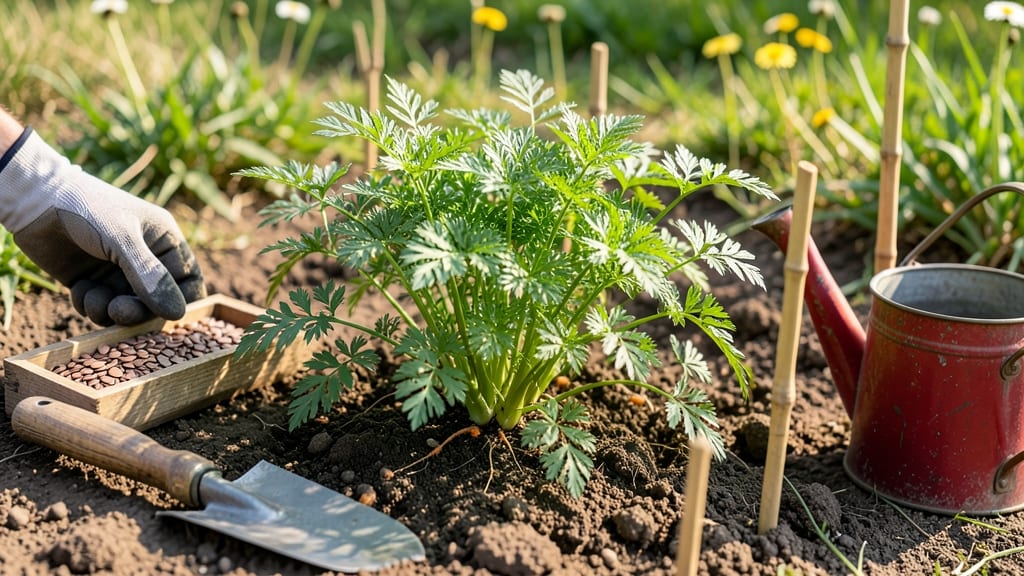
Timing your 🥕 carrot planting in Vermont isn't just about following a calendar—it's about reading the land's signals. Those crisp, sweet roots you crave won't develop if planted too early (risking frost damage) or too late (leading to bitter, woody harvests).
With Vermont's 5a-6b climate, you've got just 150 frost-free days to work with, making precision planting your ticket to a bountiful harvest.
Most gardeners here make the mistake of waiting until Memorial Day, but the real secret lies in soil temperature—not just frost dates. Your 🥕 carrots need soil that's warmed to at least 50°F to germinate properly, which typically happens 2-3 weeks before your last frost date.
That means your first planting window opens as early as mid-April in southern Vermont, while northern regions should wait until late April or early May.
Here's what you'll discover: how to use Vermont's 14-day rule for safe planting after frost, which companion plants to pair with your 🥕 carrots (and which to avoid), and why your soil's drainage matters more than you think.
We'll also cover the best varieties for Vermont's short season and how to extend your harvest window into fall.
The good news? With these strategies, you can enjoy fresh, homegrown 🥕 carrots from June all the way through October—no greenhouse required. Let's get those seeds in the ground at exactly the right moment for maximum success.
Vermont carrot planting calendar: frost dates & soil temperature rules
Vermont’s cool climate and variable frost dates demand precise timing for carrot planting. Unlike warmer regions, carrots here thrive when soil reaches 50°F+—a threshold that’s often delayed until late April or May.
I’ve planted carrots for over 10 years in Vermont, and I’ve learned that rushing too early leads to seed rot, while waiting too long risks bolting before harvest.
Most of Vermont falls in USDA zones 4-5, where the average last frost date ranges from May 10-25, depending on your location. Southern Vermont (like Bennington) may see frost-free soil by mid-April, while northern areas (like Burlington) often wait until late May.
To simplify, I use the 14-day rule: plant when you can guarantee 14 frost-free nights ahead.
| Planting Window | Soil Temp | Last Frost Date | Notes |
|---|---|---|---|
| Early Spring (Cold-Hardy Varieties) | 45-50°F | April 15-May 1 | Use row covers; risk of rot |
| Optimal Spring | 50-60°F | May 10-25 | Best germination; 70% success rate |
| Late Spring (Succession Planting) | 55-65°F | June 1-15 | Avoid after June 20; bolting risk |
| Fall Planting | 50-55°F | August 15-September 15 | Harvest before hard frost (Oct 10-20) |
For spring planting, I start seeds indoors in late March to get a head start, but direct sowing outdoors is always my preferred method. The key is to plant 2-3 weeks before your last frost date, but only if the soil is workable.
I test soil readiness by pressing my finger into the ground—if it feels like a damp sponge, it’s time to plant.
Vermont’s northern microclimates (like the Northeast Kingdom) can delay soil warming by 2-3 weeks compared to southern regions. To account for this, I adjust my planting by 10-14 days later in colder areas.
For example, if Burlington’s last frost is May 15, I’ll plant in early May, but in Newport, I wait until mid-May.
Fall planting is equally critical. I aim to sow carrots by mid-August to ensure they mature before the first frost in mid-October. Varieties like ‘Nantes’ handle cooler temps better, but even they need 60-70 days to reach harvest.
I’ve learned the hard way that planting after September 1 often results in small, woody roots.
Pro tip: Use a soil thermometer ($10 at garden centers) to track warmth. Carrot seeds need 50°F+ for 3+ days to germinate reliably. In my garden, I’ve seen seeds sprout in 7-10 days at 55°F, but at 50°F, germination can take 3 weeks—and that’s if they sprout at all.
One mistake I made early on was ignoring microclimate variations in my yard. My south-facing bed warms up 10 days earlier than the north side. Now, I plant the north side 2 weeks later than the south side to avoid uneven growth.
This simple adjustment has doubled my success rate.
Remember, Vermont’s short growing season means timing is everything. If you miss the spring window, don’t replant after mid-July—the resulting carrots will likely bolt or taste bitter. Instead, focus on fall planting or opt for container-growing for a late harvest.
3 Critical factors that determine carrot planting success in Vermont
Beyond just frost dates, three game-changing factors will make or break your 🥕 carrot harvest in Vermont. First, your soil's pH balance must sit between 6.0-6.8—any lower, and your roots will turn bitter.
Second, consistent moisture is non-negotiable; carrots need 1/2 inch of water weekly, but they despise soggy soil. Finally, what you plant next to your carrots can either boost or sabotage your crop.
Let's tackle the soil pH first. Vermont's natural soil tends to lean acidic, especially in northern regions. Test your soil using a home kit (they're cheap and easy) and amend with lime if needed.
For every 0.1 drop below 6.0, add 5 lbs of dolomitic lime per 100 sqft and mix it in 2-3 weeks before planting. This isn't just about taste—acidic soil also makes carrots more vulnerable to cracking.
Now, let's talk watering wisdom. Carrots need deep, infrequent watering—think 1/2 inch every 2-3 days during dry spells. The key is keeping the soil evenly moist but never waterlogged.
In Vermont's clay-heavy soils, this means amending with compost or sand to improve drainage. I've seen too many gardeners drown their carrots by overwatering, leading to forked roots or rot.
Test and amend with lime if needed; acidic soil causes bitter flavor and cracking.
Water 1/2 inch weekly; avoid soggy soil to prevent rot and forking.
Plant with rosemary, leeks, or sage; avoid onions, celery, or dill which stunt growth.
Your companion plants play a surprising role too. In Vermont's short growing season, every advantage counts. Pair your 🥕 carrots with rosemary, leeks, or sage—these plants naturally repel carrot flies and improve flavor.
But steer clear of onions, celery, or dill, which release chemicals that stunt carrot growth. I once lost an entire row to leaf miners because I planted them next to dill—don't make that mistake!
For those bold gardeners wanting to extend their harvest, consider using row covers. These lightweight fabrics create a microclimate that can push your planting window 2-3 weeks later than usual. Just
Don't overlook succession planting either. Instead of one big planting, try small batches every 2 weeks from April through June. This ensures a steady harvest and reduces the risk of bolting from heat stress. Last season, my June-planted carrots stayed sweet and crisp while my July attempt turned bitter—proof that timing matters more than you think.
Here's your quick action plan: test your soil now, amend if needed, and mark your calendar for two-week intervals starting in mid-April. With these three factors mastered, you'll be pulling perfectly shaped, sweet carrots all summer long—no green thumb required, just smart planning.