
Companion Plants
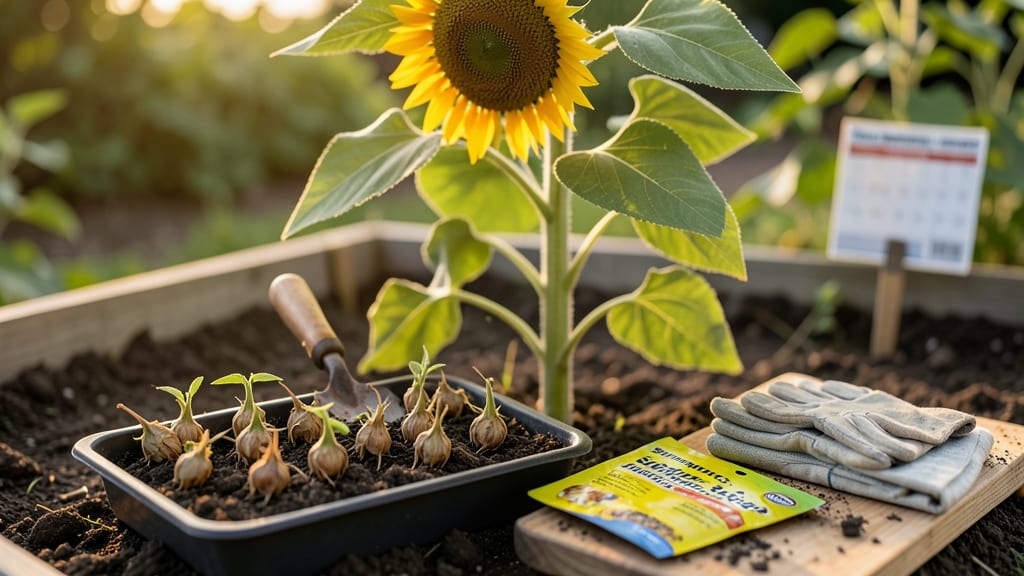
Timing when you should plant sunflower seeds in Ohio just right is the secret to growing those towering, eye-catching blooms that attract pollinators and brighten up your garden. Plant too early, and frost could nip your dreams in the bud—too late, and you might miss the summer spectacle entirely.
Since Ohio's USDA Zones 5-6 bring unique challenges like unpredictable spring weather and varying frost dates, getting the schedule perfect is key.
Most Ohio gardeners aim to sow sunflower seeds after the last frost date, typically between mid-April and early May, but the exact timing depends on your microclimate and the variety you choose.
Whether you're dreaming of 12-foot giants or cheerful dwarf varieties, understanding soil temperature and regional climate factors will help you avoid common mistakes that stunt growth. Let me walk you through the ideal planting windows and what to watch for in Ohio's ever-changing weather.
Did you know sunflowers are annuals in this climate, meaning they complete their life cycle in just one season? That makes timing even more critical—once planted, they grow fast, and missing the window could leave you with underwhelming blooms.
We'll cover everything from soil prep to adjusting for late frosts, so you can confidently plant your 🌻 seeds at the perfect moment for maximum height and beauty.
Ready to transform your garden into a sunflower paradise? I'll break down the best months to plant, how to prepare your soil, and what to do if Ohio's weather throws you a curveball.
Let's get those seeds in the ground at the right time for the tallest, healthiest sunflowers your yard has ever seen.
Ohio sunflower planting calendar by month: best dates for zone 5-6 success
Ohio's USDA Zones 5-6 offer a 75-90 day growing window for sunflowers, but timing is everything. Plant too early and risk frost damage to tender seedlings, while late plantings may produce smaller blooms before winter.
Here's my month-by-month guide tailored to Ohio's climate, including soil temperature requirements and maturity timing for different varieties.
Sunflowers thrive when soil temperatures reach 55°F (13°C)—a key threshold Ohio gardeners should monitor. In most years, this occurs between mid-April and early May in southern Ohio (Zone 6) and late April to mid-May in northern Ohio (Zone 5).
Use a soil thermometer to confirm readiness rather than relying solely on calendar dates.
For giant varieties (like 'Mammoth' or 'Russian Giant'), aim for April 15–May 15 planting to ensure they reach 10-12 feet tall before frost. Dwarf varieties (e.g., 'Teddy Bear') can tolerate later plantings up to June 1, though they'll bloom smaller if sown after June 15.
Ohio's average last frost dates range from April 15 (southern Ohio) to May 1 (northern Ohio), but microclimates matter. Urban areas may experience frost 1-2 weeks later due to heat island effects, while rural zones often warm up faster. Always have row covers ready for unexpected late frosts.
Here's my Ohio-specific planting timeline for sunflowers, accounting for variety maturity and frost risk:
For succession planting, sow seeds every 2-3 weeks from April through early June to enjoy continuous blooms. This works especially well for dwarf varieties, which mature faster (60-75 days). Space seeds 1-2 inches apart and thin to 6-12 inches apart when seedlings reach 4 inches tall.
Pro tip: Ohio's humid summers can lead to powdery mildew. Plant resistant varieties like 'Autumn Beauty' or 'ProCut' (for cut flowers) and ensure 6-8 hours of sunlight daily to prevent fungal issues. Mulch with straw to maintain even soil moisture without encouraging disease.
Remember that Ohio's first frost typically arrives between October 15-30, so plan your planting window to ensure sunflowers reach 50% of their mature height before winter. Giant varieties need at least 90 days to bloom—don't cut it close!
🌻
5 Critical factors that determine your Ohio sunflower planting time
Ohio’s unpredictable spring weather can turn even the most eager gardener’s timing into a guessing game. To nail your sunflower planting window, focus on these five critical factors that separate successful blooms from stunted growth.
From soil temperature to microclimates, each plays a pivotal role in Ohio’s USDA Zones 5-6.
First, last frost dates are your foundation—but Ohio’s average May 15th date varies wildly. Check your local historical records; some years, frost lingers until June 1st, while others see early warmth by April 20th. Use the National Weather Service or your county extension office for precision.
Next, soil warmth matters more than air temperature. Sunflower seeds need soil at 50-60°F to germinate. A soil thermometer ($10 at garden centers) is your best tool—plant only when readings hit 55°F consistently for 3-5 days.
In Ohio, this typically aligns with late April to early May, but urban areas warm faster than rural fields.
- 1. Last Frost Date: Ohio’s average is May 15, but verify your local 10-year average—some areas see frost until June 1.
- 2. Soil Temperature: Plant when soil hits 55°F+ (use a soil thermometer); urban areas warm 1-2 weeks earlier than rural.
- 3. Sunflower Variety Maturity: Dwarf varieties (60 days) can plant 2 weeks earlier than giant types (120 days).
- 4. Microclimate Differences: South-facing beds warm 3-5 days faster than north-facing; raised beds heat up 1 week earlier.
- 5. Ohio’s Weather Whiplash: Late May frosts or June heatwaves can shift your window—always have a backup planting plan.
Your sunflower variety also dictates timing. Dwarf varieties (like ‘Teddy Bear’, 60 days to maturity) can start as early as April 15th in protected microclimates, while giant types (e.g., ‘Mammoth’, 120 days) need to wait until May 1st to avoid bolting or frost damage. Confetti sunflowers (edible petals) thrive with a June 1st planting for late-summer harvests.
Ohio’s microclimates create another layer of complexity. A south-facing garden bed might be ready for planting 3-5 days earlier than a north-facing one, while raised beds warm up 1 week faster than in-ground soil.
Urban gardens with concrete or pavement nearby can experience heat islands, accelerating soil warmth by up to 10 days compared to rural areas.
Finally, Ohio’s weather unpredictability demands flexibility. A late-May frost (not uncommon) can devastate early plantings, while a June heatwave might push your window earlier. Always have a succession planting plan: sow a second batch 2 weeks later if your first planting faces setbacks.
For maximum blooms, stagger plantings every 10-14 days from April 20th to May 15th.