
Plants
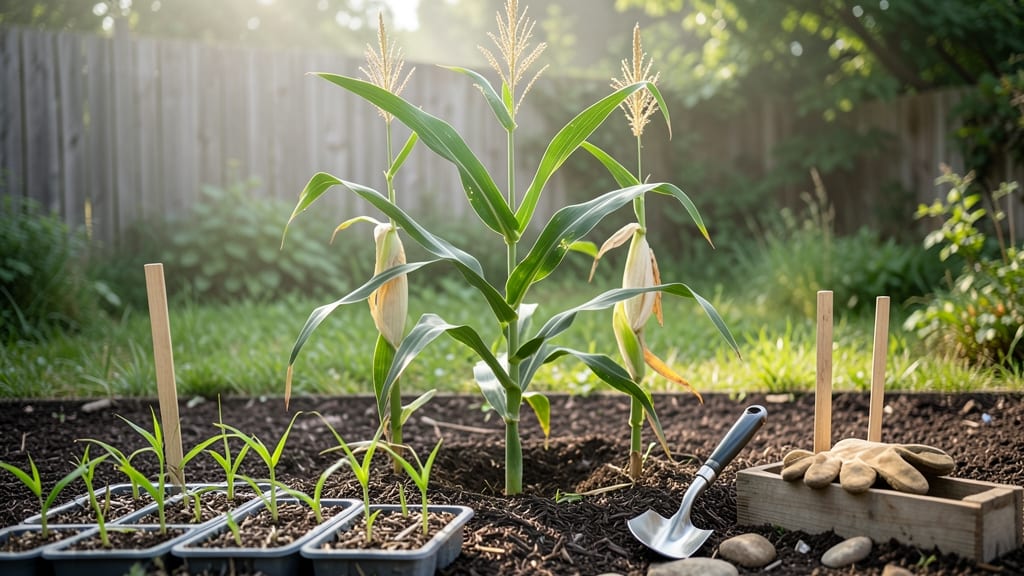
Planting corn in Tennessee isn't a one-size-fits-all task—getting the timing wrong could mean the difference between a bumper crop of 🌽 and a disappointing harvest. With frost dates varying dramatically from the mountains to the valleys, knowing when to plant corn in your specific county is the key to success.
Most Tennessee gardeners follow the April 15 to May 31 window, but that's just the starting point. Soil temperatures, elevation, and even your county's microclimate can shift that timeline by weeks.
In USDA zones 6a-7b, waiting until the ground reaches 60°F ensures strong germination, while early planters in western Tennessee might start as early as late March.
This guide breaks down the exact planting windows for Tennessee's three main regions—East, Middle, and West—so you can align your schedule with local frost patterns. Whether you're growing sweet corn for summer meals or field corn for fall storage, precision timing is your secret weapon for a thriving crop.
Ready to avoid frost damage and maximize your yield? Let's dive into the county-specific dates that will transform your corn-growing strategy for 2024 and beyond.
Tennessee’s corn planting zones: county-by-county frost dates
Tennessee’s corn planting schedule hinges on last-frost dates, which shift dramatically from the mountain counties to the Mississippi River Valley. In East Tennessee (e.g., Sevier, Cocke), average last frosts hit April 15–20, while West Tennessee (e.g., Shelby, Fayette) often sees frost-free soil by March 15–30.
Middle Tennessee (e.g., Davidson, Rutherford) falls in between, typically April 1–10.
Corn thrives when soil temperatures stay above 60°F for 10+ days, so planting too early in cooler regions risks stunted growth. USDA hardiness zones 6b–7a (most of TN) demand patience—waiting for consistent warmth is critical.
For example, Johnson City’s last frost averages April 25, while Memphis’ is often March 20.
Here’s how to align your planting with local frost data and corn maturity timelines to avoid frost damage during vulnerable seedling stages:
For precision planting, check the UT Extension’s frost maps or your local Cooperative Extension Service. They provide 10-year averages that account for microclimates like river valleys or hilltops.
For example, Nashville’s frost dates can vary by 5–7 days depending on whether you’re near the Cumberland River or on higher ground.
If you’re in a transition zone (e.g., Knoxville), err on the side of planting later. Corn seeds won’t germinate below 50°F, and seedlings are extremely frost-sensitive. A 50°F night after planting can kill young plants outright.
Pro tip: Use black plastic mulch to warm soil faster in cooler regions. This can shave 7–10 days off your planting window by raising soil temps by 5–10°F. Just remove it once plants are 6 inches tall to avoid overheating roots.
For southern Tennessee counties (e.g., Dyer, Obion), you might even squeeze in a second planting in early June for a fall harvest. However, this requires fast-maturing varieties (60–75 days) to avoid first-frost risks in October.
Always cross-reference with Almanac frost predictions—they’re not perfect, but they’re better than guessing. And if you’re new to corn growing, start with 1–2 rows of a reliable variety like ‘Silver Queen’ or ‘Peaches and Cream’ to test your local timing.
🌽
How to adjust planting dates for Tennessee’s microclimates
Tennessee’s microclimates can shift corn planting windows by weeks—even within the same county. A mountain valley might have 30 days earlier planting than a nearby ridge due to temperature differences. To avoid late-spring frosts, use these adjustments based on your specific conditions.
First, check your soil temperature—corn needs 60°F+ soil to germinate. A soil thermometer ($15–$25) is your best tool. Plant only when the ground stays above this threshold for 5 consecutive days.
In eastern Tennessee, this often means waiting until mid-April, while western counties can start as early as late March.
Elevation plays a huge role: every 1,000 feet higher delays planting by 3–5 days. For example, Sevier County’s mountains (avg. 1,500 ft) may need to wait until April 20, while Shelby County’s lowlands (avg.
300 ft) can plant by April 1. Use the USDA Plant Hardiness Zone Map to estimate your local delay.
- Soil Temp: Wait until 60°F+ for 5 days (use a thermometer).
- Elevation: Add 3–5 days per 1,000 ft above 500 ft.
- Frost Risk: Check local frost-free dates (UT Extension provides county data).
- Urban Heat: Cities like Nashville can plant 7–10 days earlier than rural areas.
- Water Access: Delay if drought is forecasted (check NOAA Climate Predictions).
Don’t rely solely on calendar dates. Use frost-free calculators like the one from the UT Agricultural Extension (free online). Input your ZIP code and it’ll show your historical frost risk—critical for avoiding blackened seedlings.
For example, Johnson City has a 20% chance of frost after May 1, while Memphis rarely sees frost after mid-November.
If you’re in a high-risk frost zone, consider starter rows—plant a small test patch 2 weeks earlier to gauge soil warmth. Cover seeds with row fabric ($10–$15 per 100 sq ft) if nighttime temps dip below 50°F.
This trick buys you 10–14 extra frost-free days in Appalachian counties like Cocke or Sullivan.
Finally, monitor local weather patterns. A cold snap in May can wipe out young corn—check the National Weather Service’s 14-day forecast before finalizing your planting date.
Pro tip: Western Tennessee gardeners often plant two varieties—one early (e.g., Silver Queen) and one late (e.g., Peaches and Cream)—to hedge against timing risks.