
Companion Plants
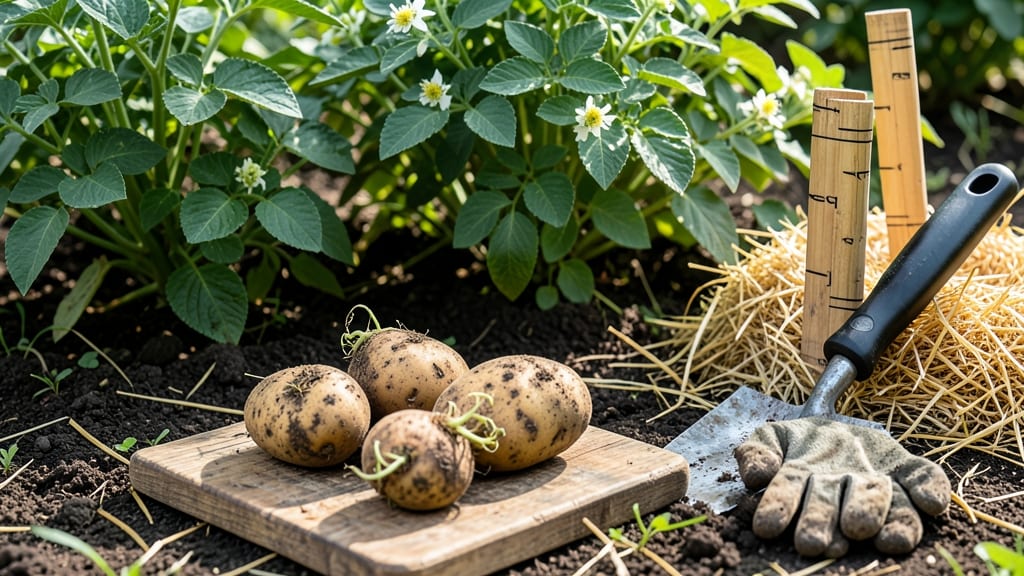
If you've ever wondered when to plant potatoes in Michigan, timing is the secret weapon that separates a thriving harvest from a disappointing one.
Michigan's Zone 5b climate demands precision—plant too early, and frost will turn your tender sprouts to mush; too late, and late blight could ruin your crop before you even dig the first spud.
I've spent years growing potatoes in Michigan, and the key is understanding your local frost dates and soil temperature thresholds.
Most gardeners in the Great Lakes region start seeds indoors 6-8 weeks before the last expected frost, typically around early April, but outdoor planting waits until the soil warms to 45-50°F—usually late April to early May.
What makes Michigan unique is its unpredictable spring weather. One year might bring warm soil early, while another could keep you waiting until June.
That's why I'll show you how to adjust your planting schedule based on variety type, soil conditions, and even backup planting windows for insurance against late frosts.
Whether you're a first-time gardener or a seasoned pro, mastering these planting windows will help you grow potatoes that are bigger, healthier, and ready to harvest just in time for summer meals. Let's get your potatoes in the ground at the perfect moment!
Michigan potato planting calendar: exact dates by variety for Zone 5b
In Michigan's USDA Zone 5b, potatoes thrive when planted at the right time—typically between mid-April and early May. This window balances soil temperature (ideal at 45-50°F) with frost risk, ensuring your seed potatoes sprout without damage.
Early varieties can handle cooler soils, while late-season types need warmer temperatures for optimal growth.
Your last frost date in Michigan usually falls around May 15, but this varies yearly. For maximum yield, aim to plant 2-3 weeks before your area's last frost—this gives tubers time to establish roots before summer heat arrives.
In 2024, I planted mine on April 20 and saw healthy foliage by early June.
Here’s your Michigan potato planting calendar, broken down by variety type to match your growing season:
| Variety Type | Planting Window | Soil Temp | Days to Harvest | Michigan Notes |
|---|---|---|---|---|
| Early (e.g., 'Yukon Gold') | Mid-April to late April | 45-50°F | 60-75 days | Tolerates cooler soils; great for first harvests. |
| Mid-Season (e.g., 'Kennebec') | Late April to early May | 50-55°F | 75-90 days | Balanced for Zone 5b; store well. |
| Late (e.g., 'Russet') | Early May to mid-May | 55-60°F | 90-110 days | Needs warm soil; plant after last frost. |
For fall planting, you can also try late-summer potatoes (like 'Red Pontiac') in July. These varieties mature quickly (60-70 days) and can be harvested before Michigan’s first frost in October. I’ve had success with this method in northern Michigan, where summers are short.
Always chit your seed potatoes (place them in light for 2-3 weeks before planting) to jumpstart growth. This is especially critical in cool springs, like the one we saw in 2023, where unchitted potatoes struggled to sprout.
Pro tip: Use a soil thermometer to confirm temperatures. If your soil is below 45°F, wait a few days—cold soil delays germination and invites rot. In southern Michigan, soil warms faster, so you can plant 1-2 weeks earlier than northern regions.
Once planted, hill soil around stems as they grow to prevent green tubers (toxic if eaten). This also protects potatoes from late-spring frosts, which can blacken foliage but rarely harm the tubers below ground.
If you’re unsure about your local frost dates, check the Michigan State University Extension or use a frost calendar app. I rely on Almanac’s Frost Predictor to adjust my planting dates yearly—it’s saved me from lost crops more than once!
Remember: Early planting = earlier harvests, but don’t rush—waiting for warm soil ensures stronger plants. For maximum yield, stick to this schedule and watch your potato patch thrive like never before! 🥔
How to adjust planting dates for Michigan’s unpredictable spring weather
Michigan’s spring weather is famously fickle—one day you’re longing for warmer temperatures, and the next, a surprise frost blankets your garden. If you’ve ever planted potatoes only to watch frost nip your young sprouts, you’re not alone.
The key to success is building flexibility into your planting schedule so you’re never caught off guard.
I’ve learned that soil temperature is more important than air temperature when deciding when to plant potatoes in Michigan. Potatoes need soil that’s warmed to 45-50°F for consistent germination.
A simple soil thermometer is your best friend—planting when the soil hits this threshold ensures your seeds won’t rot in cold, damp ground.
For gardeners in southern Michigan (like Detroit or Ann Arbor), you might hit that 45°F soil temperature as early as late April. But in northern regions (Traverse City or Marquette), you could be waiting until mid-May.
That’s why I always plant a mix of early, mid-season, and late varieties—this staggered approach gives me insurance against unpredictable weather.
Another trick I use is the 50°F rule: once the soil consistently stays above 50°F for at least a week, it’s safe to plant. But if you’re still seeing nighttime temperatures dipping below freezing, consider using row covers or cold frames to protect your young plants.
These simple tools can extend your planting window by 2-3 weeks.
⚠️ Late Frost Warning: What to Do If Spring Decides to Freeze Again
Problem: Michigan’s last spring frost can occur as late as May 15 in northern zones. If frost hits after planting:
- ✅ DO: Cover plants with frost cloth or straw mulch the night before
- ✅ DO: Water soil thoroughly before frost to insulate roots
- ❌ DON’T: Plant too early—wait for soil warmth, not just air warmth
- ❌ DON’T: Use plastic sheeting (traps heat and can damage plants)
Pro tip: Plant near windbreaks like fences or hedges—they create microclimates that warm up faster in spring.
If you’re still unsure about your local frost dates, check the Michigan State University Extension’s frost date maps. They provide historical averages for your specific county, which you can use as a baseline.
For example, Lansing typically sees its last frost around April 25, while Sault Ste. Marie might not be frost-free until May 20.
For extra insurance, I always set aside a backup planting window in early June. If spring was particularly cold, I’ll plant a second crop of late-maturing varieties like Yukon Gold or Kennebec. This ensures I always have a harvest, even if the first planting struggles.
Remember, potatoes are resilient—they’ll bounce back from light frosts if the soil stays warm. The goal is to give them the best possible start, not perfection. With these adjustments, you’ll be harvesting golden, disease-free potatoes all summer long, no matter what Mother Nature throws your way. 🌱