
Trees
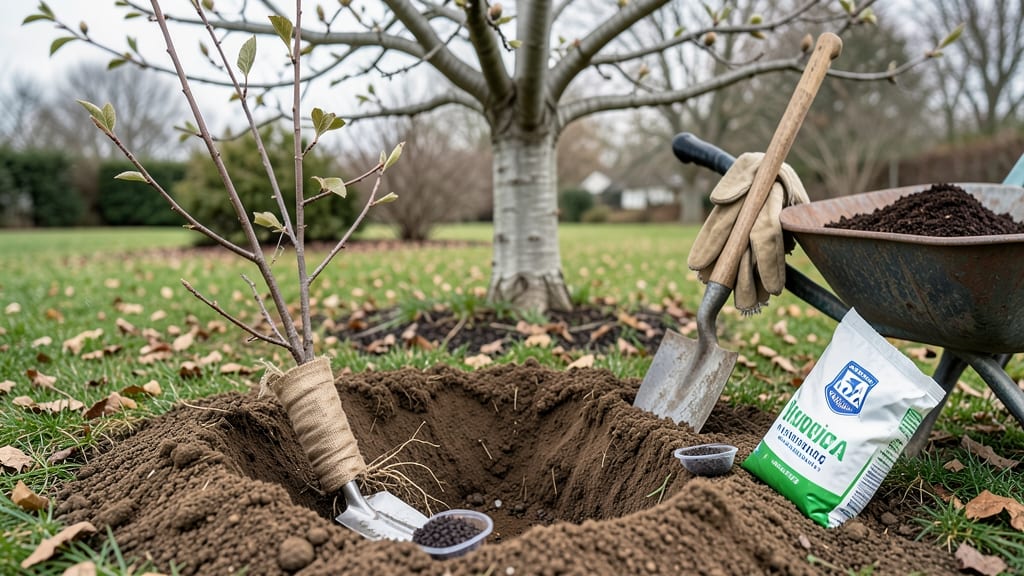
Planting fruit trees in Iowa at the wrong time can mean the difference between a thriving orchard and wasted effort. With Zone 5B-6A winters that test even the hardiest varieties, timing your 🍎🍐🍑 planting window is the most important step for long-term success.
Most gardeners know spring is ideal, but did you realize fall planting can actually give your trees a head start? The key lies in understanding when soil temperatures rise above 40°F—typically by late March—but also avoiding the late frost risks that linger until mid-April.
This delicate balance explains why so many Iowa fruit trees struggle when planted too early.
In this guide, I’ll break down exactly when to plant each variety—from apples that need 800+ chill hours to peaches with lower requirements—plus how to adjust for Iowa’s unpredictable microclimates. You’ll learn the exact months that work best for your region, whether you’re planting bare-root saplings or container-grown trees.
Ready to transform your backyard into a productive orchard? Let’s dive into the science-backed planting schedule that’ll have your fruit trees thriving for decades—no guesswork required.
Iowa’s best fruit tree planting months by chill-hour requirements
Iowa’s Zone 5B-6A climate demands precise timing for fruit tree success. The chill-hour requirement—the number of hours below 45°F needed for dormancy—dictates when to plant. Most apple and pear varieties thrive with 800-1,000 chill hours, while peaches and plums need 500-800 chill hours.
Planting outside this window risks poor fruit set or winter damage.
For bare-root trees, the ideal window is late winter to early spring (February–April), before buds break. Container-grown trees offer flexibility, allowing planting until fall dormancy (September–October). Iowa’s last frost date (around April 15) signals the safest time to plant, but soil temperature must reach 40°F for root growth.
| Variety | Chill Hours | Best Planting Month | Soil Temp Threshold |
|---|---|---|---|
| Apple (Honeycrisp) | 800-1,000 | March–April | 40°F+ |
| Cherry (Montmorency) | 900-1,100 | March–April | 40°F+ |
| Peach (Redhaven) | 500-700 | March–April or Sept | 45°F+ |
| Pear (Bartlett) | 600-800 | March–April | 40°F+ |
| Plum (Stanley) | 400-600 | March–April or Sept | 45°F+ |
Spring planting (March–April) gives roots time to establish before summer heat, while fall planting (September–October) allows trees to root before winter dormancy. Peaches and plums with lower chill-hour needs can handle fall planting better than apples, which require more cold exposure.
Always check Iowa State Extension’s frost maps for your county’s last frost date.
Soil preparation is key: Amend clay-heavy Iowa soils with compost or organic matter to improve drainage. A well-draining site prevents root rot, especially for container-grown trees. Dig a hole twice as wide as the root ball but no deeper—planting too deep suffocates roots.
Water deeply after planting to eliminate air pockets and encourage root contact with soil.
For northern Iowa (Zone 5A), prioritize early spring planting (March) to avoid late frosts. In southern Iowa (Zone 6A), fall planting (September) works well for varieties like peaches and plums.
Use mulch (straw or wood chips) to insulate roots in both seasons. Avoid mulching too close to the trunk—keep it 3 inches away to prevent rot.
If you miss the ideal window, container-grown trees can be planted in May or early June, but expect slower establishment.
Always water deeply 1-2 times per week the first year to support root growth. Drip irrigation is ideal for consistent moisture without wetting foliage, reducing fungal risks like apple scab.
Local nurseries like Iowa Fruit Growers or Bare Root Trees of Iowa offer varieties pre-selected for Zone 5B-6A chill hours. Ask for dwarf or semi-dwarf options if space is limited—they yield fruit faster and require less pruning.
Pair pollinating varieties (e.g., two apple trees) for successful fruit set, and space trees 15-25 feet apart for airflow and sunlight access.
Monitor your tree’s progress with Iowa State’s Climate Tool (https://climate.iastate.edu). Enter your ZIP code to track chill hours accumulated and adjust care accordingly. For example, if your peach tree gets 600 chill hours by February, it’s ready for spring planting. If it’s short, consider a low-chill variety like ‘Relinda’ peach.
Remember: Patience is key. Fruit trees may take 3-
How to adjust planting timing for Iowa’s microclimates and frost zones
Iowa’s climate varies dramatically from north to south, with northern counties (Zone 4b) experiencing earlier frost than southern regions (Zone 6a). This means your planting window could shift by 2-4 weeks depending on location.
For example, Des Moines typically has a safe planting window from mid-April to early May, while Sioux City’s window opens later, around late April.
Urban areas also face unique challenges, like heat islands that can delay frost by 1-2 weeks.
If you’re planting in a city like Cedar Rapids, monitor local weather stations or use the Iowa State University’s Mesonet to track soil temperatures—aim for 40°F+ for bare-root trees or 50°F+ for container-grown varieties.
⚠️ Critical Warning: Avoid Planting During Frost Risk
Planting bare-root trees when frost is forecasted within 2 weeks can kill young roots. Use this rule: Wait until after the last average frost date (usually April 15 in most of Iowa) or plant in fall (September-October) when trees are dormant.
🌡️ Pro Tip: Check the Iowa State Climate Summary for your county’s frost-free dates.
For northern Iowa (e.g., Waterloo, Mason City), prioritize early-maturing varieties like ‘Haralson’ peaches (500 chill hours) or ‘Montmorency’ cherries (600 chill hours), which establish faster.
In southern Iowa (e.g., Ottumwa, Burlington), you can push the envelope with late-spring plantings (May) for varieties needing 800+ chill hours, such as ‘Honeycrisp’ apples.
Windbreaks—like evergreen hedges or fence rows—can extend your planting window by 1-2 weeks by reducing wind chill. Plant on the lee side (sheltered side) of the windbreak and add 3-4 inches of mulch to insulate roots.
In rural areas, soil warms faster than in cities, so you can plant 10-14 days earlier if your land isn’t shaded by buildings.
Use this microclimate