
Flowers
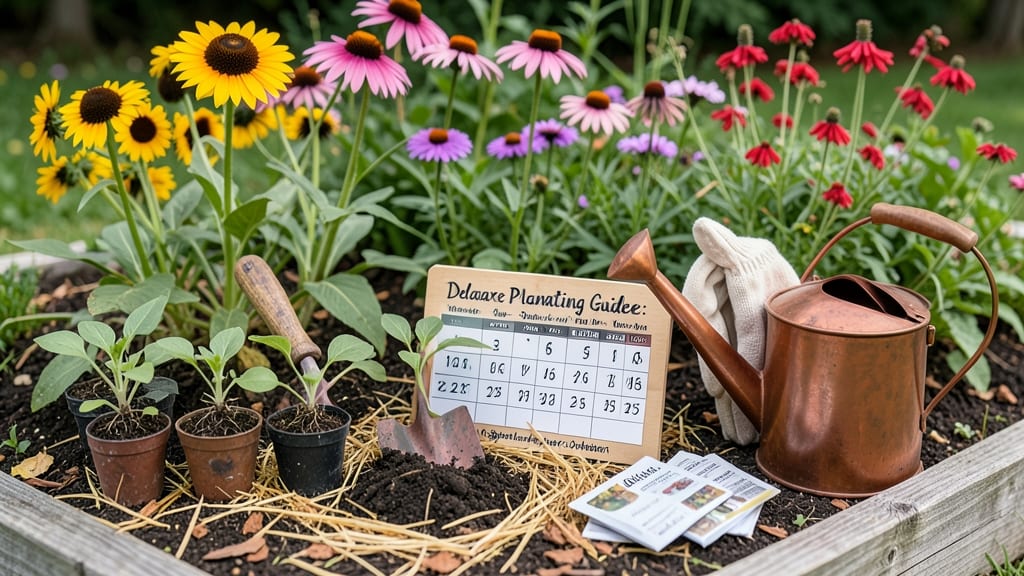
If you’ve ever stared at a seed packet wondering when to plant flowers in Delaware without getting lost in frost-date guesswork, you’re not alone.
The First State’s mix of coastal breezes and inland warmth means your timing can make or break that dream garden—whether you’re chasing spring blooms or fall color.
Here’s the secret: Delaware’s USDA Zone 7a gives you two prime windows—early spring (March-May) and fall (September-October)—but getting it wrong means wilting petals or stunted growth.
I’ll break down the exact frost dates that separate success from disappointment, plus the top flowers that thrive here (like daylilies and coneflowers) and when to tuck them into the soil.
We’ll also tackle Delaware’s tricky microclimates—coastal areas stay cooler longer, while inland zones warm up faster. That means your neighbor’s perfect timing might not work for your garden. Ready to plant with confidence? Let’s dive into the schedule that’ll have your yard bursting with 🌸 blooms all season.
From mulching tips to beat late frosts to choosing late-blooming varieties for fall, you’ll leave here with a foolproof plan. No more second-guessing—just vibrant flowers that match Delaware’s 180 frost-free days of growing magic.
Delaware’s frost dates & best flower planting months by type
Delaware’s USDA Zone 7b offers a 180-day frost-free season, but knowing the last and first frost dates is critical for timing. The average last frost falls between April 15–May 1, while the first frost typically arrives October 15–November 1.
These dates determine when to plant annuals, perennials, bulbs, and fall flowers for vibrant blooms.
For spring planting, focus on March–May—this window ensures your flowers establish roots before summer heat. Fall planting (September–October) gives perennials time to root before winter dormancy. Bulbs like tulips and daffodils should go in October–November for spring blooms, while warm-season annuals like marigolds need to wait until after May 1.
Coastal Delaware (e.g., Rehoboth Beach) may experience earlier last frosts (as early as April 1), while inland areas (e.g., Wilmington) might see later frosts (up to May 10). Always check local microclimates—valleys and low-lying areas frost sooner than hillsides.
Here’s your quick-reference planting timeline for Delaware’s most popular flowers, organized by type and frost sensitivity:
| Flower Type | Best Planting Months | Frost Notes | Delaware-Specific Tip |
|---|---|---|---|
| Annuals (e.g., petunias, zinnias) | May 1–June 15 | Wait until after last frost | Use row covers for early starts |
| Perennials (e.g., coneflowers, daylilies) | March–April or September–October | Spring: root before heat; Fall: root before frost | Mulch heavily in fall for winter protection |
| Bulbs (e.g., tulips, daffodils) | October–November | Plant before ground freezes | Coastal areas: plant by October 1 |
| Fall Flowers (e.g., chrysanthemums, asters) | August–September | Start early for late-season blooms | Choose disease-resistant varieties for humidity |
| Tender Perennials (e.g., dahlias, cannas) | May 15–June 1 | Frost-sensitive; wait until warm soil | Dig up tubers before first frost |
Pro tip: Use Delaware’s 10-day forecast to time your planting. If a late frost is predicted in May, delay planting tender annuals until May 15. For perennials, a fall planting in September gives roots time to establish before winter.
Delaware’s humid summers mean evening watering can encourage fungal diseases. Plant moisture-loving flowers like impatiens in partial shade to reduce stress. For drought-tolerant picks (e.g., lavender, sedum), wait until soil is thoroughly dry before watering.
Remember: Cooler microclimates (like wooded areas) may need 2–3 weeks earlier planting than sunny, exposed beds. Always harden off seedlings for 7–10 days before transplanting to avoid shock.
🌱
Top 10 flowers to plant in Delaware (with exact planting windows)
Delaware’s humid summers and mild winters make it ideal for growing a dazzling array of flowers, but not all blooms thrive equally here. I’ve narrowed it down to the top 10 flowers that perform best in Delaware’s USDA Zone 7a, complete with their perfect planting windows and care tips.
These picks ensure vibrant blooms from spring through fall, even with Delaware’s unpredictable weather.
From low-maintenance perennials like coneflowers to showstopping annuals like dahlias, each flower on this list is chosen for its resilience, beauty, and ability to handle Delaware’s coastal breezes and inland heat.
Whether you’re a beginner or a seasoned gardener, these varieties will give you maximum impact with minimal fuss. Let’s dive into the specifics so you can start planting with confidence.
🌸 Pro Tip: Always check your local last frost date (typically April 15–May 1) before planting tender annuals, and opt for fall planting in September–October for perennials to establish strong roots before winter.