
Plants
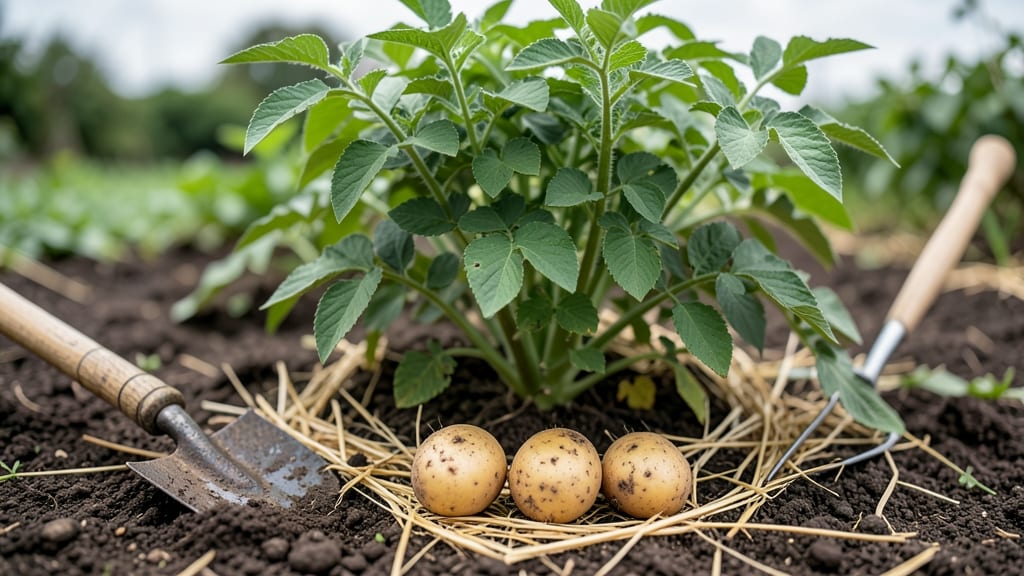
Planting fall potatoes in Texas isn’t just about throwing seed potatoes into the dirt—it’s about outsmarting the heat and first frost to guarantee a harvest. One wrong move, and you’ll either bake your potatoes in summer scorching or lose them to an early freeze.
The key? Timing your planting 60–90 days before your area’s first frost, which varies wildly from North to South Texas.
If you’ve ever watched your potato plants wilt under August’s brutal sun or rot before harvest, you know how critical this window is. I’ve seen gardeners in the Hill Country struggle with stunted tubers while those in the Rio Grande Valley pull perfectly sized potatoes well into November.
The difference? Understanding your local heat zone and adjusting for soil warmth.
In this guide, I’ll break down the exact planting dates for your Texas region, plus soil prep tricks to beat the heat. We’ll cover everything from mulching hacks to cold-hardy varieties that thrive when others fail. Ready to turn your fall potato dreams into a real, frost-proof harvest?
Let’s dive into the strategies that’ll have your 🥔 plants flourishing—even when Texas throws its hottest (or coldest) surprises your way.
Texas heat Zone planting calendar for fall potatoes: exact dates by region
Fall potatoes thrive in Texas when planted at the right time—60 to 90 days before your region’s first frost. But Texas’ varied climate means one-size-fits-all advice won’t work.
North Texas (like Dallas) has earlier frosts than South Texas (like San Antonio), so your planting window must align with your USDA Hardiness Zone and historical frost dates.
For example, Zone 8a (North Texas) typically plants in mid-August, while Zone 9a (South Texas) can wait until early September without frost risk.
Use your local average first frost date as your guide. Subtract 90 days for early varieties (like Yukon Gold) or 60 days for fast-maturing types (like Red Pontiac).
In Texas, this usually lands between late July and early September, but microclimates—like hill country vs. coastal areas—can shift your window by 1-2 weeks. Always check your county’s agricultural extension service for precise data, as Texas A&M provides updated frost maps annually.
Soil temperature is just as critical as air temperature. Potatoes need soil that’s at least 50°F (10°C)—warmer than most Texas gardeners expect for fall planting. Test your soil with a soil thermometer (dig 4 inches deep) before planting.
If your soil is still above 75°F (24°C), wait a week or two to avoid heat stress on young tubers. In North Texas, this often means delaying planting until early August even if frost dates suggest earlier.
Here’s how Texas’ three main regions differ:
| Region | USDA Zones | First Frost | Ideal Planting Window | Key Varieties |
|---|---|---|---|---|
| North Texas | 8a-8b | Mid-November | Late July–Early August | Yukon Gold, Kennebec |
| Central Texas | 8b-9a | Late November | Early–Mid August | Red Pontiac, Purple Viking |
| South Texas | 9a-9b | Early December | Late August–Early September | Sweet Potato (no, not potatoes!), Fingerling |
Adjust your planting date if your area had an early frost last year or if you’re using unusual varieties.
For instance, Russian Banana potatoes mature in 70 days, so they can be planted as late as early September in Zone 9a. Meanwhile, long-day varieties like Kennebec need 90+ days, so they’re best planted in late July in North Texas.
Always match your variety to your region’s daylight hours—Texas’ long summer days help potatoes bulk up faster, but shorter fall days slow growth.
Pro tip: Plant a test row 2 weeks before your ideal window to gauge soil conditions. If your potatoes sprout but grow slowly, wait another week—this often happens in North Texas where August soil can still be too warm.
Conversely, if your soil cools quickly (like in Hill Country), plant earlier to maximize tuber development before frost.
Watch for unpredictable weather patterns—Texas’ erratic rain and heat can throw off your schedule. If a heatwave hits in September, delay planting until temperatures drop below 90°F (32°C) during the day.
Use shade cloth if you must plant early in scorching zones like the Rio Grande Valley. Conversely, if tropical storms delay your planting, prioritize fast-maturing varieties to still get a harvest before frost.
Finally, don’t forget to rotate your planting location every year. Potatoes are heavy feeders, and planting in the same spot depletes soil nutrients.
If your last potato patch was in spring, wait at least 3 years before replanting there—this prevents verticillium wilt and other soil-borne diseases that thrive in Texas’ humid climate.
With these region-specific dates and adjustments, you’ll avoid the #1 mistake Texas gardeners make: planting too late and ending up with small, frost-damaged tubers. Timing is your secret weapon for big, flavorful potatoes**—even in Texas’ tricky fall weather.
5 Critical signs your Texas soil is ready for fall potato planting (and 3 mistakes to avoid)
Fall potatoes in Texas thrive when planted in cooled soil with the right moisture balance. Unlike spring plantings, late summer heat can trick you into thinking soil is ready—until your tubers rot underground.
I’ve learned the hard way that soil temperature and pest activity are the real dealbreakers for fall harvests.
Your first clue is soil temperature. Ideal planting conditions require soil to drop below 80°F (27°C) but stay above 50°F (10°C). Use a soil thermometer to check—this isn’t just guesswork. In North Texas, this window opens around mid-August, while South Texas may wait until early September.
Here’s where most Texas gardeners go wrong: they focus on air temperature instead of soil warmth. A 90°F (32°C) afternoon might feel scorching, but if your soil has cooled overnight, it’s ready. Dig a 6-inch hole—if the soil feels damp but not soggy, you’re golden.
⚠️ 3 Costly Mistakes to Avoid
- Planting too early in hot soil → rotten tubers before harvest.
- Overwatering before roots establish → fungal diseases like late blight.
- Ignoring soil compaction → stunted growth and poor yields.
Texas’ clay-heavy soils need amendments like compost or sand to prevent these issues.
Next, watch for pest activity. Colorado potato beetles and wireworms love fall-planted potatoes. If you spot chewed leaves or grubs in the soil, treat with neem oil or row covers before planting. I once lost an entire bed to wireworms because I didn’t check for them early enough.
Moisture is another red flag. Fall potatoes need consistent dampness, not soggy conditions. Press your finger into the soil—if the top 2 inches dry out quickly, your irrigation system isn’t cutting it. In West Texas, this means drip irrigation is a must, not just sprinklers.
Finally, test your soil pH. Potatoes prefer 5.0–6.5. If your Texas soil tests higher (common in alkaline areas), add sulfur or peat moss to lower it. I once planted in pH 7.2 soil and got tiny, bitter tubers—not worth the effort!
Pro tip: Plant test rows 2 weeks before your target date. If the soil feels right and sprouts appear within 10–14 days, you’re good to go. If not, wait another week—your fall harvest depends on it. 🌱