
Plants
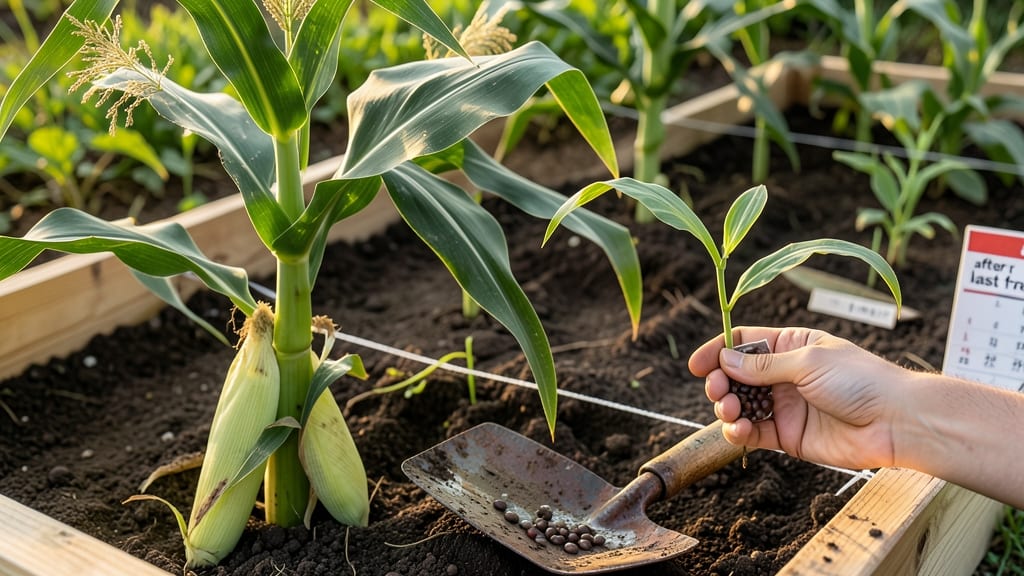
Timing your corn planting perfectly in Middle Tennessee can mean the difference between a bumper crop of sweet 🌽 and a disappointing harvest.
The ideal window runs from April 15 to May 15, but getting it wrong—whether too early or late—can leave your plants vulnerable to frost or summer heat stress.
With USDA Zone 7a conditions, you need to balance soil warmth (at least 60°F) with frost-free dates that typically arrive around March 15. Plant too soon, and cold soil slows germination; wait too long, and your corn may mature just as summer wanes.
The key is patience—waiting those critical 2 weeks after last frost ensures strong, healthy starts.
This guide breaks down exactly how to sync your planting schedule with Middle Tennessee's climate quirks, from elevation differences to soil prep. You'll learn which varieties thrive here, how to adjust for microclimates, and when to start watching for those telltale brown silks that signal harvest time.
Ready to grow corn that outshines your neighbors'? Let's dive into the precise timing and care strategies that'll give you the best possible yield from your garden plot.
Middle Tennessee corn planting calendar: exact weeks before last frost for maximum yields
Middle Tennessee’s USDA Zones 6b-7a offer a 190-day frost-free window—perfect for corn, but timing is everything. Plant too early, and late frosts will kill tender seedlings. Wait too long, and fall fungus or heat stress cuts yields short.
My ideal planting window is April 15–May 15, but I adjust based on soil temps and microclimates.
Corn thrives when soil hits 60°F—use a soil thermometer to confirm. In Nashville’s urban heat islands, soils warm faster than rural areas, so I plant 1–2 weeks earlier there. Meanwhile, high-elevation spots like the Cumberland Plateau may need delayed planting until May 1 to avoid frost.
For maximum yields, I focus on these critical milestones: 2 weeks after last frost (verify via NOAA records or local gardeners), when soil is 60°F+, and nighttime temps stay above 55°F. Skipping these steps risks poor germination or blight.
🌽Key Tip: Use black plastic mulch to warm soil faster in cool springs. This lets me plant 10–14 days earlier without frost risk.
| Planting Window | Soil Temp | Last Frost Buffer | Best Varieties |
|---|---|---|---|
| April 15–April 30 | 60°F+ | 2 weeks after frost | Early: 'Peaches and Cream' (75 days) |
| May 1–May 15 | 65°F+ | 3 weeks after frost | Mid: 'Silver Queen' (90 days) |
| May 16–June 1 | 70°F+ | 4 weeks after frost | Late: 'Bodacious' (110 days) |
*Adjust for elevation: Add 1 week for every 500 ft above sea level.
I avoid planting before April 1 unless using row covers, as late frosts (common in Zone 6b) can wipe out seedlings. Similarly, June planting risks ear rot from summer humidity. For succession planting, I stagger seeds every 2 weeks until June 15 to extend harvests.
🌱Pro Tip: Test soil pH—corn prefers 6.0–6.8. Amend with lime if below 6.0, or sulfur if above 7.0. I add compost at planting for nutrient-rich soil.
Common mistakes? Planting too shallow (seeds need 1–2 inches of depth) or overcrowding (space rows 30–36 inches apart). I also watch for cutworms—use collars around seedlings to prevent damage.
💧Watering Hack: Deep-water 1–2 inches per week, focusing on the root zone. Drip irrigation saves time and reduces foliar diseases compared to overhead sprinklers.
How to verify your local last frost date and adjust planting for Middle Tennessee’s unpredictable spring
Middle Tennessee’s last frost date isn’t set in stone—it can vary by 1-2 weeks depending on your exact location. Nashville’s average last frost is around March 15, but areas like Chattanooga’s higher elevations may see frost as late as April 1.
To avoid planting too early and risking frost damage, I always check three sources: NOAA frost maps, my local Cooperative Extension Service, and my own soil thermometer readings.
Start by visiting the NOAA Climate Data website and searching for your ZIP code’s frost history. Look for the “33% chance” frost date—this gives you a 97% confidence that frost has passed.
For example, if your area’s 33% frost date is March 22, I wait until April 5 to plant, adding a 2-week buffer for safety. This extra time ensures my corn seeds won’t germinate only to be fried by a late frost.
Key Takeaway: Middle Tennessee Frost Buffer Strategy
For gardeners in higher-elevation areas like the Cumberland Plateau, I recommend adding an extra 10-14 days to your buffer. These regions often experience microclimates where frost lingers longer in valleys.
To extend your growing season, I’ve had success with row covers or low tunnels—these can push your planting window back by 3-4 weeks while still protecting young plants.
Don’t forget to monitor soil temperature, not just air temperature. Corn seeds need soil that’s at least 60°F to germinate properly. I use a soil thermometer ($10 at garden centers) to check daily until the reading stays above 60°F for 3+ days.
If your soil is still cold, consider planting early varieties like ‘Early Sunglow’, which matures in just 65 days—perfect for squeezing in a harvest before fall frost.
One common mistake I see is planting too late in May, which can lead to smaller ears or poor pollination as days shorten. Aim to have your corn reach tasseling by mid-July to ensure full development.
For example, if you plant Silver Queen (85-day variety) on April 20, it should tassel around July 10, giving it enough time to mature before the first frost in November.
For those in urban Nashville heat islands, you might push planting back by 1 week—the extra warmth can accelerate growth, but it also increases disease pressure. If you’re unsure, I suggest planting a test row of fast-maturing varieties 2 weeks earlier than your calculated date.
This way, you’ll have a backup if late frost strikes your neighborhood.
Finally, keep a gardening journal to track your local frost dates over the years. I’ve noticed that 2023’s last frost in my garden was March 28, a full 2 weeks later than the NOAA average.
By documenting these variations, you’ll refine your planting schedule each year and maximize your corn yields in Middle Tennessee’s tricky climate. 🌽