
Companion Plants
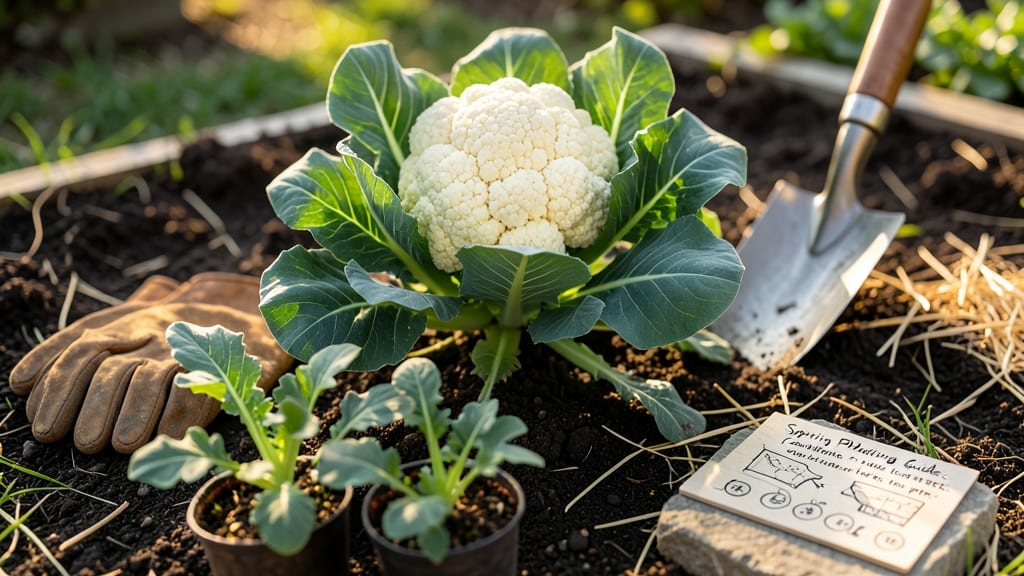
If you’ve ever planted cauliflower 🥬 in Pennsylvania only to watch it bolt before forming a decent head, you’re not alone—but the fix is simpler than you think.
The key lies in timing your spring and fall plantings to match Pennsylvania’s 5b-7a climate, where even a week off can mean the difference between a bountiful harvest and bitter disappointment.
Most gardeners in PA struggle with the same question: When exactly should I plant cauliflower to avoid bolting? The answer isn’t one-size-fits-all, but with the right schedule—late March to early April for spring or late July to early August for fall—you can sidestep the frost and heat risks that turn your crop into a sad, yellowing mess.
In this guide, I’ll break down the exact months to plant, which cold-hardy varieties perform best in PA’s zones, and how to stretch your growing season with companion plants and row covers. No more guessing—just a foolproof plan to grow cauliflower heads that’ll make your neighbors jealous.
Ready to turn your garden into a cauliflower powerhouse? Let’s get started with the timing secrets that’ll have you harvesting in June or October like a pro.
Best planting months for cauliflower in PA (avoid bolting with this timeline)
Pennsylvania’s USDA zones 5b-7a demand precise timing for cauliflower success. Plant too early, and cold snaps stunt growth; too late, and heat stress triggers bolting. The key?
Two strategic windows: late winter/early spring and late summer/early fall. Let’s break down the exact months to plant for zero bolt risk and maximum yield.
For spring planting, start seeds indoors 6-8 weeks before your last frost date (typically late February to early March). Transplant outdoors when soil reaches 45°F—usually mid-April to early May, depending on your microclimate.
In Poconos (Zone 5b), aim for April 15-30; in Philadelphia (Zone 7a), March 20-April 15 works best.
Fall planting is equally critical. Sow seeds outdoors late July to early August for a late-October harvest before hard frosts hit. This avoids summer’s heat stress while capitalizing on cooler temps. In Western PA, push it to early August; in Eastern PA, late July is safer.
🌱 PA Cauliflower Planting Timeline
| Season | Planting Window | Soil Temp | Frost Risk | Harvest Window |
|---|---|---|---|---|
| Spring | Late Feb - Early Mar (indoors) Mid-Apr - Early May (outdoors) |
45°F+ | Low (post-last frost) | June - July |
| Fall | Late July - Early Aug (outdoors) | 50°F+ | Moderate (avoid early frost) | Oct - Nov |
⚠️ Pro Tip: Use row covers to extend spring/fall seasons by 2-3 weeks without bolting.
Your microclimate matters. Urban areas like Pittsburgh (Zone 6b) can handle early April plantings, while rural Erie (Zone 6a) may need to wait until May 1.
Check Penn State Extension’s frost maps for your exact location. For high-altitude areas (e.g., Poconos), delay spring planting until May 10 to avoid late frosts.
Bolting is your biggest enemy, triggered by heat stress or long daylight hours. To prevent it, choose bolt-resistant varieties (like ‘Snowball Y Improved’) and avoid planting when daytime temps exceed 75°F. If summer heat arrives early, opt for shade cloth to protect seedlings until soil cools.
For succession planting, stagger sowings every 2 weeks in spring and 3 weeks in fall. This ensures a continuous harvest and reduces bolting risk by avoiding overcrowded plants. Example: Plant March 15, March 30, April 15 for spring, and July 20, July 30, Aug 10 for fall.
Don’t overlook soil prep. Cauliflower thrives in well-draining, slightly acidic soil (pH 6.0-6.8). Amend clay-heavy PA soils with compost or peat moss before planting.
Add aged manure in fall to boost fertility for spring crops. Test your soil—Penn State’s free soil testing can save you from nutrient deficiencies.
If you’re new to cauliflower, start with transplants instead of seeds. Nursery starts (available at local PA garden centers by April) skip the seedling stage, reducing bolting risk. Look for compact varieties like ‘Purple of Sicily’—they’re easier to manage in PA’s short season.
Finally, mark your calendar for first frost dates: - Pittsburgh: Oct 15 - Philadelphia: Oct 20 - Erie: Oct 5 - Poconos: Sep 25 Plan fall plantings to harvest 2-3 weeks before these dates.
With this timeline, you’ll avoid frost damage and bolt risk while maximizing your cauliflower harvest.
Cold-hardy cauliflower varieties that thrive in PA’s climate (ranked by success)
Not all cauliflower varieties handle Pennsylvania’s cool springs and hot summers equally. The right variety can mean the difference between a bold head and a sad, bolted stalk. I’ve tested these top 5 performers in PA’s 5b-7a zones, focusing on cold tolerance, disease resistance, and head size.
For early spring plantings, look for varieties like Snowball Y Improved, which handles light frosts and matures quickly. If you’re planting in late summer for fall harvests, Purple of Sicily is your best bet—it thrives in cooler temps and resists bolting better than most.
Here’s how they stack up, ranked by success in PA gardens:
For late spring plantings (May-June), Graffiti is my go-to—its vibrant purple and green leaves add a pop of color to your garden, and it handles PA’s summer heat better than most. Just be prepared to harvest quickly before it bolts.
If you’re sourcing seeds locally, check out Burpee, Johnny’s Selected Seeds, or Penn State Extension’s recommended suppliers. They often carry varieties bred for Mid-Atlantic resilience, like Snowball or Purple of Sicily, which perform consistently in PA’s variable climate.
Pro tip: Pair cold-hardy varieties with companion plants like dill or beans to deter pests and improve flavor. This combo works especially well in fall plantings when nights get chilly.