
Plants
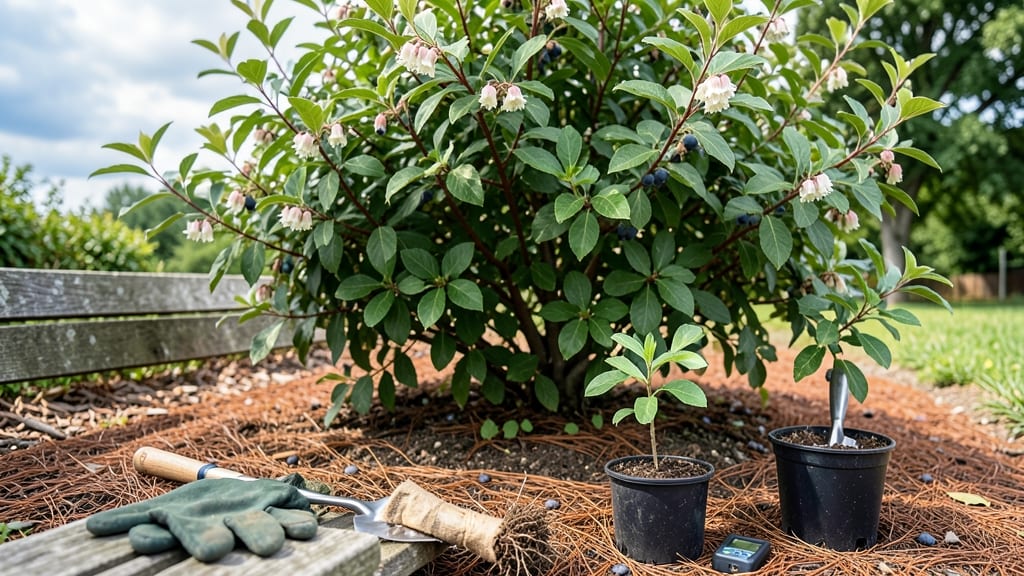
Planting blueberries in Colorado at the wrong time could mean the difference between a thriving bush and one that struggles to survive. With chill-hour requirements and unpredictable frost dates, timing is everything for your 🫐 harvest. Whether you're in the Front Range or Western Slope, getting the window right ensures your plants establish strong roots before winter.
Most Colorado gardeners know spring and fall are the best times, but the exact dates vary by elevation and microclimate. I’ll break down the optimal planting windows—from late April to early June or September to October—so you can match your variety to your local conditions.
This isn’t just about avoiding frost; it’s about giving your blueberries the perfect start for maximum yields.
If you’ve ever wondered why your blueberries aren’t producing as much as you hoped, the answer might be in the timing. The right planting schedule ensures your bushes get the chill hours they need to flower and fruit.
I’ll also share how to prepare your soil, choose the best varieties for your zone, and protect your young plants from late-season surprises.
Ready to grow juicy, homegrown blueberries that outperform store-bought? Let’s dive into the science-backed steps to plant at the ideal time for Colorado’s unique climate. Your future harvest starts now.
Colorado’s blueberry planting zones: chill-hours and microclimates explained
Colorado’s diverse elevation—from 3,000 feet in Denver to over 7,000 feet in Boulder—creates microclimates that drastically affect blueberry planting. The key factor? chill hours, which vary by region.
Northern highbush varieties need 800–1,000 chill hours, while southern highbush types thrive with 250–400 hours. Matching your variety to your zone ensures survival and fruiting.
Most of Colorado falls within USDA Zones 4–7, but altitude trumps zone more often. For example, Grand Junction (Zone 5) has fewer chill hours than Fort Collins (Zone 4), even though they’re close in latitude.
Check your local Cooperative Extension Service data for precise chill-hour maps tailored to your county.
Here’s how to decode your microclimate: Start by noting your elevation above sea level. Every 1,000-foot gain adds ~5°F colder temps. Use this rule to adjust planting windows. For instance, Denver’s 5,280 feet means spring arrives 2–3 weeks later than in Pueblo (4,650 feet).
Blueberries need 6–8 hours of sunlight daily, but high-altitude sites (like Aspen or Telluride) may require partial shade to prevent leaf scorch. Test your spot by observing how long sunlight lingers in summer. If shade covers the area after 4 PM, it’s suitable for blueberries.
Now, let’s break down the three critical regions in Colorado and their ideal planting windows:
| Region | USDA Zone | Chill Hours | Best Varieties | Ideal Planting Window |
|---|---|---|---|---|
| Front Range (Denver, Boulder, Fort Collins) | 5–6 | 800–1,000 | Bluecrop, Jersey, Patriot | Late April–early June or September–October |
| Western Slope (Grand Junction, Durango) | 4–5 | 600–800 | Duke, Bluegold, Legacy | May–June or August–September |
| Eastern Plains (Pueblo, Colorado Springs) | 6–7 | 400–600 | Top Hat, Sunshine Blue, Ozark Blue | April–May or September–October |
If you’re in a high-altitude pocket (like Leadville or Breckenridge), opt for low-chill varieties like Top Hat or Sunshine Blue. These thrive with 400–500 chill hours and tolerate shorter growing seasons.
For the Front Range, northern highbush types like Bluecrop shine, producing heavier yields if planted in acidic, well-draining soil.
Pro tip: Use local frost date data from the National Oceanic and Atmospheric Administration (NOAA). Aim to plant 4–6 weeks before your average last frost date. For example, Denver’s last frost is typically May 1, so plant by April 15 for spring planting.
For fall, shoot for 6–8 weeks before first frost (usually September 15 in Denver).
Colorado’s unpredictable spring thaws can delay planting. If your soil is still frozen or soggy by your target date, wait until it’s workable. Press your foot into the ground—if it springs back, it’s ready.
If not, you risk root rot or poor establishment. Patience here pays off with stronger plants and earlier fruiting.
For container-grown blueberries, you’ve got more flexibility. These can be planted up to 2 weeks later than bare-root varieties since their roots aren’t exposed. Just ensure they’re not root-bound and have adequate drainage.
In containers, blueberries need larger pots (15+ gallons) as they mature to prevent root circling.
Finally, test your soil’s pH before planting. Blueberries demand acidic soil (4.5–5.5). If your soil tests higher, amend it with peat moss or sulfur 2–3 months before planting. This adjustment is non-negotiable—alkaline soil locks out nutrients, stunting growth and fruit production.
Step-by-step planting timeline: when to set bare root vs. container blueberries
Colorado’s two planting windows—spring and fall—offer distinct advantages for blueberries. Fall planting (September-October) gives roots time to establish before winter, while spring planting (late April-early June) avoids late frosts. Your choice depends on your USDA zone and whether you’re using bare-root or container-grown plants.
For high-altitude areas (USDA 4-5), like Grand Junction or Steamboat Springs, prioritize fall planting to maximize root growth before winter dormancy. In lower elevations (USDA 6-7), such as Colorado Springs or Denver, both windows work—but spring planting requires careful frost monitoring.
🌱
📅 Colorado Blueberry Planting Timeline
- August (High-Altitude Areas): Prepare soil by amending with peat moss or sulfur to lower pH to 4.5–5.5. Mark planting spots 4–6 feet apart.
- September (Fall Window): Plant bare-root or container-grown blueberries after soil temps drop below 80°F. Water deeply to settle roots.
- October (Critical for Establishment): Mulch with 3–4 inches of pine needles or wood chips to insulate roots. Avoid fertilizing.
- Late April–Early May (Spring Window): Wait until last frost date (check Almanac.com) and soil is 50°F+. Plant bare-root immediately; container-grown anytime after frost.
- June (Post-Planting Care): Apply 1/2 cup acid-forming fertilizer (e.g., cottonseed meal) and water 1–2 gallons per plant weekly.
Bare-root plants are cheaper and hardier but must be planted within 24 hours of purchase. Container-grown plants offer flexibility but cost more. If using bare-root, soak roots in water + rooting hormone for 1–2 hours before planting.
Monitor your local frost dates closely—late springs in Colorado can bring 28°F dips into June. Use row covers or circulation fans to protect young plants if frost threatens. Mulch thickness matters: thicker mulch = warmer roots in winter and cooler roots in summer.
🪴