
Plants
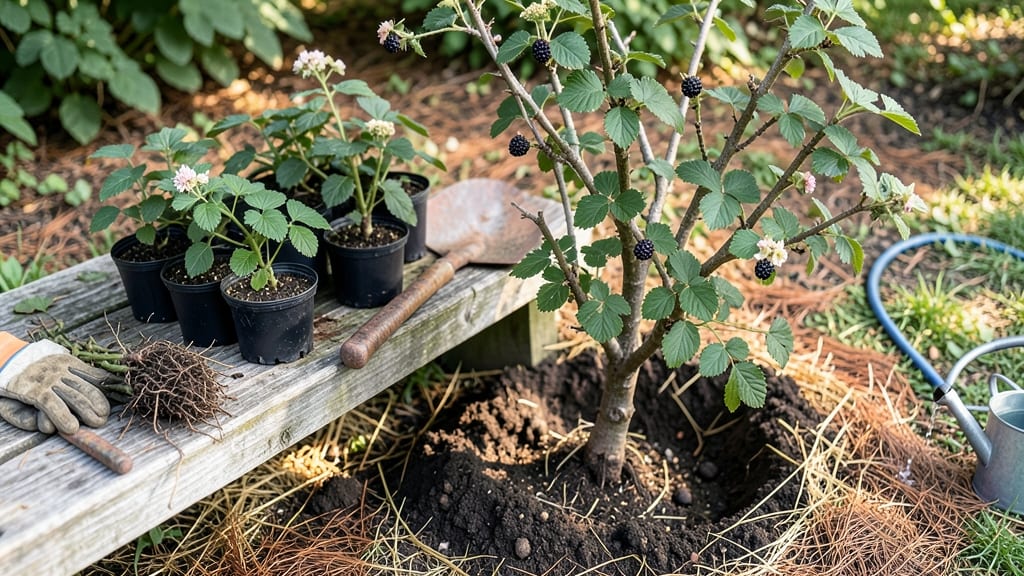
Timing your blackberry planting in Georgia just right could mean the difference between a thriving bush laden with juicy 🫐 or a struggling plant that barely produces fruit. The key lies in understanding Georgia’s unique climate zones and when the soil is primed for growth.
Most gardeners in zones 7b-9a get the best results by planting blackberries in late winter to early spring or during fall. But here’s the catch: fall planting gives your blackberries a head start on root establishment before winter, while spring planting aligns with natural growth cycles.
Which one works better for your Georgia location?
Whether you’re in the Piedmont’s rolling hills or near the coast’s milder climate, I’ll break down the exact planting windows for each variety and how to prepare your soil for maximum success. Let’s get those blackberries in the ground at the perfect time.
From soil prep to post-planting care, I’ve got the step-by-step guide to ensure your blackberries take root strong and produce bountiful harvests from late spring through early fall. Ready to transform your garden into a berry paradise?
Best planting months for Georgia blackberries by variety type
Georgia’s blackberry varieties thrive when planted during two key windows: late winter/early spring or fall. The best time depends on your USDA zone (7b-9a) and whether you’re growing thornless or traditional varieties.
In North Georgia (cooler zones), aim for February-March planting, while South Georgia gardeners can extend into April due to milder winters.
Fall planting (September-October) is ideal for bare-root canes and gives plants time to establish roots before winter. This method works best for everbearing varieties, which produce fruit in both spring and fall. Primocane varieties (like 'Natchez' or 'Ouachita') also benefit from fall planting, as they fruit on new growth.
📋 Georgia Blackberry Planting Guide by Variety
| Variety Type | Best Planting Window | USDA Zones | Key Notes |
|---|---|---|---|
| Thornless (e.g., 'Arapaho', 'Chester') | Late Feb - Early Mar | 7b-9a | Fruits on floricanes (second-year canes); needs winter chill. |
| Everbearing (e.g., 'Natchez', 'O’Neal') | Sep - Early Oct | 8a-9a | Fruits on primocanes (first-year growth); heat-tolerant. |
| Traditional (e.g., 'Cheyenne', 'Brazos') | Late Mar - Early Apr | 7b-8b | Requires cold stratification; best for cooler microclimates. |
| Primocane (e.g., 'Ouachita', 'Apache') | Sep - Oct or Feb | 8a-9a | Fruits on new growth; ideal for hotter zones. |
For North Georgia gardeners (USDA zones 7b-8a), prioritize February-March planting to avoid late frosts. South Georgia (zones 8b-9a) can plant as late as April for spring or September-October for fall. Everbearing varieties like 'Natchez' are perfect for South Georgia’s warmer climate, while traditional types thrive in North Georgia’s cooler winters.
Pro tip: If planting in fall, choose bare-root canes and mulch heavily to protect roots from freeze-thaw cycles. For spring planting, wait until soil temperatures reach 50°F (10°C) to prevent root rot. Always select disease-resistant varieties like 'Chester' or 'Arapaho' to combat Georgia’s humid conditions.
Another critical factor is soil preparation. Georgia’s clay-heavy soils benefit from amending with compost or sand to improve drainage. Test your soil’s pH—blackberries prefer 5.5-6.5.
If your soil is too acidic, add lime in the fall before planting. Well-draining soil is non-negotiable to prevent fungal diseases like root rot, which thrive in Georgia’s wet springs.
For container growing, plant in large pots (15+ gallons) with fast-draining mix. This works well in urban areas like Atlanta or Savannah, where space is limited.
Just ensure containers get full sun and are moved indoors if frost threatens. Dwarf varieties like 'Arapaho' are ideal for containers and small gardens.
Timing isn’t just about the month—it’s also about moon phases. Many Georgia gardeners swear by planting during the waxing moon (when roots grow best). For spring planting, aim for the first quarter moon in March.
For fall, the last quarter moon in September is ideal. While science doesn’t fully back this, it’s a tradition worth trying for optimal root establishment.
Finally, avoid planting in extreme heat (above 90°F/32°C) or during peak summer months. Blackberry canes planted in summer struggle to establish roots before winter.
If you miss the ideal window, fall planting is the next best option, but ensure canes have 6-8 weeks to root before the first frost.
🌱
How Georgia’s climate affects blackberry planting success
Georgia’s humid subtropical climate creates unique challenges—and opportunities—for blackberry growers. Unlike northern states, we don’t have to worry about harsh winters, but our long, hot summers and variable frost dates demand precise timing.
Plant too early, and your canes might suffer from winter dieback; too late, and summer heat can stress young roots before they establish.
The key lies in understanding your USDA zone (7b-9a) and microclimate. North Georgia’s cooler temperatures (like in Dahlonega) allow for earlier spring planting, while South Georgia’s warmer zones (like Savannah) benefit from fall planting to avoid summer heat stress.
Even within 50 miles, frost dates can shift by 2-3 weeks, so local weather data is your best friend.
Here’s the critical factor: soil temperature. Blackberry roots need the ground to be at least 50°F (10°C) for successful planting. In Georgia, this typically means late February to early March for spring or September to early October for fall. Use a soil thermometer to confirm—don’t guess!
⚠️ Avoid These Climate Pitfalls
Early Spring Planting Risks: Frost can damage tender new growth if planted before March 15 in most of Georgia. Coastal areas (Zone 8a) may be safe by February 15, but inland zones need to wait.
Late Summer Planting Risks: Planting after October 15 gives roots too little time to establish before winter dormancy. Young canes may not survive Georgia’s occasional freezing temperatures in December.
Summer Heat Stress: Never plant during June-August. The combination of 90°F+ soil temps and low humidity can cause transplant shock, even for established plants.
Another climate quirk? Georgia’s high humidity increases the risk of fungal diseases like anthracnose and botrytis. To combat this, always plant in well-draining soil with 3-4 feet of spacing between rows to improve airflow. Raised beds are a game-changer in low-lying areas where water pools after rain.
Don’t overlook wind exposure, either. Coastal Georgia’s sea breezes can dry out blackberries faster, while inland areas may experience sudden summer storms. If your garden is windy, consider a windbreak or trellis system to protect young canes.
A 5-6 foot trellis also makes harvesting easier and reduces disease spread by keeping canes off the ground.
Pro tip: Monitor your local NOAA frost forecast and adjust your planting window accordingly. For example, Atlanta’s average last frost is March 15, but Savannah’s is often February 28. Planting 2-3 weeks before your area’s last frost date gives your blackberries a head start without risking frost damage.