
Plants
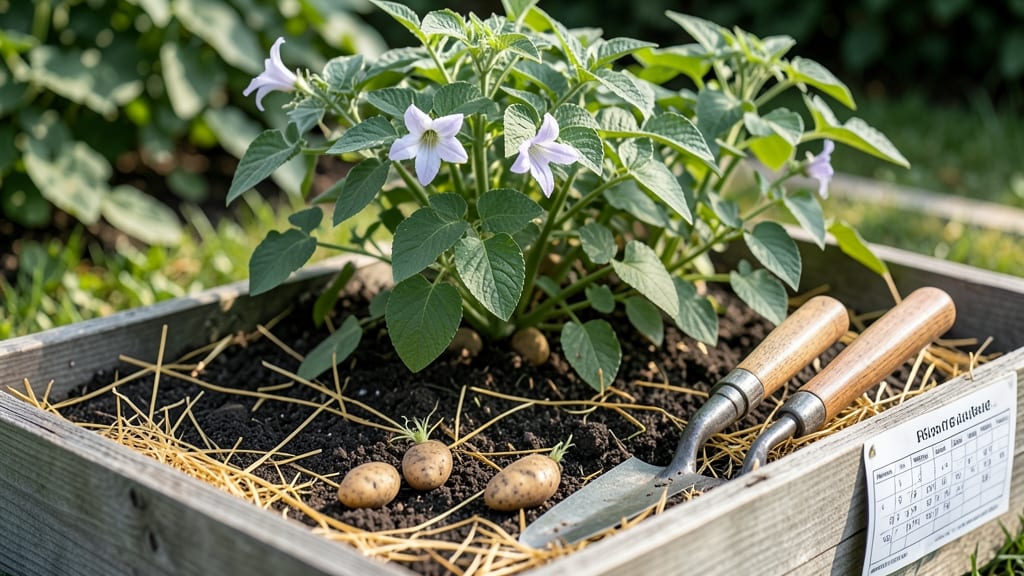
If you're asking "when can you plant potatoes in Ohio", the answer depends on your hardiness zone—and getting it right could mean the difference between a bountiful harvest and wasted effort.
Ohio's 6a zone typically sees last frost dates around mid-April, but early planters swear by starting as soon as soil warms to 45°F in late February or March.
This spring planting window is your golden opportunity to outpace weeds and late blight risks that plague Ohio gardens. While late winter starts work for cold-hardy varieties like Yukon Gold, most gardeners wait until March or April to avoid frost damage to tender sprouts.
The key is balancing patience with early preparation—like chitting your seed potatoes indoors.
What you might not realize is that Ohio's unpredictable weather makes timing even more critical. A late frost can set back your 🥔 harvest by weeks, while early planting gives you a competitive edge.
I'll show you exactly how to read your local frost dates, adjust for microclimates, and choose varieties that thrive in Ohio's humid summers.
Ready to dig in? Let's break down the perfect planting schedule for Ohio's zones, plus pro tips to protect your crop from Mother Nature's curveballs. Your July harvest starts with these first steps.
Ohio potato planting dates by hardiness zone (2024 guide)
Ohio’s diverse climate—spanning USDA Zones 5-8—means your planting window depends heavily on where you live. In northern Ohio (Zone 5), frost can linger until mid-April, while southern Ohio (Zone 8) often sees last frosts by early March.
To avoid frost damage, aim to plant 2-4 weeks before your average last frost date, but never before soil warms to 45°F.
For early harvests, some gardeners in Zone 6 and above start potatoes indoors in February using grow lights. This gives you a 2-week head start before transplanting outdoors. However, if you’re planting directly in the ground, late March to early April is your best bet for most of Ohio.
Here’s the breakdown by zone to help you plan:
| Zone | Last Frost Date (Avg.) | Ideal Planting Window | Soil Temp. Threshold | Risk Factor |
|---|---|---|---|---|
| 5 (Northern OH) | April 15 | Late March - Early April | 45°F+ | High (late frosts) |
| 6 (Central OH) | April 1 | Mid-March - Mid-April | 45°F+ | Moderate |
| 7 (Southern OH) | March 15 | Late February - Early April | 45°F+ | Low |
| 8 (Extreme SW OH) | March 1 | February - March | 45°F+ | Very Low |
If you’re in Zone 5 or 6, consider using frost blankets or row covers to extend your season. These can push your planting window back by 1-2 weeks if a late frost threatens.
For example, if your last frost is April 15, you could plant as early as March 20 with protection.
For late-season planting, Ohio gardeners can also try a second crop in May or June using early-maturing varieties like Red Norland or Yukon Gold. These potatoes grow quickly and can be harvested before the first frost in October.
Just be sure to plant them 4-6 weeks before your average first frost.
Pro tip: Use a soil thermometer to confirm your soil is ready. Potatoes won’t sprout until the ground reaches 45°F, and planting too early can lead to rot or poor germination. In my experience, waiting for 50°F soil gives the best results.
Ohio’s humidity and rainfall also play a role. If your spring is wetter than average, delay planting until the soil dries out slightly to avoid waterlogged tubers. Conversely, if it’s dry, irrigate lightly after planting to help sprouting.
Finally, keep an eye on your local weather forecasts. The National Weather Service provides frost prediction maps that can help you time your planting perfectly. For example, if a hard freeze is forecasted, hold off until temperatures stabilize.
With these zone-specific guidelines, you’ll avoid the most common mistakes—like planting too early and risking frost damage or waiting too long and missing the ideal window. Happy planting! 🥔
How to adjust planting for Ohio’s unpredictable spring weather
Ohio’s spring weather can be as unpredictable as a whimsical wind, with late frosts lurking even after average last-frost dates. To protect your potato crop, I’ve learned to play it smart—using row covers, cold-hardy varieties, and season extenders to outsmart Mother Nature.
The key is flexibility: adjust your planting timeline based on soil temperature and weather forecasts, not just the calendar.
Start by checking your soil temperature with a soil thermometer. Potatoes thrive when the ground reaches 45°F (7°C)—any colder, and your seed potatoes may rot.
In northern Ohio (zones 5-6), this often means waiting until mid-to-late April, while southern Ohio (zones 7-8) can plant as early as early March. But if a frost warning pops up, delay planting or use frost blankets to shield young sprouts.
Problem: A late frost after planting can kill tender potato sprouts, wasting your effort.
Solution: Plant cold-hardy varieties like Yukon Gold or Kennebec, which tolerate light frosts better than delicate red potatoes. For extra protection, use frost cloth or straw mulch over newly planted rows.
For gardeners in zone 5 or 6, consider a two-phase planting strategy: start with early-maturing varieties (like Red Pontiac) in late March, then follow up with mid-season types (such as Russet Burbank) in early May.
This spreads your harvest window and reduces risk. In warmer zones (7-8), you can even plant a fall crop in late July for a winter harvest—just use certified disease-free seed potatoes to avoid late blight.
Don’t forget about microclimates—your backyard might be warmer than the official USDA zone average. South-facing slopes or raised beds warm up faster, letting you plant 2-3 weeks earlier than neighbors in the same zone.
Test your spot by placing a thermometer in the soil for a week; if it hits 45°F consistently, it’s safe to plant.
If a cold snap hits after planting, act fast: mound soil or straw around the potato hills to insulate them. For container-growing, move pots to a sheltered spot or under a greenhouse until temperatures stabilize.
And always keep an eye on the National Weather Service for frost advisories—your potato patch will thank you!
Finally, rotate your planting location yearly to avoid soil-borne diseases like verticillium wilt. And if your spring is extra finicky, opt for organic mulches (like straw or grass clippings) to regulate soil temperature and retain moistureunpredictable spring into your potato-growing advantage!