
How To
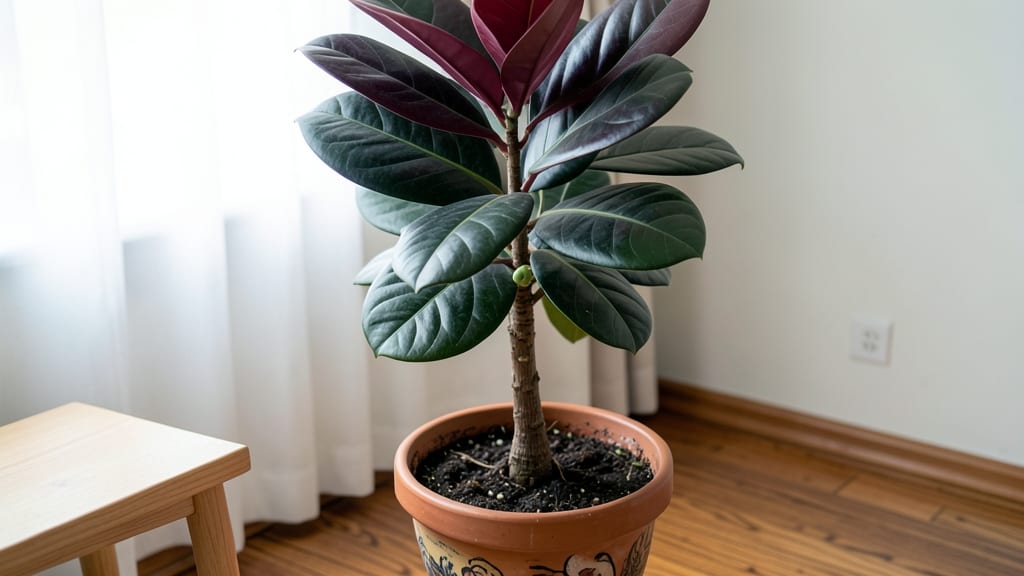
Wondering how tall your Rubber Plant 🌿 can grow—and how to keep it from becoming a jungle in your living room? The answer depends on more than just time; it’s about light, pruning, and even which variety you choose.
Under ideal conditions, these glossy-leaved beauties can stretch 6–10 feet tall, but most indoor plants max out around 3–5 feet with the right care. Whether you’re dealing with a towering ‘Black Prince’ or a compact ‘Tineke’, controlling height is all about strategy.
In this guide, I’ll break down the science behind rubber plant growth—why some varieties shoot up like weeds while others stay neatly contained. You’ll also discover simple pruning tricks to shape your plant without sacrificing its lush, dramatic foliage.
Ready to turn that ceiling-chasing monster into a showstopping centerpiece? Let’s get started.

Natural rubber plant height: what to expect indoors vs. outdoor growth
Your rubber plant (Ficus elastica) is a fast-growing tropical beauty, but its final height depends on where you grow it. Indoors, most varieties reach 3–10 feet tall, while outdoors, they can stretch even taller—up to 15 feet—if given ideal conditions.
Understanding these differences helps you set realistic expectations and plan for height control.
Outdoor rubber plants grow aggressively in warm climates (USDA zones 9–11), where they develop thick trunks and sprawling canopies. Indoors, their growth slows due to limited light and space, but they still grow 12–24 inches per year under optimal care.
The key difference? Light exposure—outdoor plants bask in full sun, while indoor plants rely on artificial or filtered light.
Here’s the breakdown of what to expect based on your growing conditions, including dwarf varieties that stay under 5 feet—perfect for apartments or small spaces.
| Growth Condition | Height Range | Growth Rate | Key Factors |
|---|---|---|---|
| Indoor (Low Light) | 3–6 feet | 6–12 inches/year | Limited light, small pots, minimal pruning |
| Indoor (Bright Light) | 6–10 feet | 12–24 inches/year | East/west windows, regular fertilization, large pots |
| Outdoor (Tropical Climate) | 10–15 feet | 24–36 inches/year | Full sun, warm temperatures, no pruning |
| Dwarf Varieties (Indoor) | 3–5 feet | 6–12 inches/year | Genetic growth habit, frequent pruning, small pots |
If you’re growing your rubber plant indoors, light is the #1 factor controlling height. Plants in low light (like north-facing windows) grow leggy and slow, while those near east or west windows reach their full height potential.
To keep your plant compact, aim for bright, indirect light—think 4–6 hours of morning sun or a grow light 12 inches away for 6–8 hours daily.
Pot size also plays a role. Root-bound plants grow taller as they stretch for nutrients. Use a pot just 1–2 inches larger in diameter than the root ball to encourage bushier growth.
For example, a 6-inch pot will keep a young rubber plant under 3 feet, while a 12-inch pot may let it reach 5–6 feet in 2–3 years.
Don’t forget about pruning—this is how you train your rubber plant’s height. By pinching back the tips of new growth when stems reach 6–8 inches, you encourage branching and a fuller shape.
Without pruning, a single stem can shoot up 3 feet in a year, turning your plant into a vertical tower instead of a lush focal point.
Outdoor rubber plants in USDA zones 9–11 grow much faster due to abundant sunlight and warmth. In these climates, they develop thick, woody trunks and can reach 10–15 feet without intervention.
If you live in a cooler zone (like 7–8), your outdoor rubber plant may only grow 3–5 feet per year, staying more manageable.
For apartment dwellers, dwarf varieties like ‘Black Prince’ or ‘Tineke’ are game-changers. These stay under 5 feet even with minimal pruning, making them ideal for bookshelves or countertops. Just place them near a south-facing window (with a sheer curtain to filter harsh light) to keep them happy and compact.
Pro tip: If your rubber plant starts leaning toward the light, it’s a sign it needs more bright, indirect sunlight. Rotate the pot quarter-turns every 2 weeks to encourage even growth and prevent lopsided height spikes.
5 Proven techniques to control rubber plant height for small spaces
If your rubber plant is shooting up like a skyscraper, don’t worry—you’re not stuck with a ceiling-bound giant. With the right techniques, you can keep your rubber plant compact and manageable indoors.
The key is understanding how to slow vertical growth while encouraging bushier, fuller foliage. Let’s explore 5 science-backed methods to tame your plant’s height naturally.
First, pruning is your best friend for height control. By cutting back leggy stems, you’ll trigger new growth at the base, creating a fuller, shorter plant. Aim to prune in early spring or summer when the plant is actively growing.
Use sterilized scissors to make clean cuts just above a leaf node—this encourages branching and keeps your plant from becoming a towering pole.
Light manipulation is another game-changer. Rubber plants stretch toward light, so if yours is reaching for the sky, it’s likely not getting enough bright indirect light. Move it closer to an east or west-facing window or use a grow light for 4–6 hours daily. Avoid placing it in deep shade, which triggers etoliation—the elongated, weak growth that makes your plant look like a sad, spindly stick.
- 🌱 Prune regularly to encourage bushier growth and cut back leggy stems.
- 💡 Rotate the pot every 2–3 weeks to ensure even light exposure and prevent lopsided growth.
- 🪴 Use a smaller pot to restrict root growth, which naturally slows vertical expansion.
- ✂️ Pinch back new growth in early spring to redirect energy toward lateral branches.
- 🌿 Propagate cuttings to create new plants, giving your original a fresh start with controlled height.
For extra compact growth, try staking or training your rubber plant. Use a bamboo stake or trellis to guide the plant’s growth in a specific direction. Gently tie the main stem to the stake with soft plant ties every few inches.
This method works well for variegated varieties like ‘Tineke’, where you want to showcase the foliage without sacrificing height.
Don’t forget about propagation as a height-control tool. When you prune, save the cuttings to propagate new plants. This not only keeps your original plant shorter but also gives you free plants to share or display.
Place cuttings in water or well-draining soil, and in 4–6 weeks, you’ll have new rubber plants ready to grow—without the height problem!
Finally, choose the right pot size. Rubber plants grow faster in larger pots, so opt for a container that’s only 1–2 inches wider than the root ball. This restricts root expansion, which in turn slows vertical growth.
If your plant outgrows its pot, it’s time to repot into a slightly larger container—but don’t go overboard!