
How To
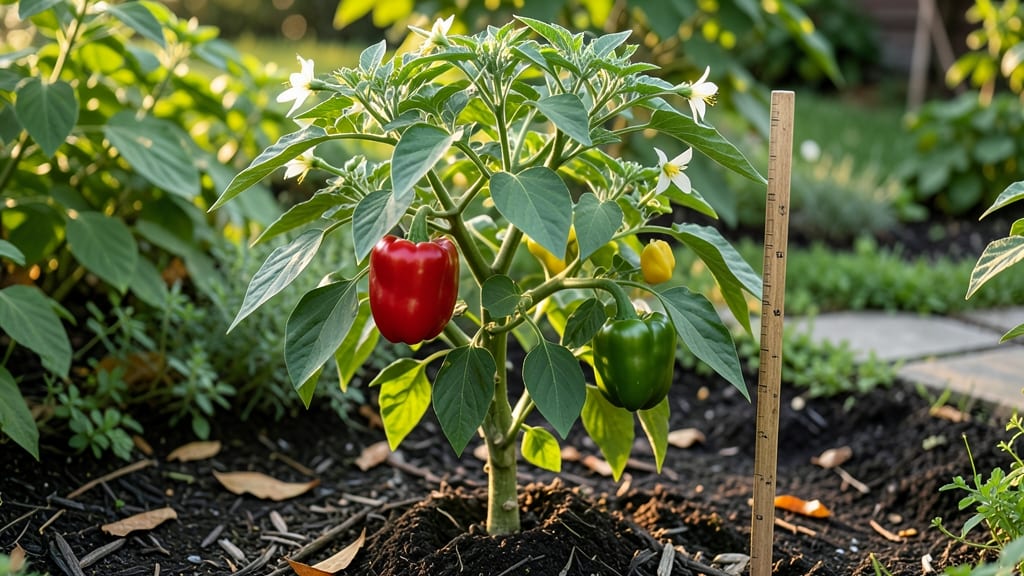
If you're planning your garden layout this spring, knowing how tall bell pepper plants grow could mean the difference between a thriving harvest and a crowded mess.
These 🌶️ plants typically reach between 2 to 4 feet tall, but their final height depends on the variety you choose and how you care for them.
Some compact varieties stay under 2 feet, making them perfect for containers or small spaces, while larger types can stretch toward 4 feet or more. The right support—like cages or stakes—can help manage their growth and keep fruits off the ground, where pests love to hide.
What you might not realize is that proper spacing and pruning can actually influence how tall your plants grow. Too much shade or poor soil can lead to leggy, weak stems, while the right balance of sunlight and nutrients encourages strong, productive growth.
Let's break down the exact heights for popular varieties and share my top tips for keeping your bell peppers at the perfect size—whether you want them bushy or towering. Your garden (and your dinner plate) will thank you!

Bell pepper plant height by variety: exact growth ranges and space requirements
Bell pepper plants vary dramatically in height depending on the variety and growing conditions. Most standard varieties reach 3 to 4 feet tall, while dwarf types stay compact at just 1 to 2 feet.
Understanding these differences helps you plan your garden layout and choose the right support system for each plant. Let’s break down the exact heights and spacing needs for popular varieties to ensure your peppers thrive without overcrowding.
For container gardening, compact varieties like ‘Jupiter’ (2–3 ft) or ‘Sweet Banana’ (2–3 ft) are ideal, as they fit neatly in 5-gallon pots. In-ground planting, however, often accommodates taller varieties like ‘California Wonder’, which can stretch up to 4 feet or more.
Always check seed packets or plant tags for precise height ranges, as even within a single variety, growth can vary by 6–12 inches based on sunlight and soil quality.
| Variety | Height Range | Spread | Ideal Spacing | Best For |
|---|---|---|---|---|
| California Wonder | 3–4 ft | 2–3 ft | 18–24 in. apart | In-ground gardens, staking |
| Jupiter | 2–3 ft | 1–2 ft | 12–18 in. apart | Containers, small spaces |
| Sweet Banana | 2–3 ft | 1.5–2 ft | 12–16 in. apart | Bushy growth, trellises |
| Carmen | 1–2 ft | 1–1.5 ft | 10–12 in. apart | Dwarf varieties, pots |
| Aristotle | 3–4 ft | 2–3 ft | 18–24 in. apart | Tall varieties, cages |
When planning your garden, account for both height and spread. For example, ‘California Wonder’ needs 2 feet of vertical space but also spreads 2–3 feet wide, making it ideal for in-ground beds with 18–24 inches between plants.
In contrast, ‘Carmen’, a dwarf variety, fits perfectly in 5-gallon containers with just 10–12 inches of spacing. Always prioritize airflow to prevent disease, especially in dense plantings.
If you’re growing bell peppers in containers, choose compact varieties like ‘Jupiter’ or ‘Sweet Banana’, which thrive in 5–7 gallon pots. Larger pots (10+ gallons) can accommodate taller varieties like ‘Aristotle’, but ensure the container has drainage holes to prevent root rot.
For in-ground planting, amending the soil with compost and balanced fertilizer (10-10-10) encourages healthier, more controlled growth patterns.
One common mistake is assuming all bell peppers grow the same height. Vining varieties (like ‘California Wonder’) can sprawl if unsupported, while bush types (like ‘Carmen’) stay compact.
To maximize yield, match your variety to your growing space—tall varieties need vertical support, while dwarf types work well in small gardens or windowsills. Always check the seed packet or plant tag for precise height ranges, as even within a variety, growth can vary by 6–12 inches.
For urban gardeners with limited space, consider ‘Sweet Banana’ or ‘Jupiter’, which produce abundant peppers in containers or hanging baskets. These varieties also respond well to pruning, allowing you to control their height and shape.
If you’re growing in a greenhouse or high-tunnel system, taller varieties like ‘Aristotle’ can reach their full 4-foot potential with proper support and pruning.
Pruning plays a crucial role in managing height. For tall varieties, pinch off the top buds to encourage bushier growth and prevent legginess. For d
When and how to support tall bell pepper plants: staking, caging, and trellising guide
Tall bell pepper plants—especially standard varieties like California Wonder—can reach 3 to 4 feet if left unsupported, leading to weak stems and poor fruit production. The key to maximizing height without sacrificing yield is proper support, introduced at the right time with the right materials.
I’ve learned that waiting too long to stake or cage your plants can result in flopping branches and lost peppers, while over-supporting can restrict airflow and invite disease.
Most gardeners introduce support at transplanting, but I’ve found that taller varieties (like Jupiter or Banana) benefit from early staking—even before flowering—to prevent stem stress. The goal is to guide growth vertically while keeping the plant’s energy focused on fruit production, not just reaching for the sky.
Let’s break down the best methods for supporting your bell peppers, from simple stakes to sturdy cages.
Support Method Comparison
Stakes
- Pros: Simple, cheap, promotes vertical growth
- Cons: Requires tying, limited support for heavy fruit
Cages
- Pros: Easy access, no tying needed, great for bushy varieties
- Cons: Can restrict airflow, may need reinforcement for tall plants
Trellises
- Pros: Maximizes space, ideal for vining varieties, improves airflow
- Cons: More complex setup, requires pruning for best results
When choosing a support method, consider your bell pepper variety and garden layout. For example, dwarf varieties (like Lucky Counter) thrive in 5-gallon containers with small cages, while standard varieties need 6-foot stakes or robust trellises.
I’ve had the most success with 5-foot tomato cages for my California Wonder plants—they’re sturdy enough to hold heavy peppers but still allow easy harvesting.
Timing is everything. Introduce support at transplanting for compact varieties, but wait until the plant reaches 12–18 inches tall for taller types. This gives roots time to establish before bearing the weight of stems and fruit.
Use soft plant ties (like velcro or fabric strips) to avoid damaging stems, and avoid metal or wire ties that can cut into the plant as it grows. Reposition ties every 2–3 weeks to accommodate growth.
Pruning plays a crucial role in managing height. For taller varieties, pinch off suckers (the shoots that form in the leaf axils) to encourage a bushier, more productive plant.
I prune mine weekly during the growing season, focusing on removing weak or crossing branches that could compete with fruit production. This not only controls height but also improves air circulation, reducing the risk of fungal diseases like powdery mildew.
If you’re growing bell peppers in containers, opt for wide, shallow pots with built-in support cages to prevent tipping. For in-ground planting, place stakes or cages at transplanting and gently weave the plant through the structure as it grows.
Remember, the goal isn’t just to make your bell peppers stand tall—it’s to optimize their growth for a bountiful, stress-free harvest. 🌱