
Plants
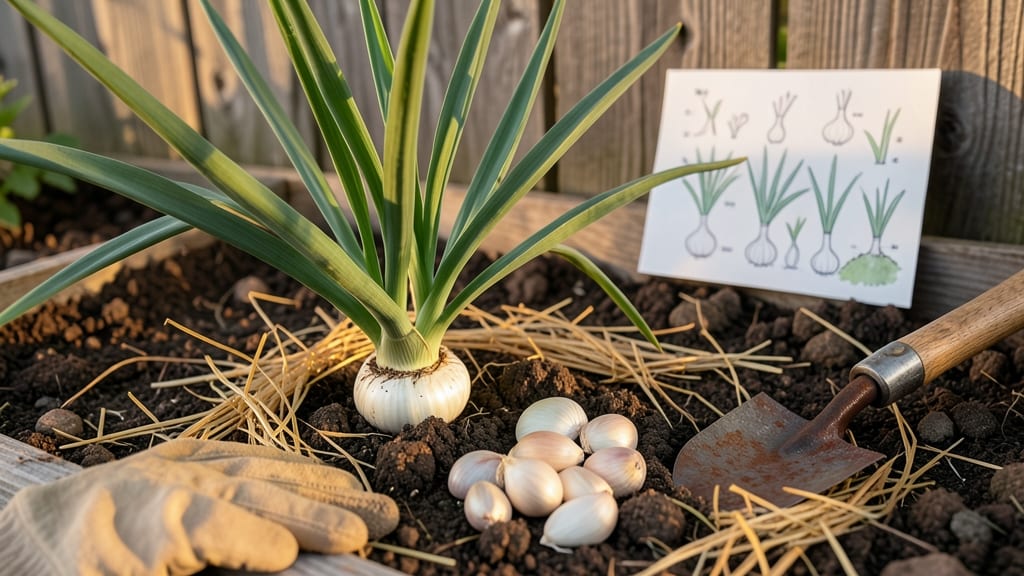
Timing your garlic planting in North Carolina can make or break your harvest—get it wrong, and you’ll end up with bitter, bolting cloves instead of the plump, flavorful bulbs you crave.
The key? Planting between October and November when soil temps drop to 40-50°F, giving your 🧄 the 300-1,200 chill hours it needs to form properly.
North Carolina’s varied climate—from the milder Coastal Plain to the colder Mountains—means your planting window might shift slightly depending on where you live. In Zone 7a-8b, most gardeners aim for early October, but those in the Outer Banks may need to wait until late November to avoid early bolting.
The goal? Break dormancy just before the ground freezes.
Why does this matter? Because garlic grows best when it experiences a long, cold winter followed by warm spring days. Plant too early, and your cloves might sprout before winter sets in.
Plant too late, and you risk weak growth or even no harvest at all. I’ll show you exactly how to match your variety to your microclimate for foolproof results.
Ready to grow garlic that rivals the best at farmers' markets? Let’s dive into the step-by-step timeline, soil prep secrets, and variety choices that work best in North Carolina—so you can enjoy fresh, homegrown garlic from June to July.
North Carolina garlic planting Zones: match chill-hours to variety for zero-bolt growth
North Carolina’s diverse climate—from the Coastal Plain to the Mountains—means garlic planting success depends on matching varieties to chill-hours. Coastal areas like the Outer Banks get only 300-500 chill-hours, while the Appalachian region can exceed 1,200+ hours.
Planting the wrong variety risks bolting or poor bulb formation. Let’s break down the best garlic types for each NC zone.
For Coastal NC (Zones 7b-8a), choose softneck varieties like ‘Silverskin’ or ‘Artichoke’, which tolerate 300-500 chill-hours. In the Piedmont (Zones 7a-7b), hardneck varieties like ‘Music’ or ‘German Red’ thrive with 600-900 chill-hours.
Mountain gardeners (Zones 6b-7a) can grow high-chill hardnecks like ‘Chesnok Red’ or ‘Korean Purple’, needing 900-1,200+ chill-hours.
Bolting occurs when garlic senses warm spring temperatures too soon. In mild winters (like Coastal NC), plant late October to early November to delay bolting. In colder zones (like the Mountains), aim for October to ensure enough winter chill before spring warmth triggers flowering.
Soil temperature matters too—40-50°F soil is ideal for planting. Use a soil thermometer to check; if temps are above 50°F, wait or use shade cloth to cool the soil. Coastal gardeners may need to plant earlier (late September) to avoid premature warming.
Here’s how NC’s microclimates affect garlic success:
| Region | USDA Zone | Chill-Hours | Best Varieties | Planting Window |
|---|---|---|---|---|
| Coastal Plain (Outer Banks, Wilmington) | 7b-8a | 300-500 | Silverskin, Artichoke | Late Oct–Early Nov |
| Piedmont (Raleigh, Greensboro) | 7a-7b | 600-900 | Music, German Red | Mid-Oct–Late Oct |
| Mountains (Asheville, Boone) | 6b-7a | 900-1,200+ | Chesnok Red, Korean Purple | Early Oct–Mid-Oct |
If you’re unsure about your chill-hours, check your local frost dates (average first frost is November 1 in most of NC). Plant 4-6 weeks before the ground freezes—this ensures roots establish before winter dormancy.
For Coastal NC, this might mean planting in late October; in the Mountains, aim for early October.
Pro tip: Use row covers in mild winters to extend chill exposure. This helps Coastal gardeners grow hardneck varieties by simulating colder conditions. Just remove covers in early spring to prevent overheating.
Soil prep is just as critical as timing. NC’s clay-heavy soils (especially in the Piedmont) need amendments like compost or sand to improve drainage. Test your soil’s pH (6.0-7.0 ideal) and add lime if needed. Well-draining soil prevents rot and ensures plump bulbs.
Remember: Hardneck varieties produce scape stalks (useful for pesto), while softnecks store longer. Choose based on your climate and goals—Coastal gardeners may prefer softnecks for storage, while Mountain growers love hardnecks for flavor and scapes.
🌱
Step-by-step garlic planting timeline: when to break dormancy in NC’s frost Zones 7-8
North Carolina’s Frost Zones 7-8 create a tight window for planting garlic—too early, and your cloves rot; too late, and they bolt. The key is planting 4-6 weeks before the first hard frost, typically between mid-October and early November.
But don’t panic if you miss this window; adjustments are possible with row covers or early varieties.
Start by ordering organic garlic cloves from reputable suppliers like Johnny’s Selected Seeds or Territorial Seed Company between October and November. These cloves need time to acclimate to cold before planting.
If you’re in the Coastal Plain (Zone 8), aim for early October, while Mountain regions (Zone 7) can wait until late October or early November.
Soil temperature is your best guide: plant when it drops to 40–50°F. Use a soil thermometer to check—this usually aligns with late October in most of NC. If your soil is too warm, your garlic may bolt prematurely, ruining your harvest.
📅 NC Garlic Planting Timeline
- October (Early-Mid): Order cloves from suppliers; let them cure at room temp for 1 week before planting.
- Mid-October: Break apart bulbs into individual cloves, ensuring each has a root attached. Plant pointy-end up, 2 inches deep.
- Late October: Apply 2–3 inches of mulch (straw or leaves) to insulate cloves from freeze-thaw cycles.
- November: Monitor for early snow cover—if heavy, add extra mulch to prevent heaving.
- December–February: Let garlic dormant-grow in cold soil; no watering needed unless drought occurs.
- March–April: Remove mulch; water lightly if soil is dry. Resist fertilizing—garlic needs low nitrogen to form bulbs.
Pro Tip: Use row covers in mild-winter zones (e.g., Coastal NC) to extend chill hours for hardneck varieties.
If you’re in a mild-winter zone like the Outer Banks or Piedmont foothills, your garlic may need extra chill hours to form bulbs.
For these areas, plant hardneck varieties like ‘Music’ or ‘German White’, which thrive with 300–600 chill hours‘Silverskin’) need 1,200+ chill hours and are better suited for Mountain regions.
For gardeners who miss the fall window, late-winter planting (January–February) is possible but risky. Use row covers or plant in black plastic mulch to warm the soil faster. However, bulbs may be smaller and less flavorful compared to fall-planted garlic.
Remember: Harvest time isn’t set by a calendar—it’s when lower leaves turn brown and papery. In NC, this usually falls between late June and July, but watch your plants, not the date!
Cure harvested garlic in a dry, shady spot for 2–3 weeks to prevent mold in NC’s humid summers.