
Plants
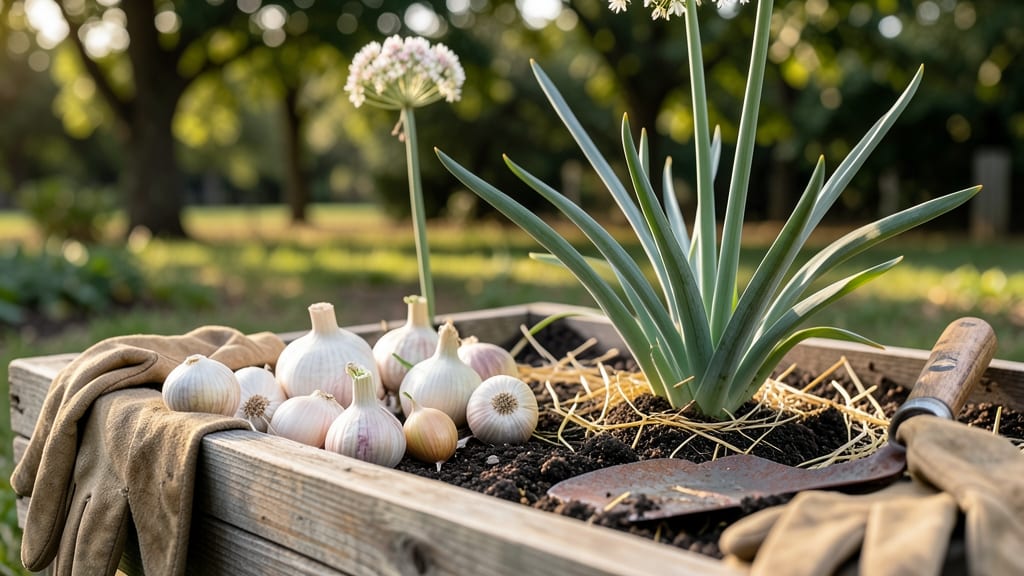
Planting garlic in Delaware at the wrong time can mean the difference between plump, flavorful bulbs and tiny, weak ones that barely survive. With Delaware's USDA Zone 7a-7b climate, timing is everything—especially for hardneck varieties that need those crisp winter chills to form properly.
Most gardeners in Delaware know fall is the prime window, but did you know planting between October and November gives your 🧄 the perfect head start? The key is matching your garlic's chill-hour needs with Delaware's predictable frost dates, which typically arrive by mid-November.
Get this wrong, and you might end up with garlic that never bulbs out properly.
In this guide, I'll walk you through exactly when to plant for Delaware's climate, including how to adjust for coastal vs. inland microclimates.
You'll learn which varieties thrive best in your zone, how to prep your soil, and even how to handle those unpredictable Delaware winters that sometimes throw off your best-laid plans.
Whether you're a first-time garlic grower or a seasoned gardener looking to boost your harvest, these actionable tips will help you grow garlic that's ready to harvest by late June or July—just in time for your favorite summer recipes.
Delaware’s best planting windows for hardneck garlic by chill-hour needs
Delaware’s USDA Zone 7a-7b climate makes it ideal for growing hardneck garlic, but timing your planting to match the chill-hour requirements of your variety is critical. Most hardneck varieties need 600–1,000+ chill hours to form bulbs properly, and Delaware typically delivers between 800–1,200 hours annually.
Planting too early or late can result in weak bulbs or no harvest at all.
In Delaware, the optimal planting window is between mid-October and mid-November, allowing garlic to establish roots before the ground freezes. However, coastal areas (like Rehoboth Beach) may experience milder winters, while inland regions (like Wilmington) face colder temperatures.
Adjust your timing based on your microclimate and the chill-hour needs of your garlic variety.
For high-chill varieties (1,000+ hours), aim to plant by November 1st to ensure they get enough cold exposure. Moderate-chill varieties (600–900 hours) can be planted as late as December 1st, but earlier planting (by October 31st) will yield larger bulbs.
Always plant 4–6 weeks before the first hard frost, which in Delaware usually occurs around November 15th.
Soil temperature is another key factor. Garlic cloves should be planted when soil temps drop to 40–50°F. Use a soil thermometer to monitor conditions, especially if your winter starts late.
In coastal Delaware, where winters are milder, you might need to plant 2–3 weeks earlier than inland areas to compensate for fewer chill hours.
If you’re unsure about your local chill hours, check the Delaware State Climate Office or use a chill-hour calculator tailored to your ZIP code. For example, Dover typically sees 1,000+ chill hours, while New Castle may only reach 800–900 hours.
Matching your variety to your location ensures the best bulb development.
One common mistake is planting garlic too early, which can cause it to sprout and then die back before winter sets in. To prevent this, avoid planting before mid-September, even if your soil is warm.
Instead, focus on soil preparation—amend your garden bed with compost or aged manure in early fall to improve drainage and fertility. Well-draining soil is essential, especially in coastal areas where clay soils can become waterlogged.
If you’re unsure about your local frost dates, use the National Weather Service’s frost prediction tool for Delaware. For most of the state, the average first frost is around November 15th, but coastal areas like Lewes may see frost as late as December 1st.
Planting 4–6 weeks before the first frost ensures your garlic has enough time to establish roots before the ground freezes solid.
For maximum yield, aim to plant garlic when daytime temperatures are below 70°F and nighttime temps drop to 50°F or lower. This balance helps the cloves root without sprouting prematurely.
In inland Delaware, this usually aligns with late October, while coastal gardens may need to wait until early November.
Pro tip: If you’re planting in December, choose a moderate-chill variety and use extra mulch (4–6 inches of straw) to protect the cloves from freezing. This can extend your planting window slightly but may result in smaller bulbs compared to earlier plantings.
Delaware’s best planting windows for hardneck garlic by chill-hour needs
Delaware’s USDA Zone 7a-7b climate gives hardneck garlic the perfect balance of winter chill and summer warmth—but only if you plant at the right time. Most varieties need 600-1,000 chill hours, and Delaware typically delivers between 1,000-1,200 hours annually.
The key is planting 4-6 weeks before the ground freezes, usually between mid-October and early November.
Coastal areas like Rehoboth Beach often experience milder winters, while inland regions near Wilmington get colder faster. This means your planting window might shift by 1-2 weeks depending on where you live.
For example, German White (a high-chill variety) needs 900+ chill hours, while Music (moderate-chill) thrives with 600-800 hours.
🌱 Comparison Table: Delaware Planting Windows by Chill-Hour Needs
| Variety | Chill-Hour Needs | Best Planting Window (Delaware) | Frost Risk Notes |
|---|---|---|---|
| German White | 900-1,200 hours | Mid-October to early November | High chill needs; plant early to avoid late freezes. |
| Music | 600-800 hours | Late October to mid-November | Moderate chill; flexible for coastal areas. |
| Chesnok Red | 700-900 hours | Early October to late October | Early planting prevents winter heaving in wet soils. |
If you’re in coastal Delaware, aim for late October to avoid mild winters that might not provide enough chill. Inland gardeners can push planting to early November since colder temperatures arrive sooner.
Always check your local frost dates—Delaware’s average first frost is around November 15, but it can vary by 1-2 weeks.
Pro tip: Use a soil thermometer to confirm the ground is below 50°F before planting. This ensures your garlic gets the pre-chill stratification it needs to bulb properly. If you plant too late, your garlic may not develop full bulbs by harvest time.
For best results, plant 4-6 weeks before the ground freezes. This gives your garlic enough time to establish roots before winter sets in. If you’re unsure, err on the earlier side—early October is better than waiting until November.