
Plants
If you’ve ever planted 🥬 arugula in Texas only to watch it bolt into bitter flowers by June, you’re not alone. The key to crisp, peppery harvests lies in timing—and Texas’s extreme heat and varied frost dates make this crop trickier than it seems.
Texas gardeners know the stakes: plant too early, and your greens will wilt in summer’s sweltering 90°F+ days. Plant too late, and you’ll miss the sweet spot before winter frost.
The solution? A precise planting calendar tailored to your region—whether you’re in North Texas’s 7b-8a zones or South Texas’s balmier 9b-10a climate.
In this guide, I’ll break down the exact fall and spring windows for zero-bolt harvests, plus Texas-specific hacks like shade strategies and succession planting. No more wasted seeds—just consistent, flavorful greens straight from your garden.
Ready to master the timing? Let’s dive into the 4-6 week rule that’ll keep your arugula thriving through Texas’s unpredictable seasons.
Optimal Texas arugula planting calendar: fall vs spring timing explained
Arugula thrives in cool weather, making fall and spring the perfect seasons for Texas gardens. Unlike summer heat, which sends arugula bolting faster than a wildfire, these seasons offer ideal temperature ranges of 40-75°F for peak growth.
But timing varies drastically between North Texas (zones 7b-8a) and South Texas (zones 9b-10a), so let’s break it down by region.
In North Texas, where frost arrives earlier, your planting window is tighter—typically September through early November for fall and February through March for spring. Meanwhile, South Texas gardeners enjoy a longer growing season, with fall plantings stretching until December and spring options lasting until April.
The key is avoiding soil temperatures above 80°F, which triggers bolting.
| Region | Fall Planting Window | Spring Planting Window | Soil Temp Threshold | First Frost Date |
|---|---|---|---|---|
| North Texas | September 15 - November 1 | February 15 - March 15 | Below 80°F | November 15 - December 15 |
| Central Texas | September 1 - November 15 | February 1 - March 30 | Below 80°F | December 1 - January 15 |
| South Texas | August 15 - December 1 | February 1 - April 15 | Below 85°F | December 15 - January 30 |
For direct sowing, aim to plant seeds 4-6 weeks before your first frost. In North Texas, that’s typically by October 15, while South Texas gardeners can push it to November 1.
If you’re using transplants, wait until soil temperatures drop below 75°F—usually late September for fall and mid-February for spring.
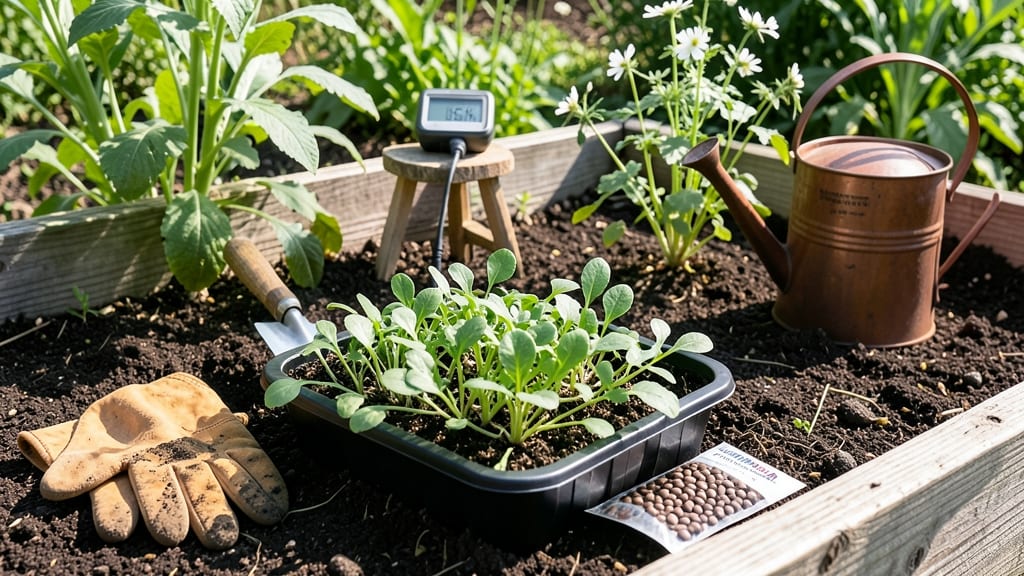
Pro tip: Use a soil thermometer to monitor temperatures. Arugula seeds won’t germinate well above 70°F, and established plants will bolt if soil stays above 80°F for more than a few days.
In Central Texas, where heat lingers longer, consider shade cloth to buy extra time for late fall plantings.
Another critical factor is succession planting. Since arugula bolts quickly (within 30-45 days in heat), stagger plantings every 2-3 weeks to ensure a continuous harvest.
For example, in North Texas, plant one batch in late September, another in early October, and a final one in mid-October to extend your harvest into December.
Don’t forget about microclimates—areas near buildings or under trees may stay cooler longer. If your garden has a shady spot, it’s a great place to push the limits of arugula growth in summer’s edge (like late May or early June in South Texas).
Just be prepared to provide extra shade and water.
Finally, avoid planting in summer unless you’re using heat-tolerant varieties like 'Astro' or 'Sylvetta', which we’ll cover in the next section. Even then, your yields will be smaller, and the flavor less peppery.
Stick to the fall and spring windows, and you’ll enjoy crisp, tender leaves all season long.
With these timing guidelines, you’ll sidestep the Texas bolting curse and enjoy arugula that tastes as fresh as the day you planted it. Happy gardening!
Optimal Texas arugula planting calendar: fall vs spring timing explained
Arugula thrives in Texas’s cool-season windows, but timing varies dramatically between North Texas (zones 7b-8a) and South Texas (zones 9b-10a). The key is planting when soil temps stay below 75°F—any hotter, and your arugula will bolt faster than a firecracker on the 4th of July.
Fall planting is your best bet for crisp harvests in Texas. Start seeds or transplants 4-6 weeks before first frost—that’s mid-September to early November in North Texas and October to December in South Texas.
Spring planting works too, but rush it by sowing February to early March before summer heat arrives.
Soil temperature is your secret weapon. Arugula grows best when soil stays between 45°F and 70°F. Use a soil thermometer to check before planting—if it’s above 75°F, wait or use shade cloth to cool roots.
| Region | Fall Planting Window | Spring Planting Window | First Frost Date | Key Tip |
|---|---|---|---|---|
| North Texas (7b-8a) | Mid-Sept to early Nov | Feb 15 - March 15 | Nov 15 - Dec 15 | Use row covers after frost |
| Central Texas (8a-9a) | Late Sept to Dec | Feb 20 - March 20 | Dec 1 - Jan 15 | Plant near water sources |
| South Texas (9b-10a) | Oct to Dec | Feb 25 - April 1 | Dec 15 - Jan 31 | Use shade cloth 30% |
For direct sowing, scatter seeds ¼ inch deep in well-draining soil. Transplants need 3-4 weeks of hardening before going outdoors—start them indoors if planting early. Space rows 12 inches apart to allow airflow and prevent fungal issues.
Texas’s clay-heavy soils can trap heat, so amend with compost or aged manure to improve drainage. If your soil stays warm past November, opt for heat-tolerant varieties like 'Astro' or 'Sylvetta'—they’ll delay bolting by 2-3 weeks in borderline conditions.
Pro tip: Mark your calendar for succession planting every 2 weeks in fall. This ensures a continuous harvest until winter frost—no more sad, bolted patches in your garden!