
Companion Plants
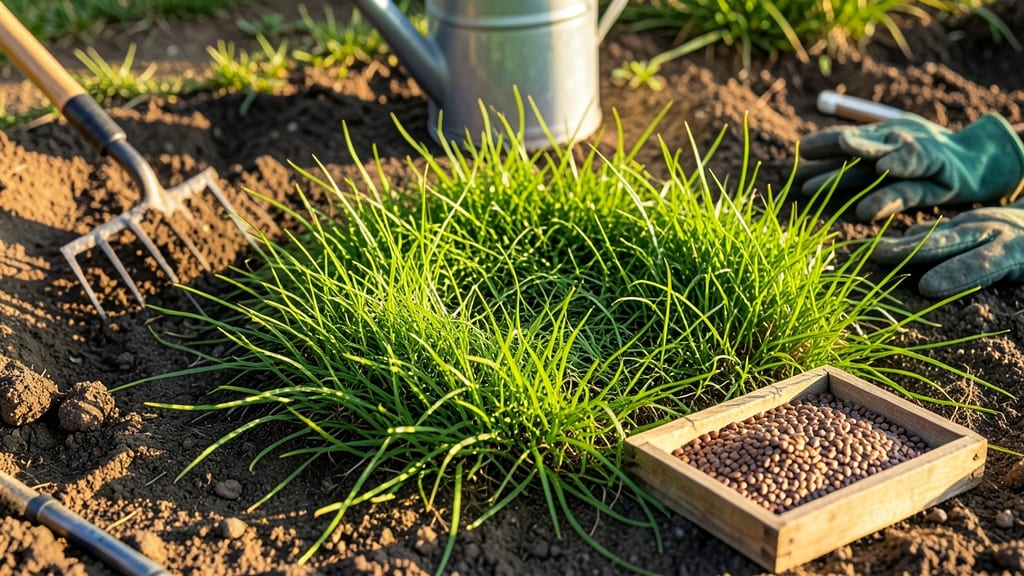
Planting Bermuda grass seed in Texas at the wrong time can mean the difference between a vibrant lawn and months of frustration. With our 8a-10b climate zones, timing isn't just important—it's everything.
Whether you're in North Texas where frost lingers later or South Texas with earlier warm-ups, getting it right ensures your 🌱 thrives from day one.
Most gardeners make one critical mistake: rushing the process. The key to fast establishment lies in waiting for soil temperatures to hit 65°F at 4 inches deep—usually late spring to early summer or early fall. Skipping this step means weak germination and slow growth, even with the best seed.
I'll walk you through the exact windows for your region, from preparing your lawn to post-planting care. By the end, you'll know exactly when to plant for the best results—no guesswork, just a lush, green lawn that stays ahead of Texas heat.
Ready to transform your yard? Let's dive into the fastest way to get your Bermuda grass off to the right start—without wasting time or money on mistakes.
Optimal planting months for Bermuda grass seed in Texas by region
Texas' diverse climate means Bermuda grass planting windows vary dramatically from North Texas to South Texas. The key is planting when soil temperatures reach at least 65°F at 4-inch depth—this ensures strong germination and rapid establishment.
For most Texans, this falls in late spring to early summer or early fall, but regional differences matter.
In North Texas (USDA Zones 7b-8a), like Dallas and Fort Worth, the safest window is April 15 to May 30 for spring planting. Fall planting should start by August 15 to avoid early frost risks. The region's cooler winters mean fall planting is riskier than in warmer southern areas.
For Central Texas (Zones 8a-8b), including Austin and San Antonio, you have more flexibility. Spring planting works from March 15 to June 1, while fall planting should begin by August 1 and finish by September 30.
The Edwards Plateau area may need to plant slightly later due to cooler nights.
| Region | Best Spring Planting Window | Best Fall Planting Window | Soil Temp Threshold | Key Risk |
|---|---|---|---|---|
| North Texas (Dallas/Fort Worth) | April 15 - May 30 | August 15 - September 15 | 65°F+ at 4" | Late frost |
| Central Texas (Austin/San Antonio) | March 15 - June 1 | August 1 - September 30 | 65°F+ at 4" | Heat stress if planted too late |
| East Texas (Tyler/Beaumont) | March 1 - May 15 | July 15 - September 15 | 68°F+ at 4" | Humidity and fungal risk |
| West Texas (Midland/Odessa) | April 1 - June 15 | August 10 - September 10 | 70°F+ at 4" | Drought stress |
| South Texas (Corpus Christi/Harlingen) | February 15 - April 30 | June 15 - September 30 | 72°F+ at 4" | None (long growing season) |
South Texas (Zones 9a-10a), including Corpus Christi and the Rio Grande Valley, offers the longest growing season. You can plant as early as February 15 in spring or even June 15 in fall, with minimal frost risk. The higher soil temperature threshold (72°F) here means seeds germinate faster, but consistent irrigation is critical due to summer heat.
West Texas (Zones 8a-8b), like Midland and Lubbock, requires later planting due to hot, dry conditions. Aim for April 1 to June 15 in spring or August 10 to September 10 in fall. The soil must reach 70°F+ at 4 inches—cooler nights delay germination. Mulching helps retain moisture in these arid conditions.
In East Texas (Zones 7b-9a), like Tyler and Beaumont, humidity plays a bigger role. Plant March 1 to May 15 in spring or July 15 to September 15 in fall. The higher humidity increases fungal risks, so avoid overhead watering. Morning watering (before 10 AM) reduces disease pressure significantly.
Pro tip: Use a soil thermometer to verify temperatures before planting. Bury it 4 inches deep in full sun for accurate readings.
If temperatures drop below 65°F, germination slows dramatically, leading to weak seedlings. Fall planting is often more successful in Texas because hot summer temperatures can stress young grass.
For transplanted sod (not seed), timing shifts slightly—plant when soil is 70°F+ and established roots can handle heat. This typically means May 1 to June 15 for spring or August 15 to September 15 for fall. Sod establishes faster than seed, so late-season planting is less risky.
Remember, Bermuda grass is a warm-season grass, meaning it thrives when temperatures are consistently above 80°F. Planting too early (before last frost) or too late (after September 15) can leave your lawn vulnerable to winter kill or summer dormancy.
Optimal planting months for Bermuda grass seed in Texas by region
Texas's diverse climate means Bermuda grass planting times vary dramatically from North Texas to South Texas. In cooler regions like Dallas-Fort Worth, aim for late April to early June when soil temps hit 65°F+.
Meanwhile, Houston and San Antonio can start as early as March due to warmer soils.
Fall planting is your second best window—August to early September—when summer heat fades but before first frost risks. This gives seeds 6-8 weeks to establish roots before winter dormancy. West Texas (e.g., Lubbock) may push fall planting to September-October to avoid early cold snaps.
Soil temperature, not air temperature, determines success. Use a soil thermometer to confirm 4-inch depth temps are 65°F+—Bermuda grass seeds won’t germinate below 60°F. North Texas often waits until May to avoid late frosts, while South Texas can plant as early as February in ideal microclimates.
Texas Regions vs. Bermuda Grass Planting Windows
| Region | Ideal Spring Window | Ideal Fall Window | Soil Temp Threshold | Key Risk |
|---|---|---|---|---|
| North Texas (Dallas, Fort Worth) | Late April–Early June | August–Early September | 65°F+ (4" depth) | Late frosts (after April 15) |
| Central Texas (Austin, San Antonio) | March–May | July–September | 60°F+ (4" depth) | Summer drought stress |
| East Texas (Tyler, Beaumont) | February–April | August–October | 58°F+ (4" depth) | Humidity/fungal diseases |
| West Texas (Lubbock, Midland) | Late April–June | September–October | 68°F+ (4" depth) | Extreme heat (above 100°F) |
For South Texas (e.g., Corpus Christi), March planting is often ideal—seeds germinate in 7-10 days when soils are 70°F+. However, avoid planting during peak summer (June–July) unless you’re using shade cloth to protect seeds from intense UV and drying winds.
Pro tip: Check local USDA frost maps—North Texas averages 200 frost-free days, while South Texas hits 300+. Planting 6 weeks before first frost ensures strong root development. In West Texas, September is safer than August to escape 100°F+ soil temps.
Always test your soil for pH 6.0–7.5—Bermuda grass thrives in slightly acidic to neutral soil. If your soil pH is off, amend with lime (to raise pH) or sulfur (to lower pH) 4-6 weeks before planting for best results. 🌱