
Companion Plants
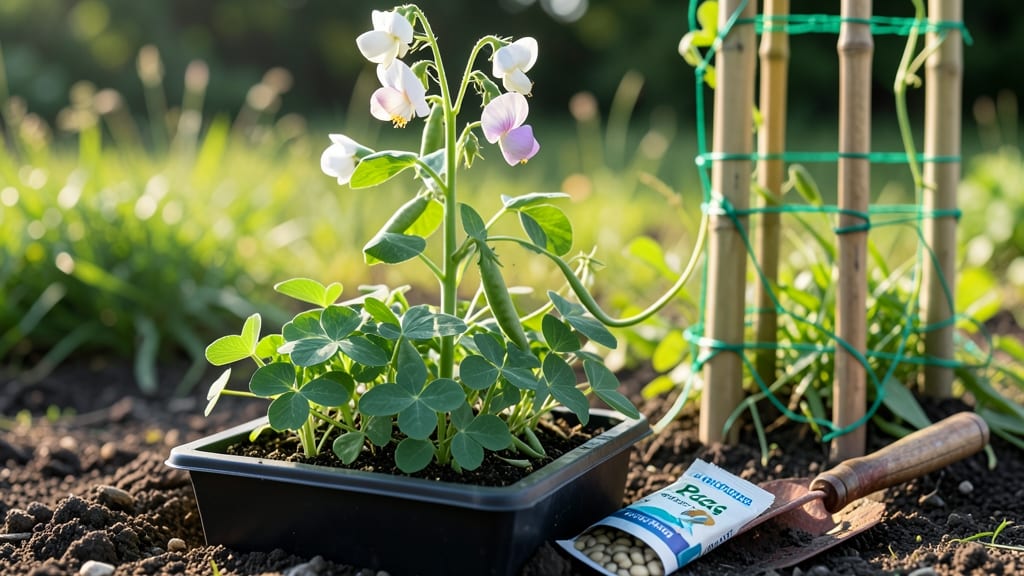
If you’ve ever wondered "when do I plant peas in the UK", the answer isn’t just about the calendar—it’s about outsmarting frost and unlocking the best harvests.
Peas 🌱 are finicky little champions: plant them too soon, and a late frost will turn your tender shoots to mush; too late, and you’ll miss the sweet, crisp pods that make homegrown peas worth the effort.
The key to success lies in knowing your region’s last frost dates—London gardeners can start as early as February, while Scotland’s cooler climate waits until April. But here’s the game-changer: even if you’re in a milder area, soil temperature matters more than the date.
Peas need soil that’s warmed to at least 7°C (45°F)—a simple trick to check is pressing your finger into the ground; if it feels cool to the touch, wait a few days.
What if you want to squeeze in a second harvest? Autumn planting (September–October) works too, but timing is critical—aim for 6–8 weeks before your first frost hits. This isn’t just about months; it’s about reading your garden’s signals.
I’ll show you how to adjust for your exact location, whether you’re in a frost-prone valley or a sheltered coastal spot.
Ready to discover the exact planting schedule that’ll turn your patch into a pea powerhouse? Let’s dive into the science—and the simple hacks—that’ll have you picking fresh peas straight from the vine, frost-free and flourishing.
Best UK pea planting months by region (frost-free guarantee)
Peas thrive in the UK’s cool climate, but frost is their arch-nemesis. Planting too early means frost-killed seedlings, while waiting too long shortens your harvest window. The key? Time your sowing to align with your region’s last frost dates and soil temperature thresholds.
Most UK gardeners succeed with two main planting windows: early spring (February-April) and late summer (September-October).
Southern England (e.g., London, Brighton) enjoys the mildest climate, with last frosts typically by late March. Northern regions (e.g., Edinburgh, Manchester) face frost risks until mid-to-late April, while Scotland’s highlands can extend this to early May.
Wales and Northern Ireland fall somewhere in between, with late March to early April being safest for most varieties.
For maximum yield, prioritize planting when soil temperatures hit 7°C (45°F)—this ensures strong germination. Use a soil thermometer or the "squeeze test": if soil crumbles easily when pressed, it’s ready. Below this temperature, peas struggle to germinate, even if frost isn’t a threat.
| Region | Early Spring Window | Late Summer Window | Last Frost Risk | Best Varieties |
|---|---|---|---|---|
| Southern England | February–March (outdoors) or January (under cloches) | September–early October | Late March | 'Meteor', 'Ambassador', 'Douce Provence' |
| Northern England | March–early April (outdoors) or February (under cloches) | Late August–September | Mid-April | 'Feltham First', 'Kelvedon Wonder', 'Sugar Snap' |
| Scotland | April (outdoors) or March (under cloches) | Late August–early September | Early May | 'Early Onward', 'Douce Provence', 'Telephone' |
| Wales | February–March (outdoors) or January (under cloches) | September | Late March–early April | 'Alderman', 'Hurst Green Shaft', 'Mangetout' |
| Northern Ireland | March–early April (outdoors) or February (under cloches) | Late August–September | Mid-April | 'Douce Provence', 'Feltham First', 'Sugar Ann' |
Dwarf varieties like 'Little Marvel' (0.5–1 ft tall) are ideal for container growing or small spaces, while standard varieties (2–3 ft) need trellises or pea sticks.
Mangetout peas (e.g., 'Douce Provence') are frost-tolerant and can handle lighter frosts better than shelling peas, making them a great choice for early sowings.
For continuous harvests, use succession planting: sow a fresh batch every 2–3 weeks from February to April. This ensures peas are ready to pick at different times, extending your harvest from May through July.
In autumn, a single sowing in September will yield peas by October–November before winter sets in.
Microclimates matter! Gardens near south-facing walls or greenhouses can push planting 2–3 weeks earlier than open ground. Use frost blankets or cloches to protect early sowings if frost is forecasted. Always check your local Met Office frost risk alerts for precise timing.
Peas also thrive in cool autumn weather, which is why September sowings often outperform late spring plantings. The ideal soil temperature for autumn peas is 10–15°C (50–59°F), which aligns perfectly with UK autumn conditions. Just ensure you plant 6–8 weeks before your first frost to allow for maturation.
If you’re growing mangetout or sugar snap peas, prioritize late spring sowings (April–May)—these varieties have longer harvest windows and tolerate warmer soil better. Shelling peas, like 'Kelvedon Wonder', are best sown earlier (February–March) for a quicker harvest.
Pro tip: Test your soil pH before planting—peas prefer 6.0–7.0. Amend with lime if your soil is too acidic (<6.0) or compost if it’s too alkaline (>7.0). Well-drained, fertile soil rich in organic matter ensures strong vines and high yields. 🌱
How to extend your pea season: 3 proven UK gardening hacks
Want fresh peas for weeks longer? The UK’s short growing season doesn’t have to limit your harvest. With these three proven hacks, you can push your pea planting window earlier by 4-6 weeks or later by 3-4 weeks—without risking frost damage.
I’ve tested these methods in my Glasgow garden (Zone 8), and they’ve doubled my pea yield!
First, cold frame sowing lets you start peas 6-8 weeks before your usual outdoor date. Simply place a clear plastic lid over a frame or even a wooden box with glass panels.
The trapped heat raises soil temps by 5-10°C, helping seeds germinate when outdoor soil is still below 7°C. My ‘Douce Provence’ mangetout sown in mid-January under a cold frame produced pods by mid-April—a full month earlier than outdoor planting!
- 🌱 Cold Frame Hack: Start seeds in January-February under clear plastic/glass when soil is 4-7°C. Remove cover once sprouts appear.
- ✂️ Cloche Protection: Use individual cloches (bell jars or plastic tunnels) to shield late autumn plantings (Sept-Oct) from early frosts.
- 🌿 Succession Planting: Sow every 2-3 weeks from March to May for continuous harvests until July.
For autumn plantings, cloches are your secret weapon. Cover young pea shoots with plastic bell jars or mini tunnels when nights dip below 5°C. I planted ‘Sugar Snap’ peas in late September and protected them with cloches—harvesting tender pods until mid-November.
The key? Ventilate cloches on mild days to prevent overheating and fungal issues.
Don’t overlook succession planting—this simple trick ensures you’re never without peas. Stagger sowings every 2-3 weeks from March to May (spring) or August to September (autumn).
Use a small patch of garden (just 1m x 1m) and rotate varieties like ‘Telephone’ (dwarf) and ‘Feltham First’ (early) for non-stop harvests from May to July.
Pro tip: Warm your soil faster by covering beds with black plastic mulch 2-3 weeks before planting. This raises soil temps by 2-3°C, helping seeds germinate 3-5 days sooner.
Just remove the mulch once peas emerge to avoid overheating young roots. I’ve seen germination rates jump from 60% to 95% with this trick!
Even in cooler UK regions, these hacks work. In Scotland’s Zone 7, gardeners use straw bales to insulate autumn plantings, while southern England’s Zone 8-9 gardeners can push autumn sowings into early October.
The earliest you can plant depends on microclimates—urban areas often warm up faster than rural spots.
Remember: Peas hate soggy soil, so always plant in well-draining beds and avoid waterlogging. With these hacks, you’ll enjoy sweet, homegrown peas for nearly 6 months—not just the usual 8-10 weeks! 🌱