
Watering
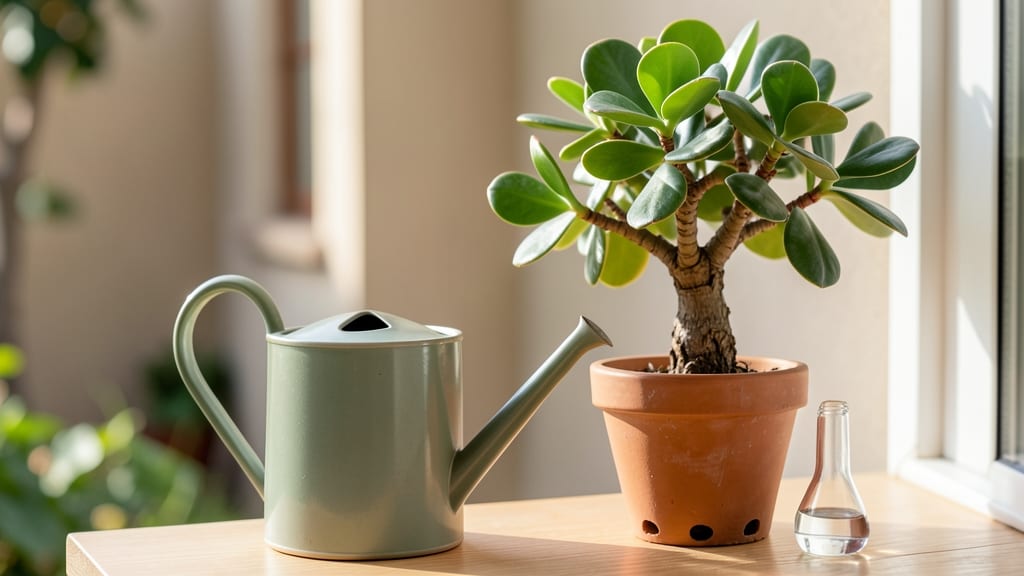
If you’ve ever wondered how much water a jade plant needs, you’re not alone—many plant parents struggle to strike the right balance. Overwatering is the #1 killer of these succulents, but the fix is simpler than you think.
Jade plants 🌿 thrive on neglect, not attention, but that doesn’t mean you can ignore them. The key is learning their subtle signals—like wrinkled leaves or dry soil—so you can water just enough to keep them happy without drowning their roots.
In this guide, I’ll break down the 1-2-3 finger test, seasonal watering adjustments, and how to spot the early signs of over- or underwatering. No more guesswork, just perfect hydration every time.
Ready to transform your jade plant care? Let’s dive into the easy, foolproof method that’s saved countless plants from root rot.

The 1-2-3 finger test: how to check jade plant soil moisture like a pro
Jade plants (Crassula ovata) are masters of drought tolerance, but even they need the right amount of water to thrive. The key to perfect hydration lies in your fingertips—not guesswork.
As someone who’s nursed countless jade plants back from the brink of overwatering, I’ve learned that soil moisture testing is the single most important skill for keeping these succulents happy.
The 1-2-3 finger test is my go-to method because it’s foolproof, requires no tools, and gives you instant feedback on your plant’s needs.
Here’s the secret: Jade plants store water in their thick, plump leaves, so their soil should dry out completely between waterings. When you water too often, you risk root rot, which is silent but deadly.
The finger test helps you avoid this by revealing exactly how dry the soil is at different depths. Ready to become a jade plant moisture detective? Let’s dive into the steps.
Step-by-Step Finger Test for Jade Plant Soil
- Step 1: Insert your finger 1 inch deep into the soil. If it feels completely dry, your jade plant is ready for water. If it’s still slightly damp, wait 2-3 more days before testing again.
- Step 2: Check 2 inches deep for a deeper moisture reading. This layer tells you how well the water is penetrating the root zone. If it’s dry here but the top layer was damp, your plant might need a deeper watering next time.
- Step 3: Test 3 inches deep for the most critical reading. If this layer is bone-dry, your jade plant has been underwatered and needs a thorough soak. If it’s still moist, you’ve been overwatering—time to adjust your schedule.
- Bonus Tip: After watering, always check the drainage hole at the bottom of the pot. If water collects there, your plant is sitting in excess moisture, which is a red flag for root rot.
Now that you know how to test, let’s decode what your fingers are telling you. If the soil at all three depths feels dry, it’s time to water. But what if you find moisture where you don’t expect it?
For example, if the 2-inch layer is damp but the top is dry, your jade plant might be thirsty for a deeper drink. This often happens in larger pots where the top layer dries out quickly, but the roots haven’t reached the moisture below.
Another common mistake is assuming that because the top layer is dry, the entire root zone is too. That’s why the 3-inch test is non-negotiable. I’ve seen jade plants with dry topsoil but soggy roots because of poor drainage.
Always check the deepest layer first—it’s the most reliable indicator of your plant’s true hydration status.
Let’s talk about what happens when you ignore the finger test. Overwatering leads to yellowing leaves, mushy stems, and a foul smell from the soil. Underwatering causes leaves to wrinkle, pucker, or drop off.
Both scenarios are preventable with this simple test. Trust me, your jade plant will thank you with glossy, vibrant leaves and steady growth.
One question I get often is, “What if my jade plant is in a decorative pot without drainage holes?” Great question! In that case, the finger test becomes even more critical. You’ll need to water less frequently because excess moisture can’t escape.
Here’s how to adapt: Water only when the soil is completely dry at all three depths, and use terracotta pots if possible—they wick away moisture faster than plastic.
Seasonal changes also affect how often you should test. In summer heat, your jade plant will dry out faster, so you might need to test every 5-7 days. In winter dormancy, the soil stays moist longer, so stretch your testing to every 3-4 weeks.
Pay attention to your plant’s environment—humidity, temperature, and light levels all play a role in how quickly the soil dries.
Here’s a final thought: The finger test isn’t just about watering—it’s about understanding your plant’s rhythm. Over time, you’ll start to anticipate when it’s time to water based on your home’s conditions.
And when you master this, you’ll have a jade plant that’s not just surviving, but thriving with plump, healthy leaves for years to come. 🌱
The 1-2-3 finger test: how to check jade plant soil moisture like a pro
Jade plants 🌿 store water in their thick leaves, so they despise soggy soil—but how do you know when the top layer is just dry enough? The 1-2-3 finger test is my go-to trick for nailing the perfect watering window without overdoing it.
Unlike other succulents, jade plants need a slightly deeper check because their roots spread wider than you’d expect.
Start by inserting your finger 1 inch deep into the soil. If it feels completely dry, that’s your first clue—but don’t water yet. Jade plants love their roots to stay on the drier side, so this top layer might still be bone-dry even when deeper soil holds moisture.
Think of it like checking the crust of a cake before digging in.
At the 2-inch depth, you’re hitting the sweet spot where most jade plant roots live. If this layer feels slightly damp (like a wrung-out sponge), hold off on watering for another 1-2 days.
This mimics their natural desert environment where water comes in rare, deep bursts rather than frequent light showers.
Only when you reach 3 inches deep and find completely dry soil should you water.
This ensures the entire root zone gets hydrated, not just the top layer. Water deeply until it runs out the drainage holes—this flushes out excess salts and prevents root rot, which is the silent killer of jade plants.
Watch for these visual cues to confirm your finger test: wrinkled leaves mean underwatering, while yellowing or translucent leaves scream overwatering. The finger test removes the guesswork so you can adjust before damage appears. Trust me, your jade plant will thank you with glossy, plump leaves in no time!
Remember, terracotta pots dry faster than ceramic, and smaller pots need watering more often than large ones. Always check the pot size against your finger test results—it’s the secret to keeping your jade plant thriving year-round. 🌱