
Plants
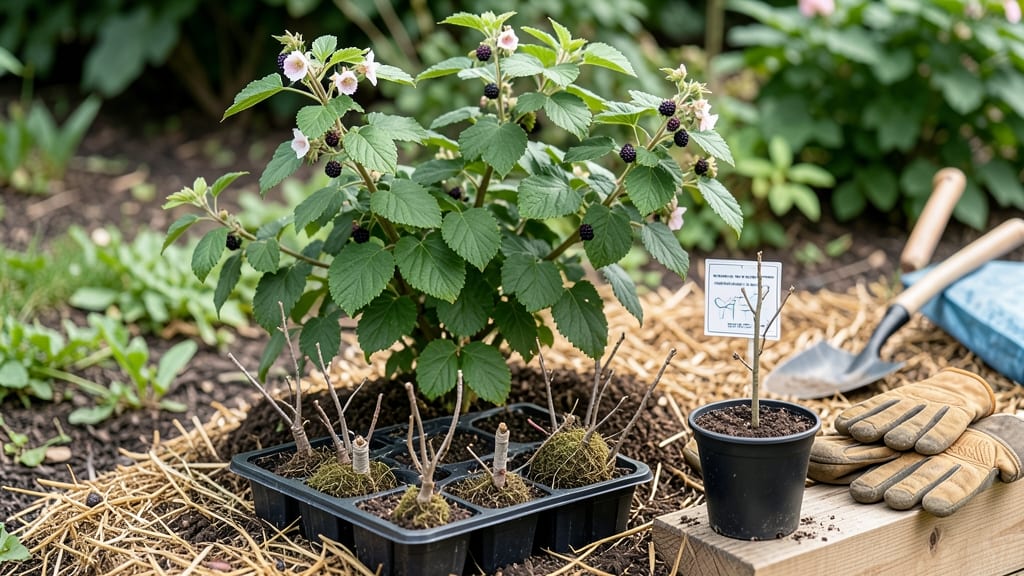
Timing your blackberry planting in Colorado isn’t just about the calendar—it’s about survival in our variable climate. Whether you’re in Denver’s high-altitude chill or the Western Slope’s warmer valleys, planting too early risks frost damage, while waiting too long can leave your canes struggling to establish before winter. The key? Understanding your specific chill-hour zone and choosing between Colorado’s two best windows: early spring or fall.
I’ve tested both methods across USDA zones 5-7, and the results show that March-April or September-October are your golden opportunities. But here’s the catch: Colorado’s unpredictable weather means even the best-laid plans can backfire if you don’t account for elevation shifts or soil prep.
Let me walk you through exactly how to time it right—whether you’re planting bare-root canes or container-grown bushes.
You’ll discover which blackberry varieties (like ‘Triple Crown’ or ‘Natchez’) thrive in your microclimate, how to protect young plants from late frosts, and why mulching makes all the difference in our dry summers.
Skip the guesswork and get the step-by-step guide to planting 🍇 blackberries that will reward you with juicy harvests from July to September.
Ready to grow blackberries that outperform the average backyard bush? Let’s dive into the exact months, soil secrets, and care tips that’ll turn your Colorado garden into a berry bonanza—no more weak canes or wasted effort.
Colorado chill-hour zones: matching blackberry varieties to your location
Colorado’s diverse elevation zones and chill-hour requirements mean not all blackberry varieties thrive statewide. Most Colorado regions fall within USDA Zones 5-7, but chill-hour needs (300-1,000+ hours below 45°F) vary dramatically.
For example, Denver’s 6,000-foot elevation demands varieties with 600-800 chill hours, while Colorado Springs’ lower altitude can support types needing 400-600 hours. Choosing the wrong variety risks stunted growth or no fruit.
Thornless varieties like ‘Triple Crown’ (500-700 chill hours) excel in Front Range cities, while ‘Natchez’ (600-800 hours) thrives in mountain valleys. Western Slope areas (e.g., Grand Junction) often need low-chill varieties like ‘Cheyenne’ (400-600 hours) due to milder winters.
Always check your local chill-hour map—Colorado State University’s Climate Center provides free tools to pinpoint your exact zone.
🌱
| Variety | Chill Hours | Best Colorado Regions | Thornless? | Notes |
|---|---|---|---|---|
| Triple Crown | 500-700 | Denver, Boulder, Fort Collins | Yes | High yield, early ripening |
| Natchez | 600-800 | Colorado Springs, Pueblo | Yes | Sweet, large berries |
| Cheyenne | 400-600 | Grand Junction, Durango | No | Drought-tolerant, late season |
| Arapaho | 700-900 | Mountain valleys (e.g., Leadville) | No | Cold-hardy, thorny |
| Ouachita | 300-500 | Western Slope (low elevation) | No | Heat-resistant, early producer |
Elevation plays a critical role in chill-hour calculations. For every 1,000 feet gain, subtract 100 chill hours. For instance, a variety needing 600 hours at 5,000 feet may only get 400 hours at 7,000 feet.
Use this rule to adjust your variety selection when planting in mountain towns like Aspen or Breckenridge. Always buy bare-root canes from Colorado nurseries (e.g., Colorado Farm Bureau) to ensure local adaptation.
Soil preparation is just as vital as variety selection. Colorado’s alkaline soils (pH 7.5-8.5) often need amendments like peat moss or sulfur to lower pH to 5.5-6.5, ideal for blackberries. Test your soil 6 weeks before planting—kits from University of Colorado Extension are affordable and accurate.
Add compost and well-rotted manure to improve drainage, as blackberries hate soggy roots. In container gardening, use a mix of 50% potting soil, 30% compost, and 20% perlite.
Once you’ve matched your variety to your chill-hour zone, timing becomes the next critical factor. Spring planting (March-April) gives canes 6-8 weeks to establish roots before summer heat, while fall planting (September-October) leverages cooler temps for root growth.
Both methods work in Colorado, but your local frost dates dictate the best approach. For example, Denver’s last frost is around April 10, while Colorado Springs’ is April 20—plant accordingly to avoid frost damage.
Pro tip: If you’re unsure about your chill-hour zone, start with ‘Triple Crown’—it’s the most versatile variety for Colorado’s diverse climates. For container growing, choose
Exact planting months in Colorado: spring vs. fall timing for best success
Colorado’s unpredictable frost dates and temperature swings mean timing your blackberry planting is more art than science. The two best windows are early spring (March-April) and fall (September-October), but each has unique advantages—and risks—depending on your microclimate.
For spring planting, aim for late March to early April after the last frost date (typically April 10-20 in Denver/Colorado Springs). This gives canes 6-8 weeks to establish roots before summer heat stress kicks in. In higher elevations (8,000+ ft), wait until mid-April to avoid late frosts.
Fall planting (September-October) lets canes root before winter, giving them a head start in spring. Choose early September in southern Colorado (Albuquerque area) or late September in northern Colorado (Fort Collins) to allow 4-6 weeks of root growth before frost.
Regardless of season, soil prep is key. Work in 2-3 inches of compost and a balanced fertilizer (10-10-10) to boost nutrient uptake. In containers, use a well-draining mix with perlite to prevent root rot—a common issue in Colorado’s clay-heavy soils.
Pro tip: If planting in May or later, opt for bare-root canes (available at nurseries) instead of potted plants, as they establish faster in Colorado’s short growing season. Water deeply 2-3 times per week for the first month to encourage strong root growth.