
Plants
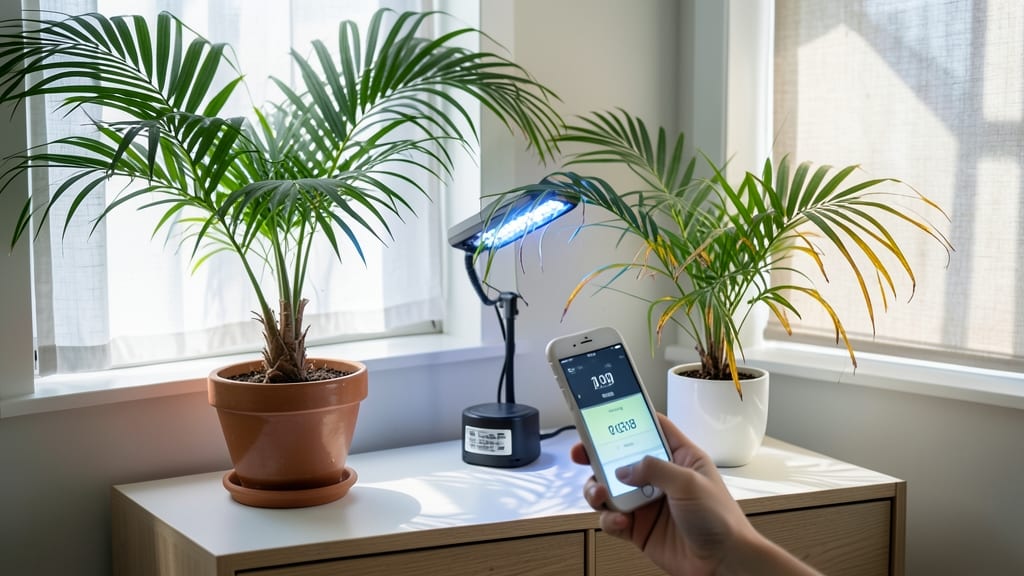
Understanding palm plant light requirements by species type
Not all palm plants have the same light needs—some thrive in bright, indirect light, while others crave direct sunlight. As a gardener, I’ve learned that matching your palm’s natural habitat to your home or garden is key to preventing those dreaded brown tips or leggy growth.
Let’s break down the light requirements for the most popular palm varieties and how to create the perfect environment for each.
For example, the Areca palm (also called the butterfly palm) loves bright, indirect light—think of it as the palm equivalent of a sunny windowsill without harsh afternoon rays. On the other hand, the Majesty palm is more adaptable and can handle full sun outdoors or bright indoor lighting.
Understanding these differences will help you avoid common mistakes that lead to plant stress.
🌴 Pro Tip: Always observe your palm’s leaves. If they’re turning yellow or developing crispy edges, it’s a sign of either too much direct sun or insufficient light. Adjust placement gradually to avoid shocking the plant.
| Palm Variety | Ideal Light Conditions | Signs of Overlighting | Signs of Underlighting |
|---|---|---|---|
| Areca Palm | Bright, indirect light (50-80%) | Brown, crispy frond tips | Leggy growth, pale leaves |
| Parlor Palm | Low to medium indirect light (20-50%) | Yellowing leaves, leaf scorch | Slow growth, sparse fronds |
| Kentia Palm | Medium to bright indirect light (30-60%) | Dry, brittle leaf edges | Dark green, dull leaves |
| Majesty Palm | Full sun to partial shade (6+ hours) | Bleached or sunburned fronds | Stunted growth, weak stems |
| Ponytail Palm | Full sun (6-8 hours) | Wilting, brown patches | Slow growth, pale fronds |
The Parlor palm is one of the most forgiving species, making it perfect for low-light spaces like north-facing rooms or offices. If your home lacks natural light, this palm will thank you with its resilient nature.
However, if you notice its leaves turning yellow or developing brown spots, it’s begging for a brighter spot—just avoid placing it in direct afternoon sun.
For outdoor palms like the Majesty palm or Ponytail palm, full sun is ideal, but they can also tolerate partial shade, especially in hot climates where afternoon sun can be too intense.
I’ve found that positioning these palms where they receive morning sun and afternoon shade works wonders for their health and growth rate.
If you’re unsure about your palm’s light needs, start by observing its natural behavior. For instance, if your Kentia palm develops dark green, dull leaves, it’s likely not getting enough light. Move it closer to a window with a sheer curtain to filter the light gently.
Conversely, if the leaves start to bleach or crisp, it’s getting too much direct sun—relocate it to a shadier spot.
Another key factor is seasonal changes. During winter, indoor light levels drop significantly, and palms may need supplemental lighting. I recommend using a grow light for 12-14 hours a day to keep your palm thriving.
This is especially important for Areca palms, which can become leggy and weak without adequate light during the shorter days of winter.
Remember, palms are native to tropical and subtropical regions, so they’re used to bright, consistent light. Whether you’re growing them indoors or outdoors, aim to mimic their natural environment as closely as possible.
With the right light conditions, your palm will reward you with lush, vibrant fronds and a touch of tropical paradise in your space.
How to assess and optimize light conditions for your palm
Not all light is created equal for palm plants. While some varieties love bright indirect sunlight, others thrive under direct rays. Start by observing your space: south-facing windows provide the most consistent light, while north-facing ones offer gentler, filtered rays.
Use a light meter app or test placement for 2-3 weeks to gauge intensity—ideal spots should feel warm but not scorching to the touch.
For indoor palms, rotate your plant quarter-turns weekly to ensure even growth. If fronds lean toward the light, it’s a clear sign your palm needs repositioning. Outdoor palms benefit from gradual acclimation: move them step-by-step into sunnier spots over 2-4 weeks to avoid shock.
Sudden exposure to full sun can cause leaf burn, turning fronds yellow or brown at the tips.
⚠️ Warning: Light Shock is Real
Palms native to shady forests (like Kentia palms) can’t handle sudden direct sunlight. Symptoms include crispy leaf edges or drooping fronds. If you’ve recently moved your palm, avoid full sun for at least 10 days while it adjusts. For outdoor palms, provide afternoon shade during hot months to prevent stress.
If your space lacks natural light, grow lights can bridge the gap. Use full-spectrum LED bulbs 12–16 inches above the plant for 12–14 hours daily.
For low-light palms like the Parlor palm, a fluorescent bulb 2–3 feet away suffices. Always position lights above the canopy to mimic natural overhead sunlight.
Sheer curtains or light-diffusing screens are game-changers for south-facing windows that overheat. These filter harsh UV rays while maintaining brightness. Test different fabrics: voile curtains reduce intensity by 30–50%, while white lace offers a softer, indirect glow.
For outdoor palms, dappled shade (like under tree canopies) mimics their natural understory habitats.
Seasonal adjustments are key. In summer, move indoor palms a few feet back from windows to prevent leaf scorch. In winter**, supplement with grow lights if daylight drops below 6 hours.
Watch for pale fronds or stretched growth—these are red flags for insufficient light. A simple fix? Rotate the pot toward the brightest window or extend your artificial light schedule.
Pro tip: Group palms with complementary light needs to create a thriving microclimate. For example, pair a sun-loving Majesty palm with a shade-tolerant Areca palm under a large umbrella. This way, you satisfy both high-light and low-light varieties in one spot without compromising either. 🌿