
Trees
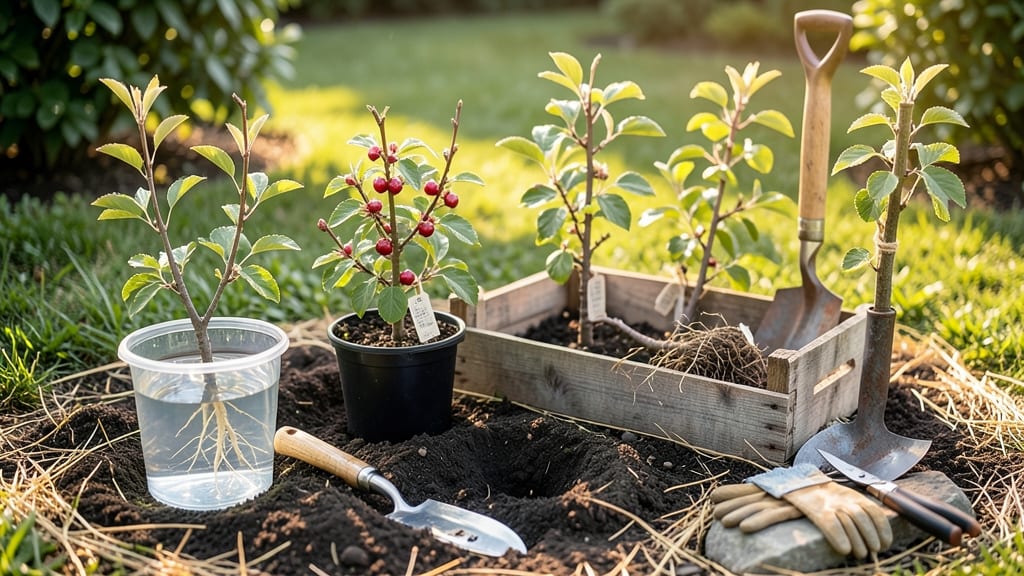
Planting a fruit tree 🍎 in Wisconsin isn’t just about grabbing a sapling and digging a hole—it’s about catching the perfect window to give your tree the best shot at thriving.
The wrong timing can leave your young tree struggling with weak roots or frost damage, and with Wisconsin’s unpredictable USDA Zone 4a-6b climate, getting it right makes all the difference.
Most gardeners assume spring is the only safe bet, but fall planting actually gives fruit trees a head start on root growth before winter sets in.
Whether you’re planting bare-root saplings or container-grown trees, understanding the late April to early June and early September to mid-October windows is the key to success.
I’ll break down exactly when to plant based on your specific zone, soil conditions, and even tree variety—because apples and cherries don’t play by the same rules. Plus, I’ll share pro tips to avoid common mistakes that Wisconsin gardeners make, like planting too deep or ignoring windbreaks.
Ready to set your fruit tree up for a lifetime of harvests? Let’s dive into the best planting strategies tailored just for Wisconsin’s climate—so you can enjoy fresh fruit from your own backyard in just a few years.
Best planting windows for Wisconsin fruit trees by USDA Zone (3-5)
Wisconsin’s USDA Zones 3-5 create unique challenges for fruit tree planting, where timing can make or break your harvest. The ideal window is either late April to early June (spring) or early September to mid-October (fall), but these dates shift slightly depending on whether you’re planting bare-root or container-grown trees.
Spring planting gives trees 6-8 weeks of root growth before winter, while fall planting allows roots to establish before dormancy.
In Zone 3 (northern Wisconsin), aim for May 1-15 in spring or September 1-15 in fall, while Zone 5 (southern Wisconsin) can extend planting until June 1 or October 10.
Soil temperature is critical—roots need 45°F (7°C) minimum to grow. Use a soil thermometer to confirm before planting. In Wisconsin’s clay-heavy soils, amending with compost or sand improves drainage for young roots.
For apple and pear trees, which are staples in Wisconsin orchards, prioritize fall planting—it gives roots time to establish before winter dormancy. Stone fruits like peaches and cherries prefer spring planting to avoid winter dieback from frost heaves.
Always check local frost dates using the UW Extension’s frost calendar—some years, late May frosts can still occur in Zone 3. Planting too early risks root damage from freezing, while planting too late limits root growth before winter.
In northern Wisconsin (Zone 3), where winters are harshest, focus on hardy varieties like Honeycrisp apples or Montmorency cherries. These tolerate -30°F (-34°C) temperatures, making them ideal for cold climates. For Zone 5, consider Haralson plums or Bosc pears, which thrive in milder winters.
Container-grown trees offer flexibility—you can plant them anytime soil is workable, even in early spring (March) or late fall (November), as long as the ground isn’t frozen. Just avoid planting during heatwaves (above 85°F/29°C) or deep freezes (below 32°F/0°C).
Pro tip: If you miss the ideal window, bare-root trees can be heeled in (temporarily planted) until conditions improve. Keep them moist but not soggy and protect with mulch to prevent drying.
Critical factors that determine success (beyond just dates)
When it comes to planting fruit trees in Wisconsin, timing is just the starting point. The real secret to success lies in understanding how soil moisture, root zone insulation, and tree variety interact with your local climate.
For example, Wisconsin’s clay-heavy soils can suffocate young roots if not amended properly, while dwarf varieties need more protection from winter winds than standard trees.
One of the biggest debates among gardeners is whether to plant in fall or spring. Fall planting gives roots a head start before winter, but only if the ground isn’t frozen. Spring planting avoids frost risks, but young trees miss out on early growth.
I’ve found that early September to mid-October is ideal for most Wisconsin zones, as it allows roots to establish before the ground freezes.
Soil preparation is non-negotiable. Before planting, I always test my soil’s drainage and pH levels. Wisconsin’s clay soils often need compost or sand to improve aeration. Aim for a pH between 6.0 and 7.0—most fruit trees thrive in slightly acidic to neutral soil.
If your soil is too dense, consider planting in a raised bed for better control.
Fall Planting vs. Spring Planting
Fall Planting
- Pros: Roots establish before winter
- Pros: Less competition for water
- Pros: Wider selection of bare-root trees
Spring Planting
- Pros: Avoids winter frost risks
- Pros: Warmer soil speeds root growth
- Cons: Shorter window before summer heat
💡 Best for Wisconsin: Fall planting in zones 4a-5a; spring planting in zone 6b.
Another critical factor is tree variety selection. Dwarf and semi-dwarf varieties are popular in Wisconsin because they’re easier to manage and bear fruit faster. However, they require staking and winter protection, especially in exposed areas. Standard varieties, while larger, often handle Wisconsin’s winters better with minimal care.
Don’t overlook the importance of mulching and windbreaks. A 3-4 inch layer of wood chips or straw mulch insulates roots in winter and retains moisture in summer.
For trees planted in open areas, consider a windbreak fence or evergreen barrier to protect against harsh winds that can dry out soil and damage bark.
Finally, monitor soil moisture closely. Wisconsin’s unpredictable weather can swing from drought to heavy rains. Use a moisture meter or the finger test (dig 2 inches deep—if dry, water deeply) to avoid over- or under-watering. Young trees need consistent moisture, but soggy soil can lead to root rot.